






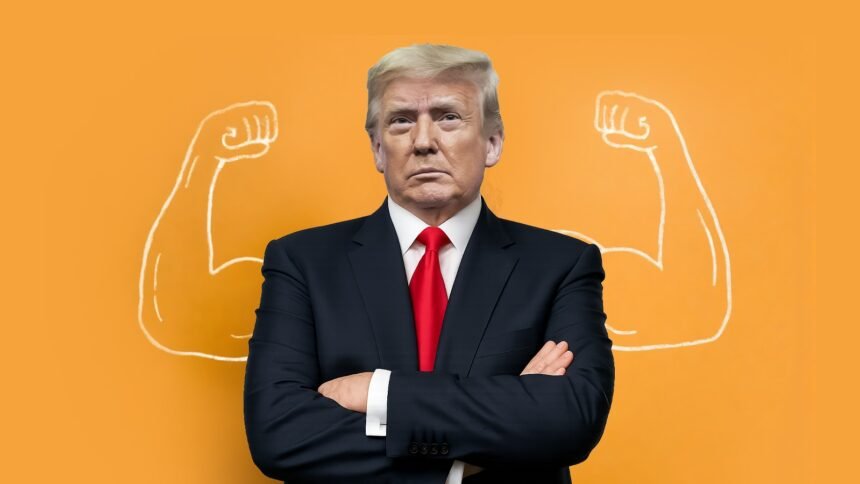
In the waning days of 2025, as the world grapples with escalating geopolitical tensions—from the protracted Russia-Ukraine conflict to simmering rivalries in the Indo-Pacific—the Trump administration unveiled its National Security Strategy (NSS) on December 4, a document that has ignited fierce debate across Washington and beyond. Critics, including prominent voices in foreign policy circles, have lambasted it as a “moral and strategic disaster,” accusing it of dismantling the post-World War II liberal international order. Yet, such condemnations often fixate on the NSS’s perceived retreat from values-based diplomacy, overlooking its pragmatic reinforcement of the order’s foundational elements: unassailable military might and economic vitality. By committing to restore American “economic and military preeminence,” the strategy astutely preserves the core tenets of the United States’ enduring grand plan, which has underpinned global stability for over eight decades. It adapts these pillars to contemporary realities, including the rapid evolution of emerging technologies like artificial intelligence and quantum computing, as well as the populist backlash against unchecked globalization that fueled Trump’s electoral resurgence.
However, the NSS falters in two critical areas: its ambiguous framing of the “axis of aggressors”—a coalition of revisionist powers including China, Russia, Iran, and North Korea—and its outright rejection of even pragmatic efforts to advance democracy and human rights abroad. This is, after all, merely a strategy on paper; its alignment with President Trump’s impulsive decision-making or the administration’s day-to-day policies remains an open question. Nonetheless, NSS documents carry weight—they signal priorities to allies and adversaries alike, shape bureaucratic agendas, and influence congressional oversight. Viewed through this lens, the 2025 NSS merits qualified applause: it gets far more right than wrong in navigating a multipolar world fraught with peril.
To fully appreciate the NSS’s contributions and shortcomings, one must contextualize it within the arc of American grand strategy, which traces its roots to the ashes of World War II. The mid-20th century was a crucible of catastrophe: two global wars that claimed over 70 million lives, economic depression that ravaged livelihoods, and the rise of totalitarian regimes that threatened human freedom. In response, visionary U.S. leaders like Franklin D. Roosevelt, Harry Truman, and their advisors—drawing on lessons from the failed League of Nations and the isolationism of the interwar years—forged a new international system designed to prevent such horrors from recurring. This architecture was not born of altruism alone but of enlightened self-interest: a stable world would secure American prosperity and security.
At its bedrock lay a robust security framework anchored in U.S. military supremacy. This included forging ironclad alliances through NATO in Europe (established in 1949) and bilateral pacts in Asia, such as the U.S.-Japan Security Treaty (1951). Nuclear deterrence emerged as a cornerstone following the success of the Manhattan Project, with the U.S. maintaining a qualitative edge in strategic arsenals to deter aggression. Preventing hostile powers from dominating key regions—Eurasia, the Middle East, and the Western Hemisphere—became a doctrinal imperative, as articulated in early Cold War documents like NSC-68 (1950). Nonproliferation efforts, exemplified by the Nuclear Non-Proliferation Treaty (1968), aimed to curb the spread of weapons of mass destruction, recognizing that their diffusion could unravel global order.
Layered atop this security edifice was the “liberal” dimension, inspired by Enlightenment ideals of liberty, commerce, and governance. The Bretton Woods system (1944) institutionalized free and fair trade through the International Monetary Fund and the World Bank, while the General Agreement on Tariffs and Trade (later the World Trade Organization) dismantled barriers to trade. Democracy and human rights were promoted through institutions like the United Nations (1945) and the Universal Declaration of Human Rights (1948), fostering cooperation among nations. During the Cold War, this order flourished in the “free world,” countering Soviet expansionism through strategies such as containment (as outlined by George Kennan) and massive aid programs, such as the Marshall Plan, which rebuilt Western Europe and integrated it into a transatlantic community.
The strategy’s triumph was evident in the Cold War’s peaceful conclusion. With the fall of the Berlin Wall in 1989 and the Soviet Union’s dissolution in 1991, former Warsaw Pact nations clamored to join Western institutions—NATO expanded eastward, and the European Union grew to encompass much of the continent. The absence of great-power wars since 1945 is no accident; it’s the dividend of U.S. leadership. Economic metrics tell a similar story: global GDP per capita has surged from about $3,000 in 1945 (adjusted for inflation) to over $12,000 today, lifting billions from poverty. In 1945, extreme poverty afflicted two-thirds of humanity; by 2025, it’s below 8 percent, thanks in part to trade liberalization and technological diffusion. Democracies numbered a mere dozen post-war; now, nearly 100 nations qualify as electoral democracies, according to Freedom House indices, enhancing global stability, as democracies rarely war with one another.
Yet, the NSS, echoing widespread critiques, dwells on post-Cold War missteps—a unipolar era of hubris. Efforts to integrate China and Russia as “responsible stakeholders,” championed by administrations from Clinton to Obama, backfired spectacularly. China’s accession to the WTO in 2001 accelerated its economic ascent. Still, at the cost of U.S. manufacturing jobs—over 2 million lost to offshoring, according to the Economic Policy Institute—while entangling supply chains in dependencies that are vulnerable to coercion. Russia’s post-Soviet reforms faltered, leading to Putin’s revanchism, as seen in the 2014 annexation of Crimea and the 2022 invasion of Ukraine, which has displaced millions and disrupted global energy markets. Prolonged Middle East engagements, from the 2003 Iraq War (costing over $2 trillion and 4,500 U.S. lives) to counter-ISIS operations, yielded mixed results amid strategic drift. Allies, particularly in Europe, free-rode on U.S. defense spending—NATO’s 2 percent GDP target, agreed in 2014, remains unmet by many members. Irregular migration, fueled by instability and economic disparities, sparked nationalist movements, including Brexit and Trump’s 2016 victory.
These flaws are undeniable, yet the aggregate ledger of the unipolar moment is positive. U.S. GDP grew from $6 trillion in 1991 to over $28 trillion in 2025, outpacing rivals. Global life expectancy rose from 66 to 73 years, and infant mortality halved, per World Bank data. The perception of unmitigated failure ignores these gains, often amplified by populist rhetoric. As the world evolves—marked by China’s GDP nearing parity with the U.S., Russia’s hybrid warfare, and technological disruptions—the NSS’s drafters faced the task of modernizing this successful framework. They addressed three paramount challenges: globalization’s excesses, the tech revolution, and the axis of aggressors, though unevenly.
The NSS excels in reaffirming traditional pillars. In security, it demands “military dominance” and “overmatch,” advocating for the “world’s most robust, credible, and modern nuclear deterrent” alongside advanced missile defenses, including a “Golden Dome” for homeland protection—inspired by Israel’s Iron Dome but scaled globally. It vows to “prevent the emergence of dominant adversaries,” echoing Eisenhower-era doctrines. Trump’s touted “Operation Midnight Hammer”—a hypothetical strike neutralizing Iran’s nuclear program—exemplifies proactive nonproliferation. Alliances are lauded as force multipliers, with the U.S. and its partners commanding over half of the global economy. The strategy pushes for burden-sharing, as evidenced by recent NATO summits, where European defense spending reached record highs amid Ukraine’s plight.
Criticism of Europe is blunt, noting a decline in its GDP share from 25 percent in 1990 to 14 percent today, exacerbated by demographic stagnation and regulatory burdens. While the document’s tone strains transatlantic ties—prompting rebukes from EU leaders like Ursula von der Leyen—it reflects realities: Europe’s pre-2022 invasion energy dependence on Russia highlighted vulnerabilities. Trump’s “vinegar” approach, through tariffs and public shaming, has arguably spurred reforms, with Germany boosting its military budget post-Zeitenwende.
Economically, the NSS promotes “fair, reciprocal trade deals” that deliver mutual benefits, prioritizing engagement in the Indo-Pacific, the Western Hemisphere, and Africa—regions rich in critical minerals essential to green transitions. It safeguards the dollar’s reserve status amid challenges from digital currencies such as China’s e-yuan. Rather than jettisoning multilateralism, it seeks reforms to align institutions with U.S. interests, as in ongoing WTO disputes.
Where the NSS stumbles is in sidelining democracy promotion; it celebrates American freedoms and “genuine democracy” among allies. Still, it rejects “imposing” change on others, ignoring how U.S. support—through Radio Free Europe during the Cold War or aid to Eastern European transitions—fostered partners aligned with U.S. values. Democracy was once alien to much of Europe and Asia; today, it’s a glue that holds alliances together. This abdication risks ceding moral ground to autocrats.
In addressing new challenges, the NSS shines in tackling the pitfalls of globalization. Trump’s team, attuned to Rust Belt grievances, proposes securing the supply chain, reindustrialization through incentives like the CHIPS Act (2022 extensions), reshoring manufacturing, and border fortification—addressing migration flows that have reached 10 million encounters since 2021. These measures could redress the imbalances of the 1990s-2000s, rebuilding domestic support for engagement.
In technology, it positions the U.S. to dominate the “new tech race” with China, leveraging America’s innovative ecosystem—home to firms like OpenAI and Quantum Computing Inc.—to set standards in AI, biotech, and quantum. Calls for global collaboration counter Beijing’s Belt and Road tech exports, though recent chip sales to China (announced December 2025) undermine this, drawing congressional ire.
Finally, the NSS inadequately confronts the axis of aggressors, the gravest threat since the Axis powers. Trump’s first NSS (2017) identified great-power competition; now, China leads a bloc with Russia (arming Ukraine foes), Iran (proxy wars via Houthis and Hamas), and North Korea (missile tech swaps). Risks of multi-theater conflicts loom—e.g., an escalation in the Taiwan Strait amid Ukraine’s drain on U.S. resources. Yet the document omits North Korea, downplays Iran after the Midnight Hammer, casts Russia as Europe’s problem (with U.S. mediation), and soft-pedals China. Interlinkages, like Sino-Russian joint exercises or Iranian drones in Ukraine, are ignored— a missed opportunity for clarity.
Trump’s NSS envisions a “new golden age” for America, vowing to make it “safer, richer, freer, greater, and more powerful than ever before.” U.S. power has been a net good, averting catastrophe and fostering progress. Amid the uncertainties of 2025—from AI arms races to climate-induced migrations—success hinges on execution. Let’s hope it delivers.
Matthew Kroenig is a columnist at Foreign Policy, vice president and senior director of the Atlantic Council’s Scowcroft Center for Strategy and Security, and a professor at Georgetown University. His latest book, with Dan Negrea, is We Win, They Lose: Republican Foreign Policy and the New Cold War.


