



The Pan-African Paradigm of Public Health Sovereignty and Structural Resilience
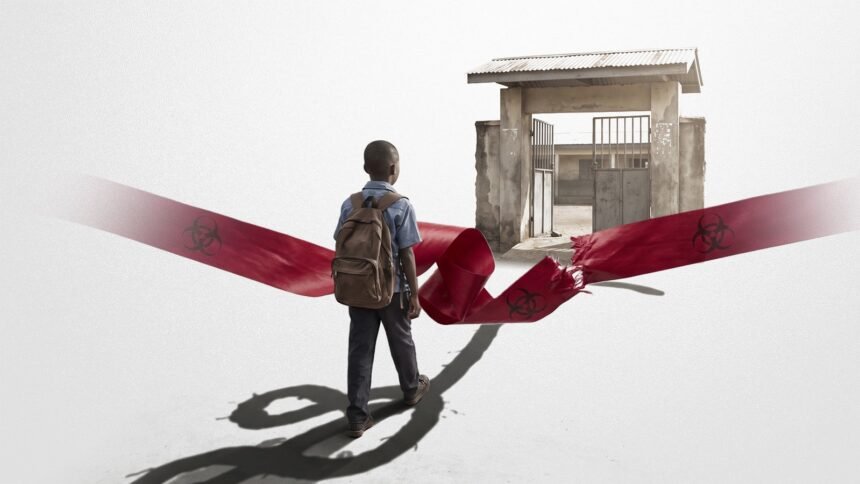
More than 3,000 coffins mark the toll of the worst Ebola outbreak in the Democratic Republic of Congo’s long history with the disease. Yet this week, its hardest-hit schools reopened their gates regardless, after authorities concluded the risk of interrupted education outweighed the transmission risk within classrooms. Congo’s education ministry’s decision to abandon a planned “distance learning” regime in more than 1,000 red-zone schools across Ituri province is a striking illustration of the structural trade-offs facing African public health institutions operating under sustained epidemic pressure with limited resources. It is easy, from outside the region, to read the choice as reckless; on the ground, it reflects a harder calculus about which risks a fragile state apparatus can actually manage and which ones, a generation of children falling behind on curriculum, worksheets delivered every two weeks proving an inadequate substitute for structured schooling, compound into deeper, longer-term harms. Congo’s improvisation under crisis conditions, shaped by direct consultation with provincial authorities rather than a one-size-fits-all central mandate, offers a case study in what public health sovereignty looks like when the textbook response collides with the lived reality of an outbreak that shows no sign of a clean endpoint.
The Scale of an Unprecedented Outbreak
The current epidemic, caused by the Bundibugyo strain of Ebola for which there is no approved vaccine or treatment, has become the deadliest in Congo’s history. Government data published this week put the death toll above 3,000, with cases spread across six provinces and a mortality rate of 48.6%, a case fatality rate that underscores both the virulence of this particular strain and the strain placed on Congo’s health infrastructure in containing it without the vaccine tools deployed against prior outbreaks caused by the more familiar Zaire strain. North Kivu province alone accounts for 868 of the country’s 6,186 confirmed cases, concentrating the epidemic’s human toll in a region already contending with the parallel crisis of Rwanda-backed AFC/M23 rebel control over parts of its territory.
The Policy Reversal on Distance Learning
Ministry regulations published on August 19 had stipulated that schools classified within Ebola “red zones,” areas of active transmission, would temporarily shift to distance learning, combining worksheets distributed every two weeks with radio and television broadcast programming. That policy applied to more than 1,000 schools in Ituri province alone. But an education ministry official told journalists this week that the government reversed course “at the request of provincial authorities who wanted to ensure that students living even in red zones would not fall behind in the school curriculum compared to others,” with a commitment to revert to distance learning “at the first sign of a case” in a given school. The reversal illustrates a distinctly bottom-up dynamic within Congo’s crisis governance, with provincial voices shaping national epidemic policy in real time rather than simply implementing directives handed down from Kinshasa.
Governance Across a Fractured Territory
Notably, schools also reopened this week in areas of North and South Kivu under the control of the Rwanda-backed AFC/M23 rebel coalition, which seized significant territory in a lightning offensive last year. A rebel official confirmed that hand-washing and social distancing requirements were being enforced in those classrooms as well, a detail that speaks to the unusual continuity of basic public health protocol implementation even across a territorial line of control contested by armed conflict. This overlap between epidemic response and active insurgency underscores the layered institutional challenge Congo’s health authorities face: containing a lethal, untreatable pathogen while simultaneously operating across a landscape divided between internationally recognized government control and rebel administration.
Parental Vigilance as Frontline Response
With no approved vaccine or treatment for the Bundibugyo strain, individual and household-level prevention measures have taken on outsized importance. In Beni, a city in North Kivu accounting for a substantial share of confirmed cases, resident La Reine Vahwere described stocking her children’s backpacks with disinfectant and instructing them to avoid physical contact with classmates before sending them to school this week. School staff, for their part, have installed hygiene kits in red-zone schools and directed arriving students to hand-washing stations, reflecting a broader pattern of household and community-level vigilance filling gaps that centralized health infrastructure, stretched across six provinces, cannot fully cover on its own.
Reclaiming the Balance Between Containment and Continuity
Congo’s decision to prioritize educational continuity over blanket transmission-avoidance measures in its hardest-hit zones will not satisfy every epidemiological purist. Still, it reflects an institutional maturity increasingly asserting itself in African outbreak response: the recognition that public health decisions cannot be evaluated on infection-control criteria alone, divorced from the broader social and developmental costs of prolonged school closures documented extensively during the Covid-19 and prior West African Ebola epidemics. As the outbreak’s death toll continues climbing past the 3,000 mark, Congo’s education and health ministries are, in effect, asserting the right to weigh those trade-offs themselves rather than default to the most conservative containment posture. Whether that calculated bet pays off will depend on the discipline of the surveillance systems now tasked with detecting the “first sign of a case” quickly enough to reverse course before transmission spreads through the very classrooms authorities have chosen to keep open.