



Africa’s latest climate and sustainable development outlook warns that the continent’s economic expansion and rapid urbanization are intensifying climate risks, even as they open new pathways for green growth.
The analysis, released in mid-February by regional policy experts, argues that 2026 will test whether Africa can convert years of ambitious climate commitments into concrete, climate‑resilient development.
Across the continent, cities are growing at some of the fastest rates in the world, with projections suggesting that urban residents could make up more than 60 percent of Africa’s population by 2050. This demographic surge is driving demand for housing, transport, cooling, and energy, often in places where infrastructure is already fragile.
Researchers warn that without robust adaptation plans, expanding urban centers will face worsening heat waves, floods, and pressure on water and food systems that could deepen inequality and strain public finances.
The report notes that climate impacts are already outpacing the capacity of many African countries to respond. Droughts in the Horn of Africa, flooding in parts of southern Africa, and rising temperatures across the Sahel have repeatedly disrupted livelihoods and undermined economic growth.
At the same time, international climate and development finance has remained uneven and uncertain, complicating efforts to build resilient infrastructure and protect vulnerable communities.
Yet the outlook stresses that these risks sit alongside significant opportunities to rewire Africa’s growth model around clean energy and low‑carbon industries. The continent hosts some of the world’s best solar and wind resources, and several countries are scaling up renewables, green industrial parks, and climate‑smart agriculture.
Analysts argue that linking renewable power, digital networks, and new manufacturing zones could help African economies capture more value from global supply chains while cutting emissions.
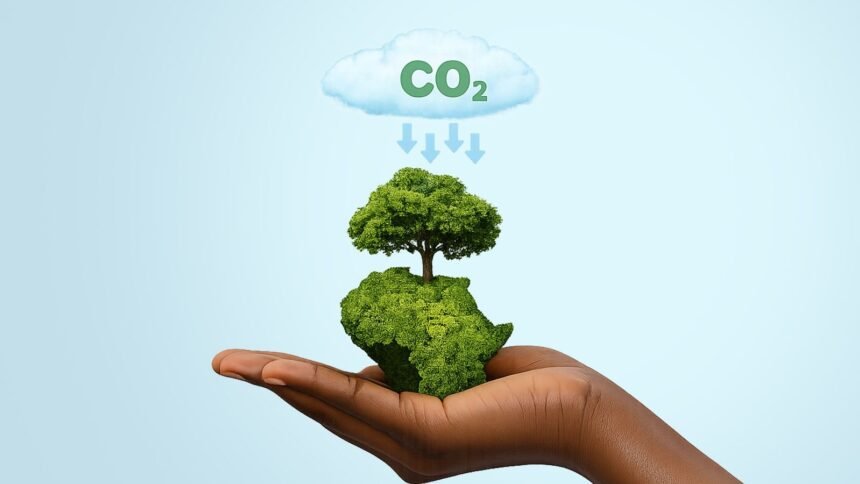
Carbon markets are highlighted as one of the most promising and contentious tools for financing this transition. A recent status and outlook report from the Africa Carbon Markets Initiative suggests that high‑integrity carbon credits could mobilize billions of dollars for projects in renewable energy, sustainable agriculture, and ecosystem restoration by 2030, if governance and transparency are strengthened.
Supporters say such markets could create green jobs, expand energy access, and reward countries for protecting forests like the Congo Basin, which is under growing stress from heat and drought.
Others caution that carbon trading is not a simple fix. Experts at a recent United Nations University panel described carbon markets as an instrument that can both enable climate action and reproduce global inequities if poorly designed.
They warned that projects must avoid displacing communities or locking Africa into a role as a supplier of cheap offsets for richer nations, and instead prioritize domestic development benefits and local ownership.
Economic forecasters say the stakes are high. The International Monetary Fund projects that African growth could approach or exceed 4.5 percent by 2026, led by countries such as Nigeria and Egypt, but notes that climate shocks and debt pressures could quickly derail these gains.
Think‑tank publications like Foresight Africa 2026 underscore that investment in resilient infrastructure, skills, and clean energy systems will determine whether today’s growth translates into lasting, inclusive prosperity.
The February outlook concludes that Africa’s climate and development agenda has entered an implementation phase in which progress will be measured less by declarations and more by delivery.
It calls on governments to strengthen domestic institutions, scale regional development finance, and align national industrial strategies with a just energy transition.
International partners, it argues, will need to move beyond pledges toward predictable, long‑term support that helps African countries manage climate risks while seizing green‑economy opportunities.
In a year shaped by tighter global economic conditions and rising temperatures, Africa’s choices on energy, urban planning, and land use will help decide whether the continent becomes a model for climate‑compatible growth or an early casualty of a warming world.