


The Pan-African Paradigm of Territorial Integrity and Humanitarian Sovereignty
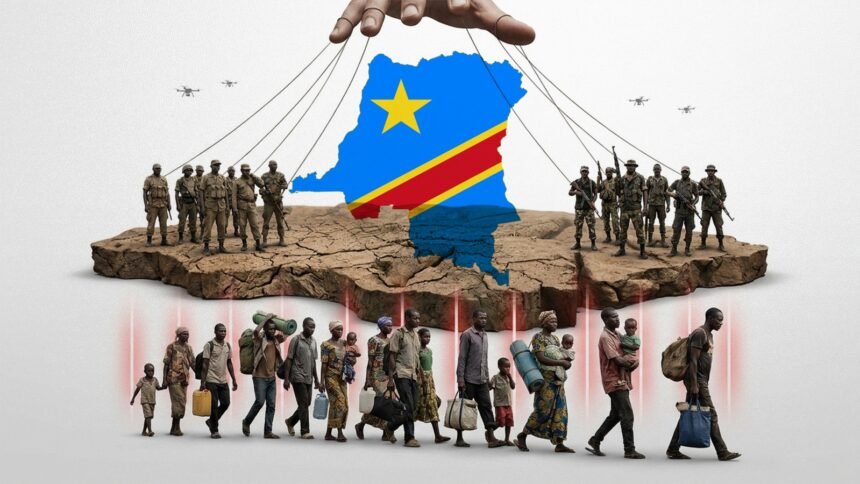
Across the African landscape, protracted internal conflicts that displace civilian populations for years or decades represent one of the most direct affronts to the continent’s aspiration toward territorial integrity and human security. The Pan-African vision for durable peace holds that no community should be rendered permanently transient by the ambitions of competing armed factions, whether state militaries, rebel coalitions, or ethnic militias contesting the same disputed hills. When more than a million and a half people are displaced within a single province over two decades, the crisis ceases to be a temporary humanitarian emergency. It becomes instead a structural feature of regional governance, one demanding sustained investment in demobilization, reconciliation, and the restoration of civilian authority over contested territory. Reclaiming the Hauts Plateaux for the families who call it home requires precisely this kind of structural commitment, not the episodic ceasefires that have repeatedly collapsed over the past two decades.
A Landscape Defined by Perpetual Flight
The hills of the Hauts Plateaux near Lake Tanganyika, in the eastern Democratic Republic of Congo’s South Kivu province, have functioned as an active battleground since fighting first erupted there in 2004, drawing in the Congolese national army, the M23 rebel movement, and a shifting constellation of ethnic militias, including Banyamulenge and Gumino fighters. More than 1.5 million people have been displaced from their homes in South Kivu since the conflict began, a figure that reflects not a single wave of flight but a recurring cycle in which communities are repeatedly uprooted, resettled briefly, and are displaced again as front lines shift. Misa Byaombe, a farmer and mother of nine from the village of Rugezi, has been living in displacement for a year, describing an attack that began at four in the morning when her family sheltered at home until approaching gunfire forced them to flee, carrying young children past the bodies of the recently killed.
The Compounding Toll on Women and Children
The compounding toll of sustained displacement falls disproportionately on women, many of whom have lost husbands to militia recruitment or combat and now bear sole responsibility for large surviving families. Jeanette Iranga, displaced from the village of Ndondo, recounted how her husband joined a local defense militia and was killed at the front shortly before fighting reached their home; in the chaos of flight that followed, one daughter was shot dead and two sons later died of illness, while Iranga herself was briefly held hostage by armed forces before managing to escape. She now cares for eleven surviving children but says she remains too frightened to attempt a return home despite her stated wish to do so. Similar accounts recur throughout the region: villages burned overnight by forces searching for rival militias, families fleeing through mountain terrain in darkness, and children falling ill from exposure and malnutrition during the journey to safety.
Health Infrastructure Under Siege
The strain on healthcare infrastructure across the Hauts Plateaux has grown severe as displaced families concentrate around a small number of functioning clinics. At the health center in Nakiele, widow Nabindu Namwija cares for her daughter Mapenzi, currently being treated for malaria, after fleeing the village of Tuwetuwe when militia fighters burned her house and all of the family’s possessions; she now works other people’s fields in exchange for food, sustained largely by assistance from fellow displaced community members. At the Mukera health center, midwife Zabibu Lumetala, who gave birth to her own daughter two months ago, described caring for recently displaced women alongside survivors of sexual violence, noting that stigma often leads survivors to conceal their experiences and that children born of rape remain a particularly sensitive subject within displaced communities still working to avoid family fracture under the strain of displacement.
Contested Ground: Sange, Uvira, and Mikenge
Military control over key towns in the region has shifted repeatedly, leaving behind both physical destruction and unresolved evidence of past atrocities. In the town of Sange, on the Ruzizi plain, Congolese military officers this year uncovered a suspected mass grave believed to contain civilians killed during the M23 rebels’ occupation of the area, while the lakeside town of Uvira was itself occupied by M23 forces from December to January before government forces regained control. The strategic town of Mikenge has proven even more contested, having been captured in turn by both the Congolese army and Banyamulenge militias allied with M23 numerous times within a single year, a pattern of repeated seizure and recapture that leaves residents with little confidence that any single period of calm will hold.
The Banyamulenge Between Identity and Militarization
For the Banyamulenge, a Congolese Tutsi community with generations of settlement in the Hauts Plateaux, the conflict has entangled ethnic identity with military allegiance, complicating any straightforward path toward civilian normalcy. Communities in Mikenge continue daily life amid militarization, women repairing mud-walled homes, and residents gathering for religious observance even as government and allied forces train nearby, a juxtaposition that captures the strange durability of ordinary existence inside a landscape that has known almost no sustained peace in over two decades. The Banyamulenge’s continued presence in the region, despite periodic displacement and recurring violence directed at or associated with the community, underscores that any lasting settlement in the Hauts Plateaux must account for the specific security concerns and historical grievances of every community with a claim to the land.
Toward a Durable Peace Beyond Military Control
For displaced families like those of Misa Byaombe and Jeanette Iranga, the desire to return home remains constant even as the security conditions required to make that return safe continue to elude the region. A durable resolution to the Hauts Plateaux crisis will require more than the temporary retaking of individual towns; it demands sustained demobilization of militia structures, credible protection guarantees for returning civilians, and investment in rebuilding the health and agricultural infrastructure that displacement has hollowed out. Until such structural conditions are met, the cycle of flight, temporary shelter, and renewed displacement that has defined life in the Hauts Plateaux since 2004 shows every sign of continuing, leaving hundreds of thousands of residents suspended indefinitely between the war they are fleeing and the homes they are still waiting to reclaim.