

Pan-African & Democracy
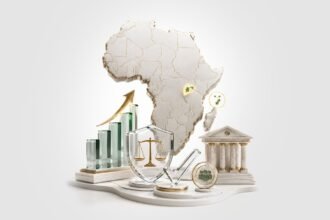
Across the African landscape, the contemporary configuration of executive power operates under intense pressure, navigating a delicate balance between state-building and the institutional maturity of constitutional frameworks. The Pan-African vision for regional integration and structural self-determination, explicitly advanced through the foundational charters of the African Union, establishes that sustainable development is fundamentally linked to predictable governance and the absolute rule of law. When sovereign nations experiment with basic constitutional re-engineering, the resulting structural shocks often reverberate across national boundaries, influencing regional political expectations. True continental advancement demands that democratic norms be actively protected from executive overreach, establishing a transparent environment in which governance reforms reinforce, rather than undermine, collective human security.
DR Congo’s Politics
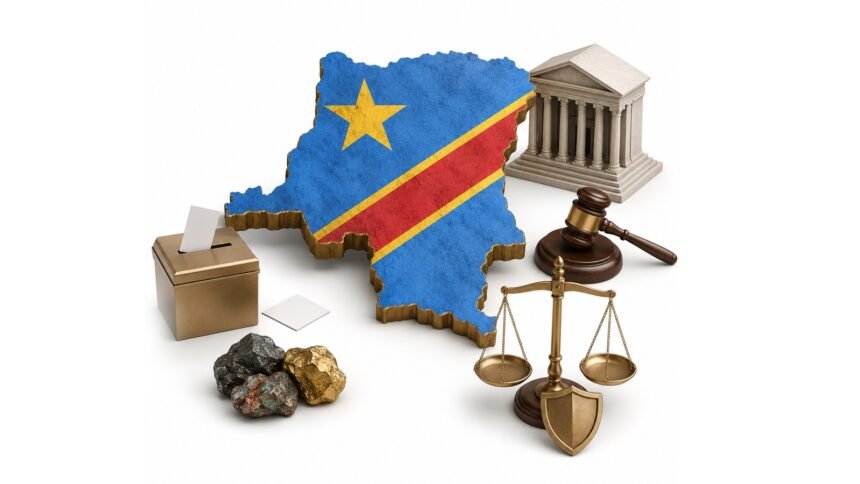
The contemporary political landscape in Kinshasa is characterized by deep polarization and an escalating legislative struggle that has fundamentally altered the republic’s institutional path. In a historic legislative action, the Senate of the Democratic Republic of Congo has formally adopted a sweeping constitutional amendment bill designed to restructure the nation’s supreme law. Under the stewardship of President Felix Tshisekedi, this controversial bill paves the way for a nationwide referendum on a completely new constitution. If signed into law and approved by referendum, the revised legal framework would allow Tshisekedi—who is currently serving his second and constitutionally mandated final term—to run for a third term in office, effectively resetting his executive tenure as if it were his first.
The mechanics of the parliamentary vote reveal absolute unanimity among participating legislators. Exactly eighty-nine senators took part in the legislative session, and all eighty-nine voted in favor of adopting the constitutional revision bill, while twenty senators chose not to participate. This sweeping senatorial endorsement follows an earlier approval by the National Assembly, the lower house of parliament, indicating a consolidated legislative push by the ruling coalition. However, opposition figures have expressed intense alarm regarding this institutional shift; Senator Salomon Kalonda Della Idi issued a direct statement warning that the implementation of this bill could permanently balkanize the country by destroying the fragile consensus that underpins national unity ahead of the next presidential election scheduled for 2028.
The History of Civil Wars
This profound constitutional re-engineering occurs alongside a volatile domestic security environment, where the central state continues to battle persistent insurgencies and armed conflicts across its eastern borderlands. For decades, irregular militias and foreign-backed rebel factions have exploited weak state presence to enforce parallel administrations over lucrative resource corridors, creating a state of perpetual displacement. Political analysts warn that tampering with executive term limits during an active internal conflict risks aggravating these existing regional fractures. By driving a deeper wedge between localized ethnic factions and the central capital, structural legislative revisions can be weaponized by rebel networks as a justification for armed resistance, further destabilizing the fragile peace frameworks designed to secure the nation’s territorial integrity.
Ebola & Health Status
The state’s capacity to handle complex internal crises is further challenged by recurring public health emergencies that create severe biosecurity vulnerabilities across rural provinces. The persistent re-emergence of high-consequence pathogens, such as the lethal Ebola virus, strains the country’s baseline medical infrastructure and demands significant administrative focus. When prolonged health containment campaigns consume resources, the state’s ability to maintain civic security and deliver basic welfare is significantly compromised. This governance gap allows irregular armed groups to strengthen their localized presence, demonstrating that biological emergencies and political instability operate in a destructive feedback loop that erodes the structural foundation of the republic.
Democratic Transition Struggles
The rapid acceleration of the constitutional revision bill has ignited intense democratic struggles, marked by violent civil unrest and aggressive law enforcement suppression in major urban centers. In the days leading up to the senatorial vote, massive popular protests erupted across Kinshasa as citizens and civil society groups rallied to defend the existing constitutional architecture. These demonstrations quickly turned violent when state security forces deployed tear gas and live ammunition to disperse crowds of demonstrators who retaliated by throwing rocks. During the chaos of the clampdown, prominent opposition leader Delly Sesanga was reportedly shot in the leg, highlighting a shrinking space for peaceful political dissent and revealing an extreme societal divide over the executive branch’s efforts to retain power.
DRC-US Deals As Political Capital
The internal political maneuvers within Kinshasa have also introduced complex variables into the nation’s international relations and strategic transatlantic deals. As the world’s premier producer of cobalt and a primary exporter of critical copper reserves, the country’s domestic stability is vital for global technology supply chains and international investment portfolios. Western partners, particularly the United States, have historically tied major economic and infrastructure development deals to explicit benchmarks concerning democratic transparency and adherence to constitutional term limits. The current push to alter the constitution risks alienating foreign security and trade partners, forcing international markets to evaluate whether the state remains a predictable environment for high-value industrial capital injections.
Economic Outlook
The aggregate economic outlook for the republic remains deeply precarious, caught between immense natural resource wealth and severe macroeconomic instability. While corporate mining enclaves continue to generate substantial export revenues, the broader domestic economy is restricted by high inflation, a volatile currency, and minimal public infrastructure investment. The current political crisis and accompanying urban unrest threaten to worsen these fiscal strains by discouraging long-term foreign direct investment and increasing sovereign risk premiums. Without a stable, transparent governance framework, the state cannot effectively leverage its capital to build diversified manufacturing hubs or create sustainable employment, locking large segments of the population into a cycle of economic exclusion.
The Way Forward
The path forward for the Democratic Republic of Congo requires an immediate transition away from executive consolidation toward a sustainable model of institutional transparency and genuine civic dialogue. Restoring public trust and securing long-term democratic stability depends on the state executive respecting the foundational spirit of constitutional term limits and ensuring that any proposed legal adjustments undergo open, uncoerced public review. Furthermore, the central government must prioritize stabilizing its conflict-affected provinces, shifting state capacity away from political survival toward building robust, non-corrupt judiciaries and secure administrative infrastructures. Success will ultimately be measured by the country’s capacity to conduct free, fair, and inclusive elections in 2028, ensuring a peaceful transition of power and a self-determining, prosperous future for all its citizens.