





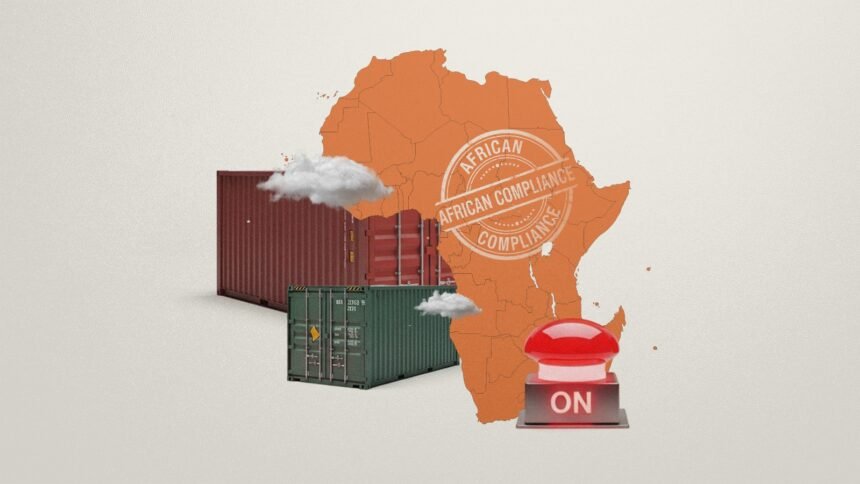
Banking and financial experts are calling on African nations to create their own sanctions and compliance systems to better protect its financial markets, reduce vulnerability to foreign pressure, and strengthen the stability of its entire economic ecosystem.
Experts noted that African banks currently operate under a patchwork of global and domestic sanctions, from the United Nations to the United States and European Union, while also navigating local regulatory requirements.
This fragmented system, they say, creates uncertainty for legitimate African businesses and hinders the smooth flow of trade across the continent, during the African Export-Import Bank (Afreximbank) Compliance Forum (ACF) in Kigali, on Wednesday, November 12.
“In practice, banks often receive automated alerts flagging transactions as risky because they match global or domestic sanctions lists. In many cases, these alerts affect legitimate African trade deals, including essential imports such as food and medicine,” said Caroline Ngigi, Global Head of Compliance and Financial Crime Risk for Transaction Banking in Africa at Standard Chartered Bank.
Compliance is not about stopping business, it is about conducting business safely. The challenge is determining whether an alert reflects real risk or just the limitations of a global system not tailored for Africa.”
Officials explained that banks currently differentiate between global and local sanctions, as well as between cross-border and domestic transactions, before deciding how to handle each cross border transaction. Human oversight remains crucial, particularly in trade corridors involving multiple countries.
Developing African-led compliance standards would harmonise processes across borders, providing clarity for banks and businesses alike. A unified regional approach would also allow financial institutions to screen transactions efficiently while protecting legitimate trade.
Peter Kunz, the Head of Global Financial Crime Steering atCommerzbank AG, a European bank, emphasised the importance of understanding client relationships when navigating sanctions.
“If a German client is trading with an African partner who also deals with a third sanctioned country, we first assess the relationship, how long has it existed, is there a history of legitimate trade, or are there indications the arrangement might be used to circumvent sanctions? This level of understanding cannot be achieved by technology alone, it requires human engagement and clear regional rules.”
“Artificial intelligence (AI) and machine learning are increasingly used to flag high-risk transactions. These tools can process billions of transactions and detect potential violations faster than humans, but they are not foolproof. Errors can inadvertently block legitimate trade, particularly in sectors critical to food security and healthcare.”
Kunz also said that AI can provide a big data net, but it still needs guidance. “We augment automated systems with human intervention to ensure that alerts are properly investigated and that legitimate trade is not disrupted.”
Veli Kaplan, the Head of Risk and Compliance at Numisma Bank, U.S based bank, argues that African-led sanctions and compliance standards would not only protect financial institutions but also strengthen the continent’s broader economic and security interests. By managing its own compliance system, Africa could reduce illicit financial flows, enhance cross-border trade, and accelerate economic integration.
“Without clarity and certainty within the African region, ease of trade under AfCFTA will remain limited. A regional compliance framework would complement global standards while protecting the integrity of markets and supporting economic growth,” he said.
Kudakwashe Matereke, the Director of Regional Operations for East Africa at Afreximbank, emphasised the urgency for Africa to take charge of its own compliance and trade frameworks.
“We are calling you to leverage AI and digital innovation and not perceive them as threats, but as enablers of integrity and growth. Let us continue to build a strong compliance culture rooted in trust, accountability, and collaboration. On practical steps for advancing trade, closer engagement between technology providers, regulators, and businesses are essential,” he said.
Experts insist that homegrown compliance and sanctions are essential for sustainable trade, financial stability, and national security. By pairing technology with regional standards, the continent can ensure that African businesses thrive while protecting the integrity of its financial system.