






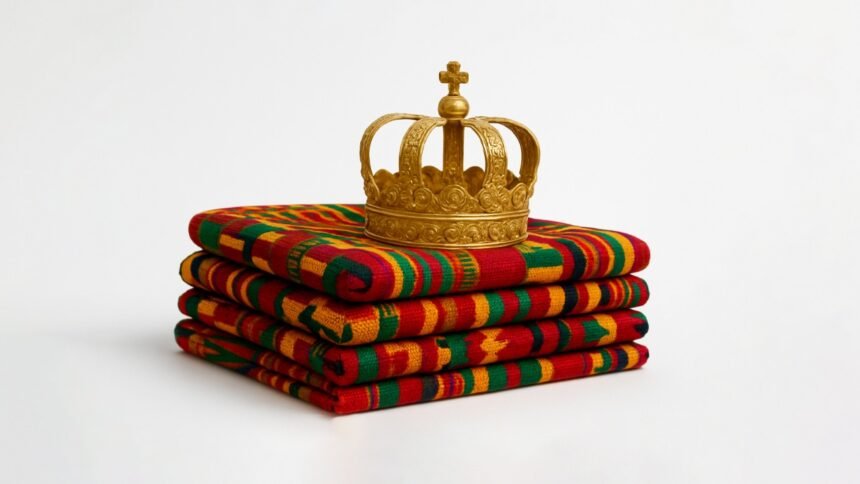
Kente cloth emerges as a radiant symbol of West African artistry and endurance, its meticulously woven patterns encapsulating centuries of Ghanaian wisdom, communal values, and creative expression. Originating from the skilled hands of Asante weavers in Ghana’s Ashanti Region, this textile has journeyed far beyond its homeland, becoming a beacon of Pan-African unity that connects diverse peoples through shared narratives of heritage and resilience. Villages like Bonwire, renowned as the epicenter of kente production, continue to hum with the rhythmic clack of looms, where artisans craft vibrant strips that speak volumes in color and design. In a world increasingly intertwined by globalization, kente’s evolution highlights positive cultural exchanges —from African American celebrations of ancestry to international fashion runways —while Ghanaian guardians safeguard its authenticity. This narrative explores kente’s profound layers —from its historical roots in Akan societies to its role in fostering solidarity across the Black diaspora —emphasizing how this cloth weaves together threads of appreciation, innovation, and mutual respect into a tapestry that honors its origins while embracing global dialogues.
Ancestral Looms: Kente’s Deep Roots in Ghanaian and West African Heritage
The story of kente cloth begins in the lush landscapes of Ghana, where it first took shape among the Asante people of the Akan ethnic group during the 17th century. However, its techniques draw from even older West African weaving traditions. In villages such as Bonwire, located in the heart of the Ashanti Region, master weavers—often men organized into familial guilds—developed this craft under the patronage of local chiefs and kings, transforming simple threads into elaborate masterpieces and inspired by the natural world and ancient raffia cloths traded from neighboring regions like modern-day Côte d’Ivoire, early kente incorporated silk unraveled from imported European fabrics, blending local cotton with exotic materials to achieve a lustrous sheen that symbolized wealth and prestige.
The production process itself is a testament to communal ingenuity: artisans spin yarns by hand or foot-powered wheels, dye them using natural extracts from indigo plants, kola nuts, or tree barks for hues ranging from deep blues to fiery reds, and then weave narrow strips—typically four inches wide—on portable looms that allow for intricate geometric patterns. These strips are later sewn together to form larger cloths, a method that requires not only technical skill but also a deep understanding of symbolism. Each design carries meaning; for instance, the “Sika Fre Mogya” pattern, with its gold and red motifs, represents the idea that “money calls blood,” underscoring the importance of family ties and economic prosperity in Akan philosophy. Historically, kente was reserved for royalty and nobility within the Asante Empire, which flourished in the 18th and 19th centuries as a powerhouse controlling gold trade routes that linked West Africa to North African and European markets. Chiefs wore it during durbars—grand assemblies where the cloth’s folds and colors conveyed messages of authority, wisdom, and unity, often synchronized with rhythmic dances and drumbeats that echoed the region’s oral traditions.
This heritage extends beyond Ghana, influencing West African textile practices through migratory exchanges and trade networks along the Volta River and trans-Saharan paths. Similar weaving techniques appear in Ewe communities along Ghana’s coast and even in Togolese border areas, where patterns adapt to local folklore while maintaining the core emphasis on storytelling through fabric. Kente’s ancestral looms thus represent a broader West African ethos of innovation born from environmental adaptation—using available resources like wild silkworms and plant dyes—and social harmony, where the act of weaving fosters intergenerational knowledge transfer, with apprentices learning not just craft but life lessons in patience and collaboration. In this foundation, kente cloth stands as a living link to pre-colonial grandeur, reminding contemporary admirers of West Africa’s rich contributions to global artistry.
Symbolic Wefts: Kente’s Vibrant Place in Ghanaian Cultural Expressions
In modern Ghana, kente cloth remains an integral part of the fabric of daily life and national identity, symbolizing continuity amid change and serving as a canvas for cultural values such as hospitality, respect, and communal strength. Woven predominantly in rural workshops where families pass down secrets from generation to generation, the cloth’s creation process encourages social bonds, with weavers gathering to share stories. At the same time, their looms produce the distinctive clatter that fills the air in places like Bonwire. Here, patterns evolve subtly to reflect contemporary themes, such as environmental stewardship through eco-friendly dyes derived from sustainable sources, ensuring the tradition adapts to global concerns like climate resilience.
Kente graces a myriad of occasions, from joyous births, when infants are wrapped in soft, protective variants, to elaborate weddings, where couples don matching ensembles signifying lifelong partnership. At funerals, darker tones honor the deceased, facilitating communal mourning that strengthens village ties. Urban centers like Accra and Kumasi buzz with kente’s presence in bustling markets, where tailors innovate by blending it into Western-style clothing—think tailored suits with kente accents or flowing dresses that merge tradition with urban flair. National festivals, such as the Akwasidae celebrations in the Ashanti royal palace, showcase kente in its full splendor, with paramount chiefs parading in layers of the cloth that narrate historical epics through their designs, accompanied by adowa dances that mimic the weave’s rhythmic precision.
Ghana’s cultural institutions and government actively champion kente as a symbol of pride, incorporating it into school uniforms, tourism promotions, and even diplomatic attire to project a unified national image. This enduring role highlights kente’s capacity to bridge rural and urban divides, fostering a sense of belonging in a diverse society where Akan customs intermingle with those of Ga, Ewe, and other groups. By embodying principles of balance—seen in the harmonious interplay of colors and motifs—kente reinforces Ghanaian culture’s emphasis on ethical living and collective well-being, making it a dynamic force in preserving and evolving West African expressive traditions.
Diasporic Drapes: Kente’s Warm Embrace in African American Cultural Journeys
Kente cloth has found a profound second home in African American communities, where it serves as a powerful emblem of reclaimed heritage, empowerment, and connection to the African continent, evoking a sense of ancestral kinship that transcends geographical distances. Introduced through early 20th-century Pan-African movements and the intellectual fervor of the Harlem Renaissance, kente resonated with figures seeking to affirm Black identity amid historical dislocations. As British Ghanaian fashion journalist Daniel-Yaw Miller has observed, Ghana and its cultural artifacts, such as kente, hold a special place in the Black American imagination, serving as an accessible link to the “motherland” for those without direct familial ties.
In educational milestones, kente stoles have become cherished symbols at graduations in historically Black colleges and universities, such as Howard and Spelman, where students drape the cloth over their robes to celebrate not just personal achievements but communal triumphs over adversity. This practice draws from deeper rituals of recognition, mirroring Ghanaian customs of honoring accomplishments with textile gifts. Political and social spheres amplify kente’s presence; in the wake of 2020’s widespread protests against racial injustice, U.S. leaders like Representative Nancy Pelosi and Senator Chuck Schumer wore kente-inspired accessories during solidarity events, underscoring the cloth’s role in bridging empathy and action. Similarly, New York City Mayor Eric Adams has been seen sporting kente-patterned socks in public appearances, blending casual style with cultural homage.
Artistic expressions further illustrate this embrace: poet Amanda Gorman’s 2021 Vogue cover featured her in a kente-inspired dress designed by Virgil Abloh for Louis Vuitton. This fusion celebrated Black creativity on a global stage. Visits to Ghana, often called “homecomings,” culminate in ceremonies where African Americans, like community organizers, are draped in authentic kente, forging tangible bonds through shared rituals. These drapes facilitate healing across generations, with elders recounting migration histories. At the same time, younger innovators incorporate kente into streetwear, jewelry, and digital art, ensuring the cloth’s relevance in evolving narratives of identity. Through such journeys, kente nurtures a diasporic warmth, promoting mutual understanding and pride in shared Black experiences.
Globalized Geometries: Kente’s Expansion and Protections in Worldwide Exchanges
Globalization has elevated kente cloth to international prominence, transforming it into a versatile icon that inspires fashion, decor, and cultural dialogues while prompting thoughtful measures to safeguard its Ghanaian authenticity. From European catwalks to Asian marketplaces, kente’s geometric patterns appear in diverse products—tablecloths, hats, T-shirts, and even footwear—demonstrating its adaptability to global tastes. High-profile moments underscore this reach: during a 2023 visit to Ghana, former U.S. Second Gentleman Doug Emhoff was honored with a kente draping. This diplomatic gesture symbolized cross-cultural respect and alliance.
This expansion fosters positive exchanges, as designers worldwide collaborate with Ghanaian artisans to create hybrid pieces that blend kente with local motifs, enriching global aesthetics while channeling economic benefits back to weavers. However, the rise of mass-produced versions from regions like China has spurred innovation in protections; Ghana recently secured geographical indication status for kente through the World Intellectual Property Organization, ensuring that only cloths woven in the country—using traditional methods in places like Bonwire—earn the authentic label. This framework, akin to those for French champagne, empowers local communities by establishing quality standards and fair trade practices, allowing artisans to thrive in ethical marketplaces.
Sustainable initiatives further enhance this global weave, with weavers experimenting with organic cottons and recycled dyes to meet eco-conscious demands. In diaspora hubs like London, Toronto, and Paris, pop-up shops and online platforms facilitate direct sales, where consumers learn about kente’s stories, turning purchases into acts of cultural support. Through these geometries, kente navigates globalization as a bridge, promoting equitable commerce that celebrates its West African origins while inviting worldwide participation in its vibrant legacy.
Pan-African Patterns: Kente as a Unifying Force in Black Cultural Solidarity
Kente cloth patterns a profound Pan-African vision, where its designs symbolize the interconnected struggles and aspirations of Black peoples across continents, fostering solidarity through shared symbols of resilience and creativity. At continental gatherings such as African Union summits, kente elements feature in discussions on cultural heritage, advocating policies that preserve African arts as tools for unity and development. This textile inspires cross-border collaborations, such as workshops where Ghanaian weavers share techniques with Senegalese or Nigerian artisans, blending kente’s geometries with wax prints or adire cloths to create new expressions of African innovation.
For African Americans and other diaspora groups, kente acts as a unifying thread in festivals and heritage events, where joint celebrations—complete with weaving demonstrations and storytelling sessions—build bridges of understanding. These patterns extend to educational programs, where kente-motif curricula teach about empire histories, the legacies of the slave trade, and modern migrations, empowering youth to view their identities as part of a larger tapestry. In addressing contemporary challenges like social equity, kente’s motifs remind participants of ancestral strength, encouraging collective action rooted in mutual respect. Thus, kente weaves Pan-African patterns that affirm Black solidarity, turning individual threads into a robust fabric of innovation and shared progress.
Comparative Colors: Kente in the Spectrum of West African and Diasporic Textiles
When placed alongside other West African textiles, kente’s jewel-toned brilliance and structured symbolism shine distinctly while revealing harmonies that underscore regional kinship. Compared to Mali’s bogolanfini mud-cloths, with their earthy narratives of rural life, kente’s silk-infused vibrancy evokes urban royalty. Yet, both use abstraction to convey ethics such as community and fertility. In Nigeria, Yoruba aso-oke shares kente’s loom techniques and proverbial depth, though its metallic threads add a festive gleam absent in kente’s organic palette, highlighting migratory influences along trade routes.
Diasporically, kente parallels Caribbean madras in anchoring identity amid colonial legacies, but its disciplined strips offer a narrative precision suited to Akan hierarchies. Globally, it contrasts Scottish tartans’ rigid clan affiliations with their fluid adaptations, enabling broader incorporation that enriches cultural dialogues. These comparative colors position kente as a pivotal hue in Africa’s textile spectrum, illuminating West African creativity while fostering diasporic connections through shared visual languages.
Woven Horizons: Kente’s Bright Future in Pan-African and Global Unity
Looking ahead, kente cloth promises a horizon woven with opportunity, where its legacy inspires sustainable growth, cultural dialogues, and unified visions for Black communities worldwide. In Ghana’s weaving enclaves, youth apprenticeships blend tradition with technology, like digital pattern archives that preserve designs for future generations. Diaspora-led initiatives —from fashion collectives to policy advocacy —ensure kente’s voice in global conversations on heritage rights, turning protections into platforms for empowerment.
Pan-African dreams materialize through kente’s threads, as collaborative projects across Africa and its diaspora—such as joint exhibitions or eco-textile ventures—build economic resilience and cultural pride. In embracing this cloth’s vibrant horizons, societies reaffirm that true unity arises from appreciative exchanges, draping the future in a harmonious weave of innovation, solidarity, and endless potential.


