




Shallow Pits Before the Rains
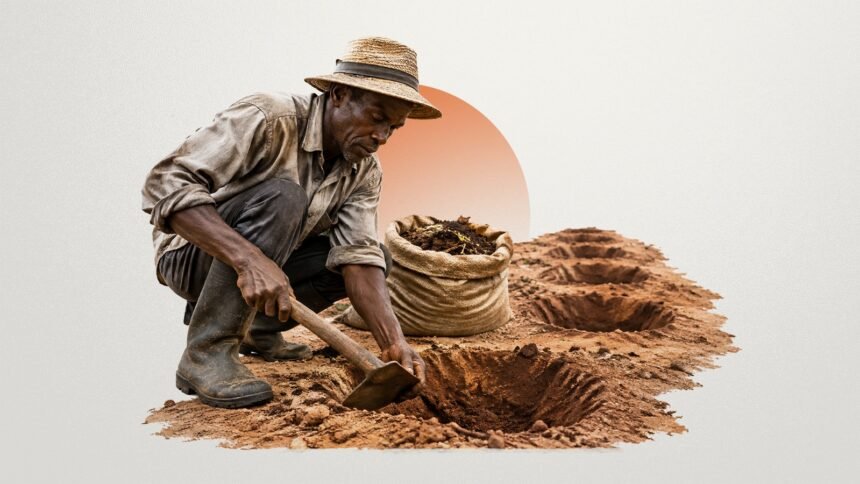
Under a hard sun in Nyanga, east of Harare, Dudzai Matsapa is not plowing his land. He is digging small, shallow pits across the field. Later he will fill them with organic manure and wait for the rains. The method, sometimes called the pothole technique, catches water where a plant will actually grow, concentrates organic matter and, in dry country, can make the difference between a harvest and a bare field. Matsapa, a father of six, has used it since 2021. He is preparing, he said, for the El Niño now gathering in the Pacific, which is expected to bring drought and extreme heat across southern Africa.
“Instead of plowing the entire land, I only disrupt the specific spot where plants will grow,” he said at his farm. The pits are part of a wider set of practices grouped under agroecology: farming that tries to produce food while protecting the soil, saving water and encouraging a greater variety of plants and insects.
What the Farmers Are Already Doing
Since 2021, Matsapa has combined zero tillage, which disturbs the soil as little as possible, with drought-resistant crops: short-season maize, groundnuts, sunflower, sorghum and millet. He makes his own manure, mixing cow dung and dried grass in a pit and leaving it to decompose for several weeks.
Netsai Dodzo, who farms in the same village, has also dug potholes. She grows drought-resistant crops and plants more than one species in the same field in a single season, a practice known as intercropping. Grown together, certain crops can keep pests down, hold the soil against erosion, slow the loss of moisture and improve the ground itself. She makes her own pest control from garlic, chili, and other plants, using the mixture to disrupt insect feeding and breeding instead of buying chemical pesticides.
Nyanga, in Zimbabwe’s eastern highlands, lives largely on tourism. In the rural areas around it, people live on what they grow. Climate change is already testing that living.
A Warning From the Pacific
In September, the World Meteorological Organization said the El Niño pattern was strengthening rapidly in the Pacific, raising the prospect of months of extreme heat, floods and drought around the world. Forecasters expect it to peak around late 2026 and to continue until at least February 2027. The United Nations Food and Agriculture Organization has stressed the need to act early to protect livelihoods. A report published last month by the charity ActionAid found that agroecology can produce yields comparable to, or better than, industrial farming, including an average 41 percent rise in cereal yields when legumes are rotated with cereals across sub-Saharan Africa.
The forecast is not a distant abstraction for people who plant with the rains. It is a calendar. If the dry months arrive as predicted, the work being done now in Nyanga and in Zambia’s Western Province is the only preparation many small farmers can afford.
Kafwamba Maize and a Harvest That Still Feeds the House
Nswau Kufanga farms in the village of Liboma, in Sesheke, in Zambia’s Western Province. She grows a local maize variety called kafwamba, which she described as drought-resistant and quick to mature. “The type of maize that I grow is an early maturity,” said Kufanga, a mother of three. “I can still get a better harvest during drought because it does not need much water and it matures in a few months compared to other varieties that need more time.” She also grows cassava, groundnuts, millet and sorghum, intercrops her fields, and uses kitchen ash against pests. In the dry season of 2025, she had surplus maize and sold it to her neighbors.
Namuchana Mubita, another Sesheke farmer, said that when the area received good rains, as it did early this year, agroecology gave him up to 2.8 tonnes of maize. In a previous drought, his harvest was still slightly above a tonne, enough to feed his four children until the next season. He and Kufanga have watched neighbors who farm conventionally see their crops wither.
Benjamin Mtembo of Zambia’s Ministry of Agriculture said harvests in the 14 villages under his watch in Sesheke point the same way: in a drought, farmers who use agroecology do better. Matsapa and Dodzo have seen their own harvests fall by about half in dry years, and even then they say they can still feed their families.
Recognition Is Not the Same as Money
Faides TembaTemba, the executive director of ActionAid Zambia, said the country needs to move from acknowledging sustainable agriculture in policy to financing agroecology as a national priority. “Zambia must integrate agroecology into climate and development plans,” she said. The gap she describes is familiar across the region. Ministries praise climate-smart methods, visiting officials admire a compost pit, and the budget still runs toward fertilizer and maize seed that need more water than the coming season may provide.
For Matsapa, the political argument can wait. “I have already done my part. Now, I am just waiting,” he said. The pits are dug. The manure is ready. What he cannot do himself is make the rain arrive on time.
Who Is Prepared, and Who Is Left to the Season
The structural question raised by these fields is not whether small farmers in Nyanga and Sesheke are inventive. They are. It is whether governments in southern Africa will treat that inventiveness as the core of a food system or as a charming exception. El Niño will not pause for a policy paper. If the dry months are as hard as the weather agencies now expect, the households that dug pits, saved local seed and mixed their own pest control will be better placed than those that were sold a single hybrid and a bag of fertilizer. That advantage will remain private and uneven unless ministries put money behind the methods they already praise. The farmers have started without waiting. The test for Harare and Lusaka is whether they will meet them before the soil hardens.