




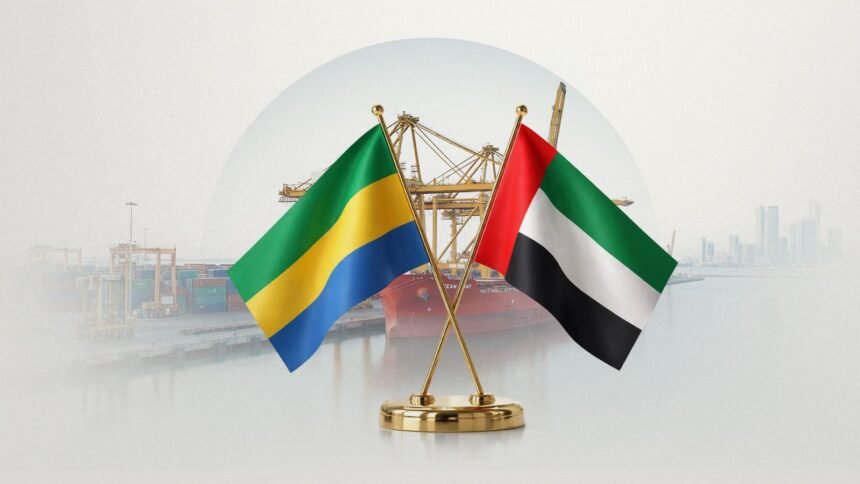
In a move poised to reshape economic ties between the Gulf and Central Africa, the United Arab Emirates has signed a Comprehensive Economic Partnership Agreement (CEPA) with Gabon, marking a new chapter in cross‑continental trade and investment. The agreement, concluded in Abu Dhabi and witnessed by UAE President Sheikh Mohamed bin Zayed Al Nahyan and Gabon’s President Brice Clotaire Oligui Nguema, signals a shared commitment to deeper economic integration, diversification beyond oil, and long‑term sustainable developmen
Framed against the African Union’s Agenda 2063, the continent’s blueprint for a prosperous and self‑reliant future, the CEPA echoes wider aspirations for African economic integration by opening markets, strengthening value chains, and anchoring partnerships in mutually beneficial growth rather than extractive trade patterns.
For Gabon, it comes at a pivotal moment in its economic transformation; for the UAE, it consolidates its role as one of Africa’s most influential external investors and a gateway for African exports to global markets.
At its core, the UAE–Gabon CEPA aims to reduce or eliminate tariffs, dismantle non‑tariff barriers, facilitate investment flows, and deepen private‑sector collaboration, with a strong emphasis on small and medium‑sized enterprises. Priority sectors include agriculture, logistics, renewable energy, mining, food production, and services, areas that are both central to Gabon’s diversification plans and aligned with the UAE’s push into non‑oil industries.
In 2025, non‑oil trade between the two countries reached about 320.7 million US dollars, more than double the value recorded in 2021, underscoring the momentum the CEPA is designed to accelerate. Gabon’s main non‑oil exports to the UAE currently include manganese, rubber, and timber, reflecting its rich natural‑resource base and the potential to move further up the value chain.
A suite of complementary initiatives accompanies the agreement. Both sides have agreed to establish a joint UAE–Gabon Business Council to drive commercial linkages and identify new co-investment opportunities.
At the same time, a memorandum of understanding between the UAE’s General Women’s Union and Gabon’s Ministry of Social Affairs launches a women’s empowerment programme focused on entrepreneurship and leadership in business. Additional cooperation accords in areas such as defence, social development, and capacity building signal that the CEPA is part of a broader strategic partnership rather than a narrow trade deal.
For Gabon, the timing is significant. The country’s gross domestic product is estimated at US dollars in 2024, with growth projected at around 3 percent in 2025. Its government has embarked on a 5.5‑billion‑dollar accelerated transformation plan to diversify away from oil.
Raw materials, including oil and petroleum products, manganese, timber, and agricultural commodities such as cocoa, coffee, palm oil, and rubber, still account for more than 90 percent of its exports, leaving the economy vulnerable to price swings and external shocks.
By improving market access, integrating supply chains, and encouraging investment in processing, logistics, and services, the CEPA is intended to help shift Gabon from being primarily a supplier of raw materials to a hub for higher‑value activity.
Officials in Abu Dhabi cast the deal as part of a wider African strategy. The UAE’s non‑oil trade with African nations reached about 112 billion US dollars in 2024, up roughly 34 percent from the previous year. The country has emerged as the largest source of new foreign direct investment in Africa, committing more than 110 billion US dollars to projects across the continent since 2019.
Much of this capital has flowed into renewable energy, ports, logistics, and industrial zones, as Emirati companies seek long‑term partnerships in infrastructure and green growth. The CEPA with Gabon, UAE officials say, will deepen the UAE’s footprint in West and Central Africa, connecting Emirati investors to a region they view as having strong potential for sustainable, diversified expansion.
Beyond bilateral trade figures, the agreement has symbolic weight for Africa’s broader development agenda. By prioritizing sectors such as renewable energy, sustainable mining, and value‑added food production, the CEPA dovetails with Agenda 2063 goals of structural transformation, green industrialization, and resilient infrastructure.
It also reflects a shift in how some African governments approach partnerships with Gulf states: not merely as sources of capital, but as collaborators in building integrated supply chains, local jobs, and technology transfer.
Analysts say the real test will lie in implementation. Realizing the CEPA’s potential will require transparent regulation, predictable dispute‑resolution mechanisms, and safeguards to ensure that investment supports local development, environmental standards, and inclusive growth.
For Gabon, that means aligning CEPA‑driven projects with domestic reforms on governance, the business climate, and diversification; for the UAE, it means ensuring that its growing African portfolio mitigates concerns around labour practices, environmental impact, and illicit financial flows that have accompanied some investments elsewhere on the continent.
Still, the deal arrives at a moment when both sides are looking to the future. As global economic dynamics shift and traditional trade routes reconfigure, agreements such as the UAE–Gabon CEPA underscore the UAE’s ambition to position itself as a bridge between emerging markets, linking African producers to Middle Eastern, Asian, and European consumers.
For Gabon, the partnership offers an opportunity to leverage that connectivity to finance its diversification agenda, reduce its dependence on hydrocarbons, and build more resilient, climate‑aligned growth.
In that sense, the CEPA is more than a legal instrument; it is a statement of intent regarding the economic relationships Africa and the Gulf seek in the coming decades. If its promises are realized, the agreement could serve as a model for future partnerships, advancing not only bilateral prosperity but also Africa’s long‑term aspirations for unity, self‑determination, and economic sovereignty.