





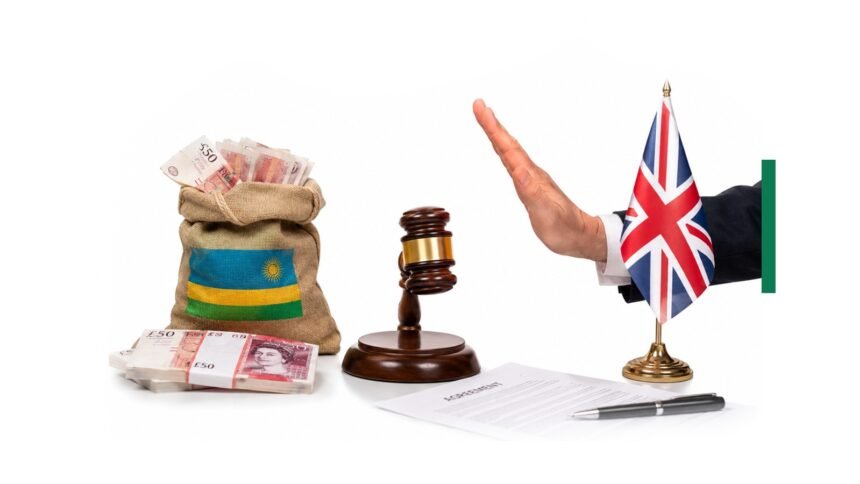
The United Kingdom has won a legal challenge brought by Rwanda over the cancellation of a controversial asylum partnership, with an international arbitration tribunal ruling on June 1 that Britain is not required to make additional payments sought by Kigali.
Rwanda had sought more than £130 million from the UK, arguing that London breached the terms of the migration agreement after the Prime Minister Keir Starmer’s government abandoned the scheme in 2024.
The ruling, delivered by an international tribunal sitting under the Permanent Court of Arbitration in The Hague, marks the latest chapter in a program that generated intense political and legal debate in Britain.
The agreement, signed under the previous Conservative government, was designed to deter irregular migration across the English Channel by relocating certain asylum seekers to Rwanda for processing and potential resettlement.
During proceedings, UK lawyers argued that the change of government and Labor’s decision to end the policy made further payments unjustifiable. They maintained that Britain had acted within the terms of the agreement and that Rwanda was not entitled to the compensation it was seeking.
In a statement following the ruling, the Rwandan government said it respected the tribunal’s decision and considered the matter closed.
However, Kigali noted that one member of the tribunal, Professor Mohamed Abdel Wahab, issued a dissenting and separate opinion, highlighting that the legal questions before the panel were subject to differing interpretations.
Rwanda had previously argued that it invested substantial resources in preparing to implement the partnership and that Britain failed to meet its obligations after deciding to abandon the arrangement.
Speaking during the hearings, Rwanda’s Minister of Justice and Attorney General, Emmanuel Ugirashebuja, said the country incurred high costs in anticipation of receiving asylum seekers. He also criticized the UK government for not formally informing Rwanda before announcing the scheme’s cancellation.
The Rwanda plan was first unveiled in 2022 by then-prime minister Boris Johnson and later championed by his successor, Rishi Sunak. The policy proposed transferring some asylum seekers who arrived in the UK through irregular routes to Rwanda, where their asylum claims would be processed.
Those granted refugee status would remain in Rwanda rather than return to Britain.
Despite considerable political backing from the Conservative government, the scheme faced repeated legal obstacles. The first planned deportation flight in 2022 was halted at the last minute following intervention by the European Court of Human Rights, while subsequent court challenges delayed implementation.
No asylum seekers were ultimately relocated to Rwanda under the policy.
Following Labor’s 2024 election victory, Starmer scrapped the program, describing it as “dead and buried.” The government instead introduced a voluntary relocation initiative under which unsuccessful asylum applicants could receive financial support to move to Rwanda. Only four individuals participated in the program.
Reacting to the tribunal’s decision, the UK government said it had successfully defended its position and remained focused on broader immigration reforms aimed at reducing irregular migration and increasing removals of those without a legal right to remain in the country.
The ruling also reignited political debate in Britain. Shadow Home Secretary Chris Philp welcomed the outcome but criticized Labor for abandoning the Rwanda policy, arguing that the decision had contributed to rising migration pressures.
Meanwhile, refugee advocacy groups maintained their opposition to the scheme. Imran Hussain, Director of External Affairs at the Refugee Council, said resources would be better spent improving the efficiency of Britain’s asylum system and ensuring timely decisions on applications.
The tribunal’s decision brings to a close a legal dispute stemming from one of the most contentious migration policies in recent UK political history.