




From Hospital Software to Public Health
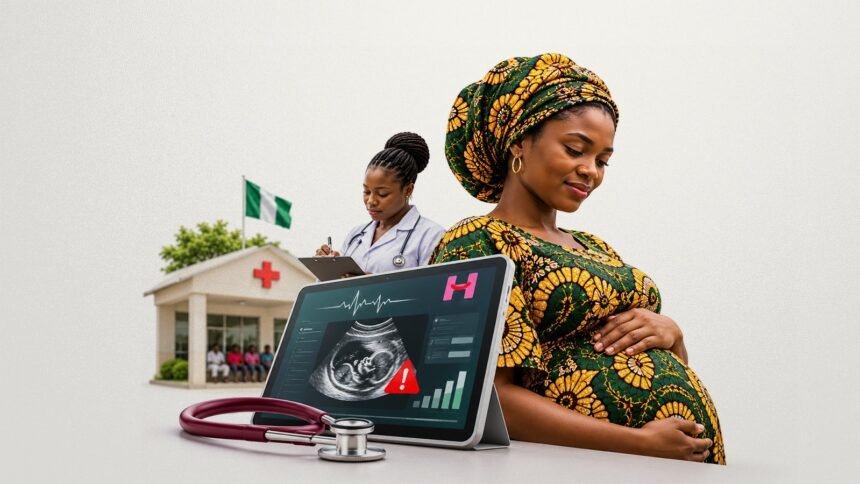
A mother’s life is often decided long before the delivery room, in the antenatal visit where a warning sign is either noticed or missed. That is the moment a Nigerian health technology company now wants to change at scale. Helium Health has secured a grant of ₦3.4 billion, about $2.5 million, from Google.org, the philanthropic arm of Google, to deploy artificial intelligence tools that help health workers identify pregnancy risks earlier and connect women to the right care.
The money will fund HeliumMum, the company’s maternal health program, which aims to reach 1.9 million pregnant women over three years. It will start in Lagos, the program’s operational base, before expanding to Delta, Kano and Oyo states. The company says it hopes the effort will contribute to a 30 percent reduction in maternal mortality where it operates. Lagos State Governor Babajide Sanwo-Olu received a joint Google and Helium Health delegation at an executive briefing introducing the rollout.
A Heavy Burden
Nigeria carries one of the heaviest maternal mortality burdens in the world. A figure of nearly 10 percent of global maternal deaths has been cited for the country around this launch; estimates of Nigeria’s share vary by source and year, but on any measure the toll is very large for a single country. Many of these deaths follow complications, such as high blood pressure or bleeding, that can often be managed if they are spotted early and the woman reaches a facility able to treat her.
That is the gap the program is designed to address. Community health workers and staff at primary health centers frequently work without the clinical support needed to recognize a high-risk pregnancy in time. If digital tools can flag those risks and route women to the right provider sooner, they can save lives without building new hospitals.
How the Tools Are Meant to Work
The grant will finance AI-powered clinical decision-support tools within primary maternal healthcare services. The system combines AI-driven risk detection with electronic medical records and the decision-support tools that health providers already use, so that health workers can identify potential complications earlier and refer expectant mothers to appropriate care. Helium Health will also receive technical help from Google engineers and AI product experts through a dedicated Google.org Accelerator.
Helium Health was the only Nigerian organization among 15 recipients of Google.org’s $30 million Impact Challenge: AI for Government Innovation, announced in September 2026, which supports organizations working with governments to use AI to improve public services. “AI holds incredible potential to transform public services, but there is often a gap between promise and practice,” said Maggie Johnson, Global Head of Google.org.
The company says it has already reached more than 3.5 million women through its maternal health initiatives. “Ultimately, we want to ensure that no woman loses her life simply because she didn’t know she was at risk or couldn’t access the care she needed,” said Dr Shona Oluwatola, Helium Health’s head of public health.
A Company in Transition
Founded in 2014 by Adegoke Olubusi, Dimeji Sofowora and Tito Ovia, Helium Health began by building electronic medical records and hospital management software to help providers digitize patient records, then expanded into billing, practice management and healthcare financing. In June 2023, it raised $30 million in a Series B round led by AXA IM Alts, taking its disclosed funding at the time to about $40 million.
The grant arrives three months after a leadership change. Olubusi stepped down as chief executive after nearly a decade and handed over to Sofowora in August; Ovia had left in 2022, leaving Sofowora as the last founder actively leading the business. “Google.org’s support allows us to build on that foundation, scale what works, and reach even more women with quality maternal healthcare,” Sofowora said.
Healthtech Funding Has Dried Up
The grant also stands out against a harsh funding climate. According to one industry tally, investment in Nigerian healthtech peaked at nearly $55 million in 2023, then fell to about $18 million in 2024 and roughly $3 million in 2025, a decline attributed to the high cost of building healthcare infrastructure and the slow adoption of digital tools. In that environment, grant money tied to public-health delivery may become as important to the sector as venture capital.
That shift has consequences. Grants can push companies towards services that governments and communities need, such as maternal care in primary health centers, rather than products aimed at paying urban customers. But they also raise questions about long-term financing once a three-year program ends, and about who owns and governs the data collected from millions of pregnant women.
Whose Tools, Whose Health System
Nigeria’s health self-reliance will not be built by foreign philanthropy, however welcome. The test of HeliumMum will be whether state governments in Lagos, Delta, Kano and Oyo fold the tools into their own primary health systems, train and pay the health workers who use them, and keep control of the data and the decisions. If that happens, a Nigerian company using a global grant could leave behind public infrastructure that outlasts the grant. If not, the women it reaches will be helped for three years and then left where they started.