





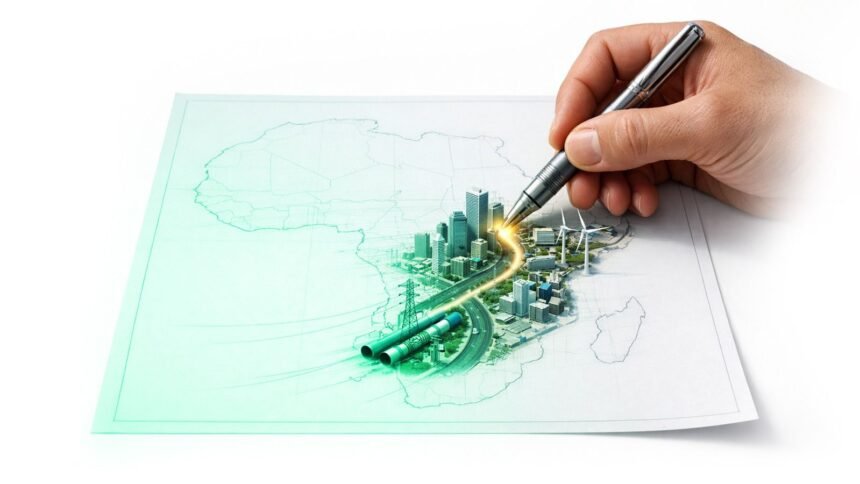
Africa is again gathering to take stock of its development journey, but this year’s Africa Regional Forum on Sustainable Development in Addis Ababa carries a different kind of urgency.
From April 28 to 30, ministers, mayors, civil society leaders, and business executives are scheduled to meet at the United Nations Conference Centre in the Ethiopian capital to review progress on the Sustainable Development Goals and agree on how to accelerate action.
With fewer than five years remaining before 2030, United Nations officials say the continent is not on track to meet many of its targets, particularly in water, energy, and urban services.
On paper, the agenda looks clinical. In alignment with this year’s High‑level Political Forum in New York, the Addis Ababa meeting will conduct an in‑depth review of five goals: clean water and sanitation (Goal 6), affordable and clean energy (Goal 7), industry, innovation and infrastructure (Goal 9), sustainable cities and communities (Goal 11) and partnerships for the Goals (Goal 17).
The forum will convene under the theme ‘Turning the Tide: Transformative and Coordinated Actions for the 2030 Agenda and Agenda 2063,’ a formulation that its organizers use to signal that incremental, business‑as‑usual efforts are no longer sufficient.
Behind the technical language lie concrete questions: whether households receive safe drinking water year‑round, whether health clinics can keep vaccines cold during blackouts, and whether young technicians can find decent work in emerging green industries rather than seeking opportunity abroad.
The meeting will unfold against the backdrop of another, distinctly African framework: the African Union’s Agenda 2063, a 50‑year blueprint adopted in 2013 that envisions “an integrated, prosperous and peaceful Africa, driven by its own citizens.”
The Africa Regional Forum is one of the main platforms where the 2030 Agenda and Agenda 2063 are reviewed together, with recent UN and AU documents describing them as “mutually reinforcing” road maps for sustainable development on the continent.
The question running through this year’s session is whether those twin agendas can still deliver amid what officials describe as a convergence of climate shocks, debt pressures, and social inequalities.
Regional Context and Political Stakes
The Africa Regional Forum on Sustainable Development was created to provide African countries with a space to assess the implementation of the global goals and to prepare common inputs to the High‑level Political Forum.
The twelfth session, known as ARFSD‑12, arrives at the midpoint of the 2030 Agenda, a milestone that United Nations reports have highlighted “delivery gaps” in many developing regions, including Africa.
According to a joint analysis on the 2030 Agenda and “the Africa we want,” external public debt has increased significantly in many African countries over the past decade, narrowing fiscal room for long‑term investments in infrastructure and social services.
The decision to focus this year’s review on water, energy, infrastructure, cities, and partnerships mirrors the global cycle but also reflects concerns voiced by African policymakers and experts. In several countries, national statistics show gradual improvements in access to “basic” drinking water and electricity.
Yet, utilities struggle with aging networks, high losses, and limited financing for climate‑resilient upgrades. Rapid urbanization magnifies those challenges.
The African Development Bank has estimated that Africa’s cities could roughly double in size by 2050, adding hundreds of millions of new residents. That growth creates economic opportunities but also strains housing, transport, and basic services.
Agenda 2063 links these issues directly to structural transformation. The framework calls for inclusive growth, industrialization, regional value chains, and modern infrastructure networks, and it has been mapped in detail to the Sustainable Development Goals. Progress on the five goals under review in Addis Ababa will help determine whether the continent can advance toward that long‑term vision while also meeting nearer‑term 2030 targets.
Human Stories and Real‑World Examples
In drought‑prone parts of the Sahel and the Horn of Africa, resilience is not discussed in terms of Goal 6 or Goal 13. It is measured by whether a borehole runs dry before the end of the dry season and by how many livestock a family must sell when rains fail.
Local officials in such areas have reported that more frequent and severe climate‑related shocks are eroding infrastructure and forcing them into a constant cycle of emergency response, even as they work to expand access to safe water and sanitation.
Urban residents face a different, but intertwined, set of pressures. In fast‑growing neighborhoods on the edges of cities like Lagos or Nairobi, people often build homes faster than pipes and power lines can follow. Many rely on informal water vendors and improvised electrical connections, leaving them vulnerable to price spikes, outages, and health risks.
For these communities, the notion of “sustainable cities” is not abstract; it plays out in whether floodwaters block the route to work, whether waste is collected or burned nearby, and whether a local clinic has electricity during evening hours.
Energy access illustrates both progress and unfinished business. Off‑grid solar companies, often backed by public‑private partnerships, have brought lighting and phone charging to millions of people who were previously unserved by national grids.
Yet small and medium‑sized enterprises, from welders to food processors, still frequently cite high power costs and unreliable supply as barriers to growth. These experiences are likely to shape debates in Addis Ababa about how to balance investment in grid expansions, large‑scale renewables, and decentralized solutions.
Policy, Debate, and Expert Views
Underneath these local realities are policy debates that have sharpened in recent years. Some African leaders have argued that the continent should retain “policy space” to use natural gas as a transition fuel, particularly for industry and power generation, even as it scales up renewable energy.
Climate advocates and some development partners warn that new fossil fuel investments could become stranded assets, making it harder to meet global temperature goals, and urge a more rapid shift toward clean energy systems. Officials involved in preparing ARFSD‑12 say they expect energy choices and their reflection in Goal 7 to feature prominently in the forum’s discussions.
Financing is another central fault line. The “2030 Agenda for Sustainable Development: The Africa We Want” analysis calls for a substantial increase in SDG‑aligned investment, including an “SDG stimulus” in concessional finance for developing countries and reforms to global financial institutions.
African governments have argued that the high cost of borrowing, combined with currency risks and rigid debt rules, makes it difficult to invest at the scale required, even when projects contribute to shared global objectives. Civil society organizations say that, without changes in how risk is shared and who makes decisions, the language of partnerships under Goal 17 risks remaining aspirational.
The official theme of “transformative and coordinated actions” has become a shorthand for these wider concerns. Preparatory documents for ARFSD‑12 emphasize that transformation should include governance reforms, investment in regional infrastructure, and stronger roles for cities and local authorities in planning and implementation.
Regional economic communities and municipal networks are expected to use the forum to press for more direct access to finance and greater involvement in cross‑border projects, arguing that decisions taken in national capitals and international institutions must be grounded in local realities.
What Comes Next
For observers in New York, Geneva, or other global hubs, the Addis Ababa meeting may appear as one more step in a complex multilateral calendar: a regional forum feeding into a global summit, with outcome documents negotiated line by line. On the continent, it functions as a test of whether existing development frameworks can adapt to a rapidly changing environment.
The test is not only whether countries can report incremental gains on specific targets. It is whether the forum helps advance changes that African institutions and communities have been calling for: lowering the cost of renewable energy technologies, strengthening cross‑border water governance, channeling more resources to local governments, and building African capacity in emerging green industries.
If the gathering in Addis Ababa moves those ideas closer to reality, it could reinforce confidence that the global goals and Africa’s long‑term vision can still be pursued together. If progress remains slow, the calls for deeper reforms in how development is financed and governed are likely to intensify.
Either way, what is decided between April 28 and 30 will resonate far beyond the conference halls, in the choices made by communities that live every day with the consequences of promises kept or delayed.