




Introduction: The Specter of Extremism Across Africa’s Horizons
From the sweeping dunes of the Sahel to the rugged terrains of the Horn, Africa’s rich and varied landscapes are increasingly shadowed by the rise of Islamic extremism. This growing menace poses a significant threat to the continent’s collective journey toward unity, peace, and progress. Among the myriad militant groups that exploit political instability, economic divides, and social unrest, the Hasm Movement—formally known as Harakat Sawa’id Misr (Arms of Egypt Movement)—emerges as a striking case. Rooted in Egypt but with implications resonating continent-wide, Hasm’s sophisticated attacks and alleged ties to the Muslim Brotherhood highlight the intricate nature of extremism in Africa. This article explores Hasm’s origins, leadership, ideology, and operations, situating it within the broader Pan-African struggle for security and stability.
The Birth of Hasm: Egypt’s Internal Struggle and Its African Echoes
Emerging in 2016, the Hasm Movement—its name meaning “decisiveness” in Arabic—arose amid Egypt’s turbulent political landscape. Its formation followed the 2013 ouster of President Mohammed Morsi, a Muslim Brotherhood figure, and the subsequent brutal suppression of his supporters at Rabaa al-Adawiya and Nahda squares. Hasm’s swift ascent, characterized by a disciplined structure and precise operations, hints at deeper ties to Egypt’s Islamist currents, notably the Brotherhood. While its roots are Egyptian, Hasm’s story echoes across Africa, where battles over power, identity, and governance fuel similar movements, challenging the continent’s stability.
Architects of Defiance: Hasm’s Leadership in Exile
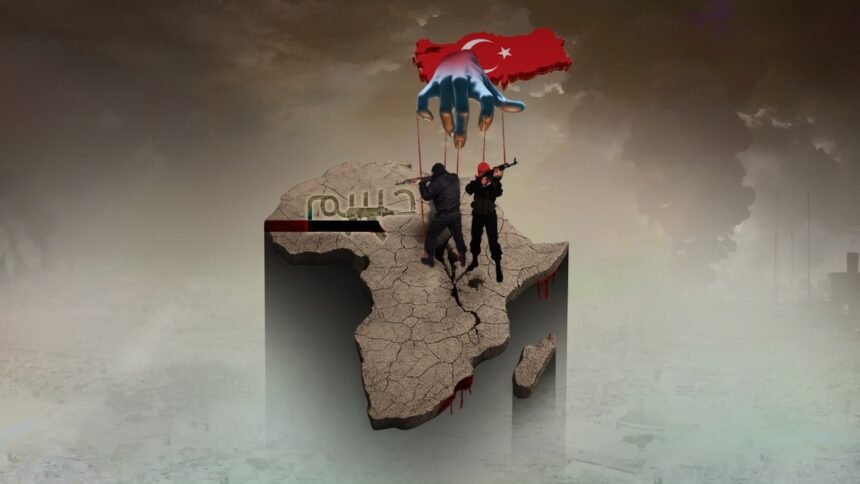
Hasm’s leaders operate from the margins, directing their campaign against Egypt’s government from exile. Alaa Ali Ali Mohammed al-Samahi, born in 1986 in Gharbia Governorate, is widely regarded as the group’s founder. After fleeing Egypt post-2013, he now coordinates from Turkey, leveraging transnational networks. Yahya al-Sayyid Ibrahim Musa, a former Morsi-era health ministry official, is linked to major attacks, such as the 2015 assassination of Egypt’s top prosecutor. With an estimated 304 members in 2017, Hasm’s exact size today is unclear, but its operational sophistication suggests external backing. This pattern of exiled leadership mirrors a recurring theme in African resistance, where displacement fuels defiance.
Ideological Crossroads: Islamism, Nationalism, and the African Context
Hasm’s ideology fuses Islamism with Egyptian nationalism, a synthesis that resonates with broader African ideological struggles. The group aims to dismantle Egypt’s current regime, which it deems tyrannical, and establish an Islamic state aligned with its vision. While its focus remains national, actions like the 2017 Myanmar embassy bombing in solidarity with the Rohingya reveal a broader Muslim solidarity. This blend of local grievances and global kinship reflects the diverse ideological threads woven into Africa’s militant tapestry, where Islamism often intersects with anti-imperialist and nationalist ideals.
Chronicles of Conflict: Hasm’s Campaign Against the Egyptian State
Hasm has waged a deliberate war against Egyptian authorities since 2016, targeting security forces and state symbols with calculated precision. Its attacks, often sparing civilians, underscore a strategic intent to weaken the government’s legitimacy. Key incidents include:
| Date | Incident | Location | Outcome |
| July 2016 | Police vehicle attack | Tamiyyah, Faiyum | 1 officer killed, 2 wounded |
| August 2016 | Attempted assassination of Ali Gomaa | Cairo | Failed, no casualties |
| September 2016 | Bomb attack on conscripts | Damietta | Several wounded |
| October 2016 | Police officer assassination | Mahmoudiyah, Beheira | Officer killed |
| December 2016 | Bombing near Giza pyramids | Giza | 6 officers killed, 3 wounded |
| May 2017 | Convoy attack | Nasr City, Cairo | 3 officers killed, 5 wounded |
| June 2017 | Attack tied to Egypt-Saudi island deal | Maadi, Cairo | No casualties |
| September 2017 | Myanmar embassy bombing | Cairo | No casualties, Rohingya protest |
| August 2019 | Car bomb outside hospital | Cairo | 20 deaths, 47 injured |
| 2025 | Threat to free Islamist prisoners | Egypt | Threat issued, no attacks yet |
These acts, marked by symbolic timing and tactical clarity, position Hasm as a persistent thorn in Egypt’s side, echoing Africa’s wider experience of resistance through targeted violence.
Tangled Alliances: Hasm, the Brotherhood, and Africa’s Extremist Networks
Hasm’s connection to the Muslim Brotherhood is both contested and pivotal. Egyptian officials label Hasm an armed wing of the Brotherhood, pointing to leaders’ past affiliations and the timing of attacks following Brotherhood losses. The group’s tribute to fallen Brotherhood figures, such as Mohamed Kamal, bolsters this view. Yet, the Brotherhood publicly disavows violence, creating a murky divide. This tension suggests a splintering within the Brotherhood, with radicalized youth possibly forming Hasm. Across Africa, such tangled alliances illustrate the intricate web of Islamist networks, linking local struggles to continental currents.
Ripples of Instability: Hasm’s Threat to Egypt and Beyond
Hasm’s actions destabilize Egypt, eroding trust in state security and diverting resources from development. The 2019 Cairo bombing and 2025 prison threats highlight its capacity to disrupt. As Egypt is a linchpin in North Africa, this instability sends shockwaves region-wide, weakening collective counterterrorism efforts and emboldening other militants. Hasm’s impact, though localized, underscores the interconnected nature of Africa’s security challenges.
Diverse Faces of Extremism: Hasm in the African Militant Mosaic
Hasm fits into a broader panorama of African extremism, distinct yet related to groups like Boko Haram and Al-Shabaab. A comparison reveals:
| Group | Region | Objectives | Tactics | Impact |
| Hasm Movement | Egypt | Overthrow government, Islamic state | Targeted attacks, bombings | Local instability |
| Boko Haram | Nigeria, Chad, etc. | Islamic state, Sunni dominance | Mass abductions, suicide attacks | Millions displaced |
| Al-Shabaab | Somalia, Kenya, etc. | Sharia rule, anti-government | Civilian, military strikes | Regional crisis |
| AQIM | Sahel | Islamic governance, anti-Western | Kidnappings, bombings | Economic ruin |
| JNIM | Sahel | Jihadist unity, anti-Western | Security, civilian attacks | Widespread instability |
Hasm’s precision and restraint contrast with the chaos of Boko Haram, yet its Brotherhood ties align it with Africa’s Islamist continuum, posing a unique threat.
Towards a United Front: Countering Extremism for Africa’s Future
Hasm’s emergence reflects a continent-wide challenge requiring a unified response. Beyond military measures, addressing political exclusion, poverty, and marginalization is vital to uprooting extremism’s appeal. Regional collaboration and global support can bolster African states against groups like Hasm, fostering a resilient future. By standing together, Africa can turn the tide against militancy, securing peace and progress for generations to come.