


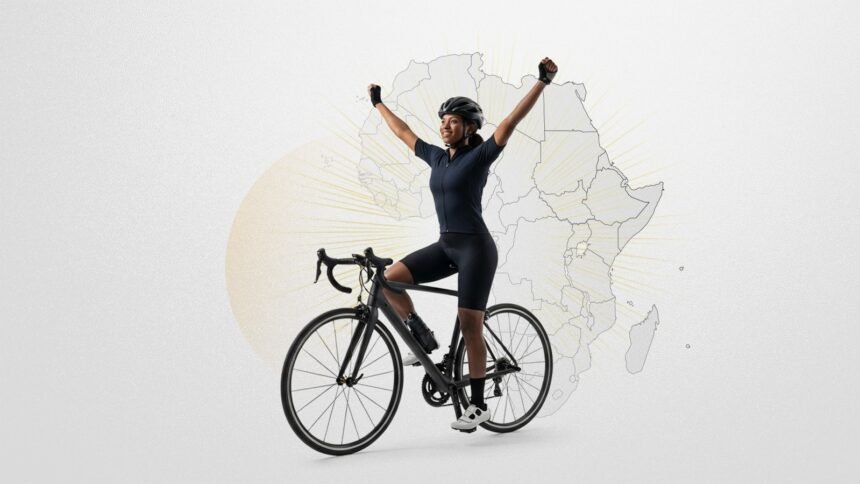
Across the sweeping savannas of Kenya, the volcanic hills of Rwanda, and the bustling boulevards of Johannesburg, the bicycle has long been more than a mere conveyance—it’s a beacon of liberation and unity. For African women, cycling embodies a profound journey from colonial imposition to contemporary empowerment, weaving threads of Pan-African solidarity into the fabric of sport and society. This narrative unfolds the intricate tapestry of women’s cycling on the continent, exploring its historical roots, the vibrant communities it fosters, the quest for gender parity, and the visionary strides toward a more inclusive future. Here, amid the dust of unpaved trails and the roar of urban traffic, women cyclists are not just competing; they are reshaping narratives, challenging stereotypes, and pedaling toward horizons where equity and excellence converge in a symphony of resilience.
Whispers of the Wheel: Colonial Legacies and Pan-African Rebirth in Continental Cycling
The bicycle’s odyssey in Africa began as a shadow of empire, its arrival tied to the ambitions of European colonizers who viewed it as a pragmatic tool for dominion. In the waning years of the 19th century, Italian forces in Eritrea deployed bicycles for swift military maneuvers across the arid highlands, establishing early tracks in Massawa that would later become a source of national pride. Similarly, British administrators in Malawi and Nyasaland pedaled through vast terrains to enforce colonial edicts, while Portuguese missionaries in Angola used two-wheeled transport to traverse dense jungles. By the early 20th century, cycling clubs sprouted in urban centers like Port Elizabeth in South Africa, where the 1881 founding of the Bicycle Club marked a fleeting era of inclusivity before apartheid’s iron grip segregated the sport, relegating black riders to the peripheries of townships and barring them from elite competitions.
This colonial imprint, however, sparked resistance that fueled postcolonial revolutions. In Eritrea, the bicycle became synonymous with endurance during the grueling 30-year war for independence from Ethiopia, where makeshift races on war-torn roads honed a generation of riders whose grit now defines African cycling. Post-apartheid South Africa saw a resurgence, with initiatives reclaiming the sport from its elitist past, transforming it into a vehicle for social mobility. The Union Cycliste Internationale (UCI) formalized this momentum with the launch of the Africa Tour in 2005. This circuit spans from Morocco’s coastal routes to Rwanda’s mountainous circuits, injecting resources into federations and spotlighting untapped talent.
For women, this rebirth carries added layers of significance. In nations like Rwanda, where the 1994 genocide left scars of division, cycling programs have emerged as tools for reconciliation, with women leading community rides that bridge ethnic divides. The 2025 UCI Road World Championships in Kigali marked a historic milestone—the first on African soil—featuring the inaugural standalone Under-23 women’s race, symbolizing a Pan-African commitment to elevating female athletes. This event, drawing riders from 18 nations, underscored cycling’s role in fostering continental unity, where shared struggles against resource scarcity and infrastructural voids forge bonds stronger than any chain. From Benin’s equal-pay policies to Ethiopia’s high-altitude training camps, women’s cycling in Africa is a testament to reclaiming agency, turning colonial relics into instruments of collective empowerment and cultural renaissance.
Threads of Tenacity: Women’s Integration into the Pan-African Cycling Mosaic
In the heart of Africa’s cycling revival, women emerge as the vibrant threads binding communities, cultures, and aspirations. Johannesburg’s Girls on Bikes club, founded by Karabo Mashele—a 32-year-old who discovered cycling at 29—exemplifies this integration. Twice-monthly rides through Pretoria’s leafy suburbs or Soweto’s lively streets attract up to 25 women in their 20s and 30s, blending casual exploration with profound reclamation. Mashele’s encouragement —”You can do hard things” — echoes during uphill grinds, transforming participants from novices into confident navigators of a city not built for them. Her brother Titi’s Banditz Bicycle Club, started in 2018, provided the spark, evolving into a hub with a bike shop and “Homies Night Rides” that nurture this sisterhood.
This tenacity ripples across the continent. In Eritrea, riders like Monaliza Araya and Desiet Kidane dominate UCI events, their highland-honed endurance inspiring a new wave of female talent. Ethiopia’s Eyeru Tesfoam, a 2020 Worlds contender, and 18-year-old Tsige Kahsay Kiros—Ethiopian Junior Champion and a standout at the 2025 Tour du Rwanda—embody the raw potential unearthed through programs like Mesfin Engineering Team. Rwanda’s Bike for Future initiative equips adolescent girls with bikes, helmets, and skills, turning weekly sessions into gateways for education, health awareness, and entrepreneurship, while countering cultural norms that once deemed cycling unladylike.
Urban expressions add flair: Johannesburg’s Sentech Croozers, a mixed-gender crew in Brixton, modifies bikes with antelope-horn handlebars and silver mudguards, drawing from Soweto’s 1980s “stance culture” of daring tricks like doughnuts and kitchen turns. While male-dominated, women like Lesedi Mosima (18) infuse it with feminine energy, recruiting youth and landing commercial gigs for banks and brands. In Benin, the national women’s team, under coach Adrien Niyonshuti, races on equal terms—equal gear, international slots, and pay—winning stages at the 2025 Tour du Burundi Féminin, with Charlotte Metoevi claiming yellow. These stories weave a Pan-African mosaic, where women’s cycling transcends sport, fostering mentorship networks that dismantle barriers and celebrate communal triumphs over individual accolades.
Cogs of Change: Bridging Gender Divides in Africa’s Sporting Landscape
Gender equality in African cycling resembles an intricate gear mechanism—vital for forward motion, yet vulnerable to friction from societal and structural imbalances. Across the continent, women’s participation trails men’s significantly; in Nairobi, female cyclists account for just 3.1% of daily commutes, hampered by harassment, inadequate lighting, and cultural taboos that confine women to domestic roles. Johannesburg’s apartheid-era urban planning exacerbates this, with highways slicing through communities, forcing riders onto perilous margins where less than 1.5% of commuters cycle. Globally, female professionals earn 16-20% of men’s wages. Still, in Africa, the gap yawns wider, with many women relying on sporadic grants or bartering exposure for survival amid equipment shortages and visa hurdles.
Yet, cogs of change are turning. Benin’s revolutionary model ensures women receive the same resources as men, propelling them to continental victories and inspiring federations across the continent. The African Union’s Gender Equality Strategy, aligned with UN Women’s Generation Equality, leverages cycling for empowerment by distributing bikes to rural women in sub-Saharan Africa to access markets, clinics, and schools, boosting economic independence by up to 30% in some studies. UCI’s gender charters mandate equitable award ceremonies and race formats. At the same time, Sport for Development programs in East Africa conduct mixed clinics that challenge stereotypes, teaching coaches to address not just technique but psychological resilience against bias.
In Rwanda, the 2025 Worlds amplified this shift, with the debut U23 women’s race drawing global attention to athletes like Rwanda’s Jazilla Mwamikazi and Uganda’s Shema Kalema, who navigated visa labyrinths to compete. These efforts highlight cycling’s potential as an advanced equalizer: in Eritrea, women’s teams train alongside men on Asmara’s steep inclines, fostering mutual respect; in South Africa, riders like Ashleigh Moolman-Pasio upgrade from continental to world stages, mentoring juniors through virtual hubs. Amid challenges such as familial pressures and funding droughts, these initiatives grind toward parity, positioning gender equity as the essential lubricant for Africa’s cycling engine, driving a Pan-African movement in which women’s contributions propel the entire sport forward.
Summit of Solidarity: Leading Nations and the Pan-African Medal Pursuit
In the arena of African cycling, a select cadre of nations summit the peaks, their medal hauls reflecting strategic investments and unyielding spirit. Eritrea stands unrivaled, its 3,569 UCI points dwarfing competitors, forged in high-altitude crucibles that produced stars like Desiet Kidane and a dominant showing at the 2024 African Championships, sweeping golds in road and track. With 21 riders in the top pro levels, Eritrea’s women, including those at the 2025 Worlds, exemplify a system where national pride fuels excellence, amassing the continent’s most medals across categories.
South Africa follows as a powerhouse, its 1,113 points bolstered by the UCI World Cycling Centre in Paarl, which scouts and trains talent through inclusive programs. Riders like Kim Le Court—Mauritius’ top-ranked woman with 2,082 points, who wore the Tour de France yellow jersey in 2025—highlight cross-border influences, though South Africa’s domestic scene grapples with post-apartheid divides. Rwanda, hosting the 2025 Worlds, surges with 644 points, its under-23 initiatives yielding prodigies like Olivia Maniragena, who redefine norms in a sport once male-exclusive.
Algeria and Morocco round out the vanguard, with Algeria’s Madar Pro Cycling Team topping African squads at 653 points, dominating 2023 Continentals with eight golds. Morocco’s consistent Tour performances add depth, while emerging nations like Ethiopia (Tsige Kiros’ 7th at the 2025 Juniors Worlds) and Benin (equal-pay trailblazers) challenge the elite. This medal pursuit embodies Pan-African solidarity: collaborations like Team Africa Rising’s virtual centers train 1,000 riders, sharing knowledge from Eritrean plateaus to Mauritian coasts. Medals here symbolize mandates for inclusion, urging laggards like Egypt and Namibia to bolster women’s pathways, creating a unified continental force where every nation’s ascent lifts the collective summit.
Engines of Elevation: UCI and UN-AU Alliances Propelling Women’s Rise
The propulsion of women’s cycling in Africa owes much to synergistic engines: the UCI’s technical expertise meshed with the UN-African Union’s (AU) Pan-African vision. As part of UCI’s Africa 2025 Strategy, in partnership with Olympic Solidarity, Eritrean and Rwandan teams were dispatched to European camps, seeding 25 national championships with balanced fields. Kigali’s Worlds legacy—18 nations medaling, including Benin’s breakthroughs—amplified this, with U23 women’s races boosting visibility and qualification for events like the 2028 Olympics.
UN-AU alliances add horsepower: UN Women’s forums feature athletes like South Africa’s Cally Silberbauer, advocating for bikes as anti-poverty tools, while AU’s Sport for Development blueprint uses cycling to combat gender violence through inclusive leagues. GIZ-supported East African programs train coaches in gender-responsive methods, addressing cultural hurdles alongside cadence drills. In Benin, UCI-backed federations ensure parity, while Rwanda’s post-genocide reconciliation rides, funded by UN initiatives, heal divides.
This interplay elevates women from peripherals to pioneers: Ethiopian juniors like Tsige Kiros benefit from UCI scholarships, and Mauritian transfers to pro teams like AG Insurance-Soudal underscore global pathways. As engines of elevation, these alliances forge a Pan-African covenant, where institutional torque meets grassroots grit, steering women’s cycling toward sustainable ascents.
Visions Unleashed: Wage Equities, Obstacles, and the Pan-African Trajectory Ahead
The trajectory for African women’s cycling gleams with potential, yet navigates the rugged terrain of inequities and aspirations. Wage gaps loom large: African women often go unsalaried, contrasting WorldTour minima where global disparities reach 80%, compounded by sponsorship voids and equipment loans—like Benin’s use of vintage Trek bikes at 2025 Worlds. Obstacles abound—visa denials strand talents, familial duties clip ambitions, and urban perils in Johannesburg deter participation.
Yet, visions unleash: post-Kigali, virtual academies democratize training, Rwanda’s elite centers nurture stars, and Benin’s model inspires equity from Burundi to Botswana. UN-AU funds target equal-opportunity pools, while UCI expands women’s tours. Envision pelotons swelling with Eritrean mentors guiding Mauritanian novices, sponsorships valuing wattage over gender, and infrastructures safeguarding spins. This Pan-African trajectory demands bold advocacy, transforming perils into propulsion, where women’s cycling redefines speed as a cyclone of unity, equity, and unbound potential.
In this odyssey, African women cyclists—from Johannesburg’s ladybugs to Kigali’s conquerors—pedal revolutions that echo across borders. Their tenacity forges a legacy in which Pan-Africanism, gender equality, and sporting prowess intertwine, claiming not just roads but realms of possibility.