




Pan-African: The Challenge of Sovereign Financial Transparency
Across the African landscape, the pursuit of economic sovereignty is increasingly tied to the ability of states to manage complex multilateral relationships while maintaining the confidence of global markets. Senegal has historically been viewed as a pillar of stability within the West African Economic and Monetary Union (UEMOA), often serving as a benchmark for fiscal discipline. However, the current continental climate is one of heightened scrutiny, where the “Pan-African” mandate for self-sufficiency must contend with a global financial architecture that remains cautious toward emerging market debt. For Senegal, the challenge is to balance domestic developmental aspirations with the rigorous transparency requirements of the international financial system.
Senegal’s Economic Outlook: The Pressure of Rising Costs
The economic outlook for Senegal in 2026 is defined by a precarious balance between ambitious growth targets and the stark reality of rising energy costs. The national economy is navigating a period of significant pressure, as the global energy shocks resulting from the war in Iran have inflated the cost of essential imports. This “imported inflation” has placed a strain on the national budget, complicating efforts to manage the fiscal deficit. The current outlook is one of transition, where the government must reconcile its internal developmental roadmap with an external environment that is increasingly volatile and less forgiving of fiscal slippage.
Debt & Loans: The Deficit Discrepancy and Investor Unease
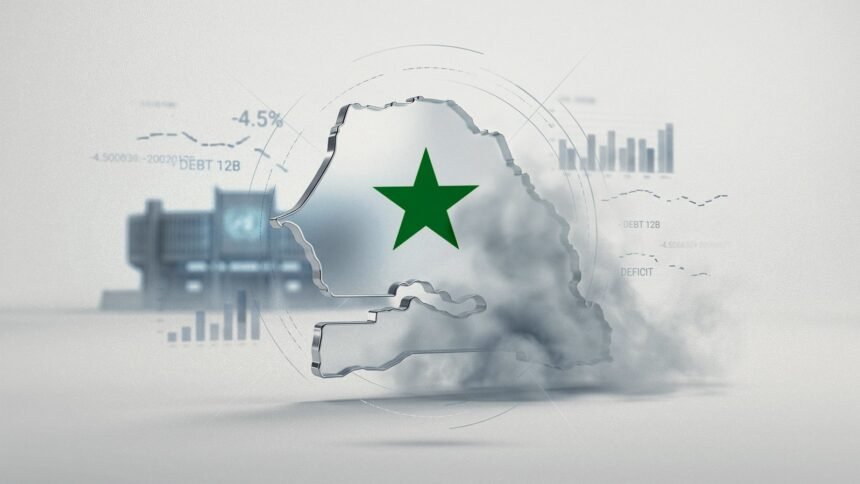
The management of Senegal’s debt and loans has recently become a focal point of intense scrutiny following the Spring Meetings in Washington. A significant source of concern for international investors is the emergence of a “deficit discrepancy.” While the Senegalese government has cited a specific deficit figure, the International Monetary Fund (IMF) has expressed caution, utilizing different, less optimistic data. This lack of alignment has created a sense of “fiscal fog,” leaving investors uneasy about the true scale of the nation’s obligations. Furthermore, financial analysts have noted higher hurdles for continued support as the rising cost of energy subsidies continues to bloat the national debt, threatening the rapid fiscal consolidation previously promised.
Senegal’s IMF Profile: A Relationship Under Scrutiny
Senegal’s profile with the IMF is currently characterized by a notable shift in communication and expectations. During the recent high-level meetings in Washington, the lack of traditional investor briefings and the absence of the typical “buzz” surrounding Senegalese delegations were interpreted by market observers as a sign of underlying friction. The IMF has reportedly urged the administration to exercise caution regarding the speed of fiscal consolidation, fearing that overly aggressive cuts could stifle growth. This evolving profile suggests that the “easy liquidity” of previous years is being replaced by a more disciplined and demanding relationship, where future disbursements are contingent on a verified and transparent reduction of the national deficit.
IMF & AfDB: Navigating the Multilateral Compact
The coordination between the IMF and the African Development Bank (AfDB) remains a vital component of Senegal’s financial strategy. While the IMF focuses on macroeconomic stability and debt sustainability, the AfDB provides the critical project-based financing required for long-term infrastructure. However, the current fiscal impasse complicates this multilateral compact. If the IMF raises concerns regarding debt ceilings, it can limit the nation’s ability to take on the “developmental loans” offered by regional bodies like the AfDB. Effectively navigating these two institutions requires a unified and transparent fiscal narrative, one that satisfies the IMF’s requirement for stability while preserving the AfDB’s mandate for industrial and social investment.
Development: Reclaiming a Transparent Roadmap
The ultimate goal of Senegal’s financial diplomacy is to secure the resources necessary for sustained national development. However, developmental success in 2026 is predicated on the restoration of trust between the state and its financial partners. Reclaiming a transparent roadmap requires the government to provide clear, verified data that reconciles the current deficit discrepancies. Development cannot be sustained on “opaque” fiscal foundations; it requires a commitment to the rule of law and the consistent management of sovereign obligations. By addressing the concerns of investors and multilateral bodies through enhanced transparency, Senegal can ensure that its path toward economic recovery is not stalled by the “unease” of the present, but is instead built on a foundation of long-term stability and regional leadership.