





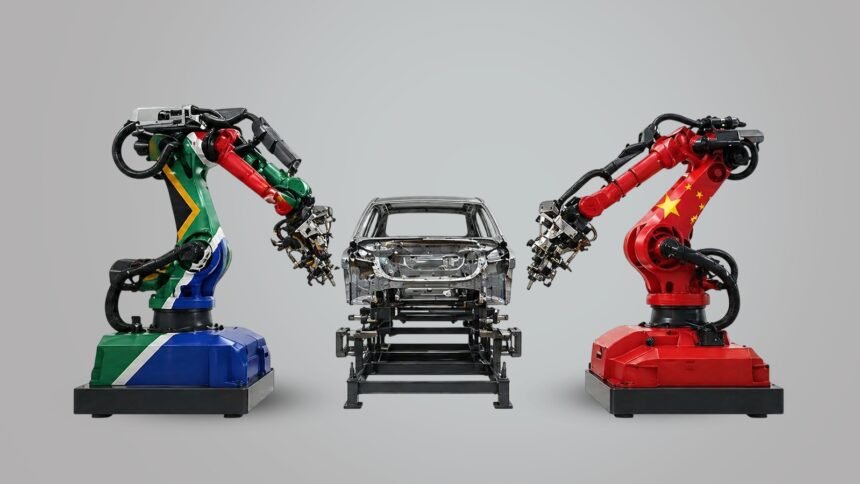
Pan-African: The Continental Gateway to Industrial Autonomy
Across the African landscape, the automotive sector has emerged as a primary vehicle for realizing the continent’s aspirations of structural transformation and industrial autonomy. As the African Continental Free Trade Area (AfCFTA) gains momentum, establishing a robust, indigenous manufacturing base is no longer a localized objective but a Pan-African imperative. The transition from being a passive consumer of global automotive exports to becoming an active producer of high-value machinery signifies a profound shift in the continent’s economic agency. By leveraging regional value chains and fostering technical synergies between emerging hubs, Africa is positioning itself to define its own mobility future, ensuring that the wheels of development are powered by domestic labor and regional innovation.
Africa-China Automotive Outlook: The Geopolitical Reorientation of Mobility
The automotive outlook for Africa in 2026 is defined by a strategic reorientation toward the Global East, as Chinese manufacturers aggressively expand their manufacturing footprint across the continent. This shift is not merely a matter of trade but of systemic industrial integration. Chinese firms, supported by state-led investment initiatives, are increasingly bypassing traditional export models in favor of localized “brownfield” and “greenfield” projects. This reorientation is driven by the dual goals of securing long-term market share in the world’s fastest-growing consumer demographic and utilizing Africa as a strategic launchpad for global exports. The current outlook is one of a “multipolar automotive era,” where a new wave of Chinese-led industrialization is challenging the historical dominance of Western and Japanese brands.
South Africa’s Automotive Sector: The High-Performance Engine of the South
South Africa remains the indisputable high-performance engine of the continental automotive sector, possessing a sophisticated infrastructure that accounts for a significant portion of the nation’s manufacturing GDP. The industry is currently undergoing a pivotal expansion as it integrates into the global Chinese supply chain. In late April 2026, a landmark development was confirmed: Chinese sport-utility vehicle maker Jetour announced it would produce its adventure T1 and T2 models in South Africa from 2027. This production will take place at the Rosslyn plant, which is currently being acquired by its parent company, Chery. With an annual production target of 50,000 units, this move solidifies South Africa’s role as the primary manufacturing hub for Chinese automotive expansion into the Southern Hemisphere.
Localization of Industry: Beyond the Assembly Line
The “localization” of the automotive industry in 2026 has moved beyond simple knockdown assembly toward deep-tier industrial integration. The South Africa-China axis is increasingly defined by the domestic production of critical components and the transfer of specialized manufacturing technology. The acquisition of the Rosslyn plant, a facility with a storied history in South African manufacturing, represents a commitment to “re-industrialization,” where legacy infrastructure is repurposed for modern, high-tech production lines. This level of localization is essential for creating high-skilled jobs and fostering a domestic supplier ecosystem, ensuring that the “value-added” remains within the host nation rather than being exported back to global centers of capital.
Automotive & Environment: Navigating the Green Mobility Transition
As the South Africa-China automotive axis expands, it must navigate the rigorous requirements of the global green mobility transition. The 2026 landscape is characterized by a dual focus on high-performance internal combustion engines and the rapid scaling of electric vehicle (EV) technology. For South African producers, the environmental mandate involves integrating sustainable manufacturing practices and preparing for a future where “Green Transport” is a prerequisite for entry into the lucrative European and Asian markets. The partnership with Chinese firms, who are global leaders in battery technology and EV supply chains, provides South Africa with the technical scaffolding needed to leapfrog traditional developmental stages and become a significant player in the low-carbon automotive economy.
ESG & Policy: The Framework of Sustainable Partnership
The success of the Africa-China automotive partnership is predicated on a robust framework of Environmental, Social, and Governance (ESG) principles. South African policy in 2026 is increasingly focused on ensuring that foreign investment contributes to “inclusive growth” and social upliftment. This involves mandates for local labor participation, rigorous environmental oversight of manufacturing sites, and transparent corporate governance. Effective policy must ensure that the expansion of the automotive sector does not come at the cost of environmental degradation or the erosion of labor standards. By aligning Chinese investment with South Africa’s national ESG goals, South Africa is building a sustainable partnership that prioritizes long-term social stability alongside industrial output.
Development: Driving Toward a Resilient Industrial Future
The ultimate goal of the South Africa-China automotive axis is to drive the continent toward a more resilient and self-sufficient industrial future. The establishment of high-capacity production lines, such as the Jetour project, is a vital component of a broader developmental roadmap aimed at reducing the continent’s reliance on imported finished goods. Reclaiming the future of African mobility requires a bold commitment to this collaborative model, where global capital and technology are harnessed to build a durable domestic industrial base. By transforming South Africa into a global center for automotive excellence, the continent is ensuring that its developmental journey is defined by innovation, sovereign agency, and the sustained prosperity of its people.