





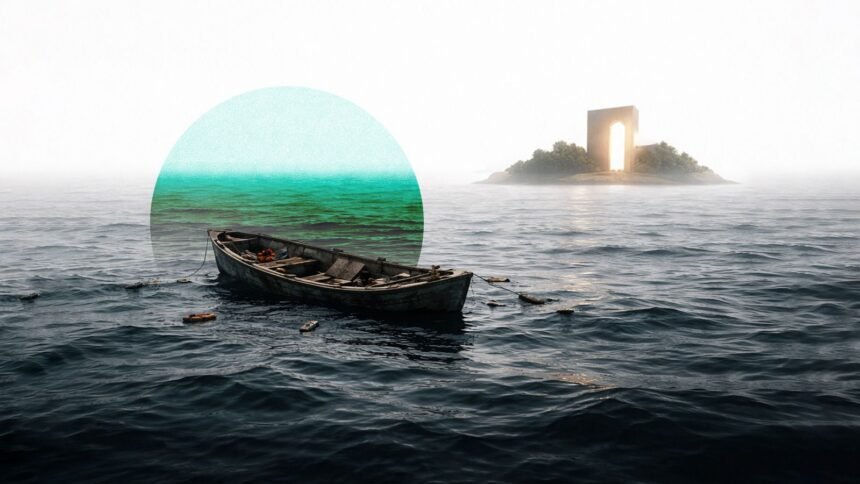
On a recent night off the northern shore of Grande Comore, the shouts came first. Residents in the town of Mitsamiouli say they heard cries for help over the sound of the surf, then the news spread quickly: a migrant boat had run into trouble just offshore.
By the time local fishermen, residents, and officials reached the water, at least 18 African migrants were dead. Thirty others were found alive, some clinging to debris, after smugglers had dropped the group in the sea and left, according to Comoros’ interior minister and hospital staff.
They had been trying to reach Mayotte, a French territory roughly 200 kilometers away that many in the region see as a precarious doorway into Europe.
Officials say most of the passengers were from the Democratic Republic of Congo, with at least two Burundians among the dead. Survivors told reporters they had been put off the boat offshore, and that many in the group did not know how to swim.
Background and Stakes
This incident, with a confirmed toll of at least 18 dead and four still listed as missing, is not an isolated disaster but part of a longstanding, often invisible migration route between the Comoros and Mayotte.
Mayotte is geographically part of the Comoros archipelago, in the Indian Ocean between Mozambique and Madagascar. Still, it is politically an overseas department of France and part of the European Union.
That status has produced a stark divide in a relatively small stretch of sea: on one side, the Union of the Comoros and mainland African countries grappling with limited jobs, fragile health systems, and political insecurity; on the other, a French-administered island with comparatively better infrastructure, schools, and social protection, even as it remains France’s poorest department.
For years, people from the Comoros and farther afield have paid smugglers to board small, often unseaworthy fiberglass boats known as “kwassakwassa” in the hope of reaching Mayotte. The United Nations’ International Organization for Migration has warned that thousands have died on this route over the past three decades.
A 2012 French Senate report estimated that between 7,000 and 10,000 people had perished trying to cross from the Comoros to Mayotte since 1995, a figure that the report itself cautioned was likely an underestimate.
Human Stories on the Ground
In Mitsamiouli, a coastal town about 40 kilometers from the Comorian capital, Moroni, the wreck was not an abstraction. Residents helped pull bodies from the water and carry survivors to a nearby hospital, where staff later confirmed that the death toll had risen to 18. The Interior Ministry’s list of the dead included two children, aged three and ten.
A young man who joined the rescue told the Agence France-Presse news agency that many of those who were dropped into the water could not swim. “They had been left offshore,” he said, describing a scramble in the dark to respond after the group’s cries reached the beach.
Survivors told officials and journalists that they were from Congo and had boarded the boat with Mayotte as their destination. For many families, such journeys represent a collective investment: relatives pool savings to send one person in the hope that, if they make it, they will be able to send money home. When a boat sinks, what remains is not only grief but debt and uncertainty, especially when bodies are never recovered.
On Mayotte, the human story is more ambivalent. The island has become a focal point in France’s broader immigration debates, with tens of thousands of undocumented residents and frequent tensions over housing, schooling, and public services.
Some longterm residents say the island is overwhelmed and support tougher enforcement at sea and on land. Others, including local activists and humanitarian workers, argue that a narrow focus on deterrence has normalized a deadly status quo in the surrounding waters.
Policy Debate and Expert Views
French authorities frame their approach as a response to “unsustainable” migration pressures on a small, fragile territory. Paris has tightened border controls around Mayotte, conducted mass deportation campaigns to the Comoros, and floated changes to birthright citizenship rules on the island. At the same time, police and gendarmes patrol the surrounding waters.
Officials in Moroni also face competing pressures: domestic criticism that the state cannot protect its citizens from smugglers or provide enough opportunity at home, and intense diplomatic friction with France over returns and border management.
Human rights groups and migration researchers say these dynamics mirror patterns seen in the Mediterranean and elsewhere. When wealthy states fortify their borders without significantly expanding legal pathways for work, study, family reunification, or protection, they argue, people rarely stop moving; instead, routes become more clandestine, more expensive, and more lethal.
The Comoros–Mayotte corridor is a case in point. “Thousands of people have died on this migration route in an attempt to reach the disputed island of Mayotte,” the International Organization for Migration said in a 2024 statement after yet another deadly shipwreck in the area, recalling the Senate estimate and warning that actual deaths were likely higher.
Investigations have also raised troubling questions about enforcement tactics. A 2025 crossborder investigation led by Lighthouse Reports and European media outlets documented cases in which French forces were accused of dangerous maritime interceptions off Mayotte, allegedly contributing to drownings and disappearances.
French authorities have defended their operations as lawful and necessary, but the reporting underscored how maritime policing strategies can shape the risks people face.
What Comes After the Wreck
In Mitsamiouli, the immediate aftermath of the latest sinking followed a grimly familiar script: search operations, body counts that rose over the course of the day, lists of the dead compiled by the Interior Ministry, and a handful of survivors trying to call relatives thousands of kilometers away.
Yet the questions that linger go beyond one boat. As long as Mayotte remains, in economic and legal terms, a different world from its neighbors, and as long as pathways to move there safely remain narrow or nonexistent for most Africans, people will keep trying to cross.
The sea between the Comoros and Mayotte, nearly 200 kilometers of water on some routes, will continue to bear the consequences of choices made in Moroni, in Paris, and in capitals much farther away.