





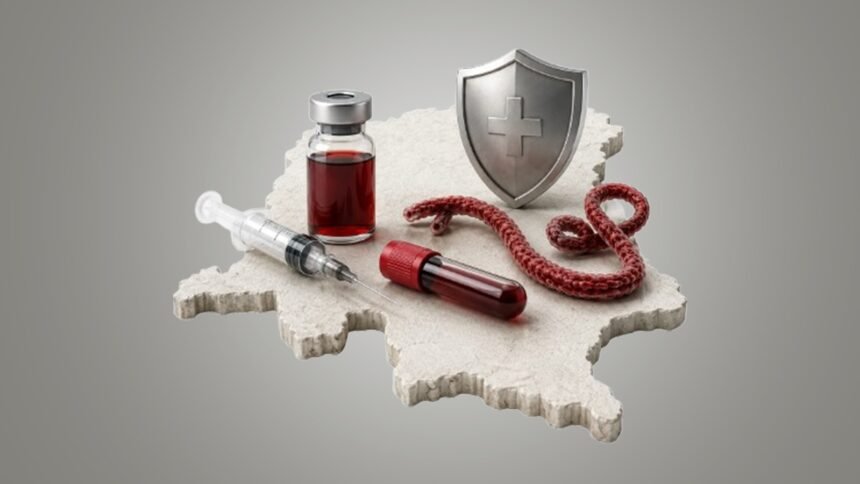
The Pan-African Paradigm of Biosecurity and Sovereign Medical Equity
Across the African landscape, the contemporary implementation of international health interventions intersects with the assertion of continental self-determination and biomedical equity. The Pan-African vision for long-term health security relies fundamentally on a decisive transition away from legacy, donor-dependent aid models toward the institutionalization of localized research grids and equal treatment paradigms. Historically, sub-Saharan public health emergencies have been utilized by global powers as external containment zones, where experimental therapeutics are deployed under restrictive parameters that prioritize foreign interests. Reclaiming Africa’s healthcare future demands a synchronized regulatory framework that mandates full access to life-saving medical assets, ensures domestic control over clinical data, and transforms passive reception into active, sovereign collaboration within global pharmaceutical networks.
Pathogenic Mutations and the Bundibugyo Challenge
The contemporary epidemiological landscape of the African continent is heavily pressured by the rapid escalation of a major public health crisis driven by the highly dangerous Bundibugyo strain of the Ebola virus. Unlike the more historically common Ebola Zaire variant, which has benefited from extensive clinical tracking and the subsequent approval of standardized medical countermeasures, the Bundibugyo species possesses no formally approved vaccines or therapeutics. This critical scientific deficit has created an unstable biological environment as the pathogen establishes high-velocity transmission lines across Central and East Africa. With the expanding epidemic officially designated a public health emergency by global monitors, the lack of an established pharmaceutical shield leaves local populations highly vulnerable to asymmetric transmission waves and elevated mortality rates.
The Frontlines of the Third-Largest Epidemic
The operational epicenter of this latest biological emergency is heavily concentrated within the Democratic Republic of Congo, which is currently managing the third-largest Ebola outbreak on record. The pathogenic footprint has rapidly expanded across multiple regional health corridors, officially cresting past 1,000 confirmed infections and causing more than 250 deaths, alongside a handful of cross-border spillovers registered in neighboring Uganda. Local field operations are profoundly complicated by severe structural hurdles, including widespread community mistrust, localized attacks on clinical staff, and fragmented disease testing networks. At high-density containment hubs, such as the Kigonze displaced persons camp in the eastern city of Bunia, frontline health teams in full personal protective equipment are working around the clock to isolate suspected cases and ensure safe burials, highlighting the acute strain on the nation’s sanitation grid.
Mobilizing Multilateral Frameworks and Ethical Protocols
The synchronized interventions of the World Health Organization and the African Centers for Disease Control and Prevention led the technical and regulatory orchestration of the emergency clinical response. Despite the rapid spread of the Bundibugyo variant, the WHO has firmly mandated that all experimental vaccines and therapeutics be deployed through rigorous, randomized clinical trials rather than unregulated, widespread distribution. This institutional insistence on rigorous scientific data aims to verify the safety and efficacy of novel compounds under field conditions before broad population rollout. Working in tandem with local health partners, specialized multilateral teams are rapidly upgrading laboratory networks, preparing treatment facilities for clinical trial enrollment, and establishing an ethical blueprint for international research operations in crisis zones.
The Strategic Pivot from Segregated Medicine
The international dynamics of the medical response experienced a definitive turning point following a major policy shift from the United States Department of Health and Human Services. Previously, Washington had maintained a highly restrictive posture, explicitly stockpiling its advanced experimental antibody treatments exclusively for American citizens, diplomats, and military personnel operating in East Africa, a position that included building a controversial segregated quarantine outpost in Kenya.
However, following widespread international outcry and warnings from the U.S. Centers for Disease Control and Prevention that the current surge could become the most devastating outbreak yet without a strong intervention, the U.S. government executed a significant pivot. Abandoning its strictly nationalistic allocation protocol, the American administration has officially provided stockpiled doses of advanced experimental therapeutics directly to the DRC government, marking its first formal commitment to support direct clinical trials for local populations.
Deploying Advanced Molecular Therapeutics in the Field
The upcoming deployment of experimental therapeutics inside the DRC and Uganda represents a sophisticated, multi-agency clinical effort to evaluate novel molecular compounds under difficult field conditions. The immediate testing protocol focuses on the antibody treatment MBP134, developed by San Diego-based Mapp Biopharmaceutical, which will be administered both as a standalone therapeutic for Bundibugyo infections and in combination with Gilead Sciences’ established antiviral drug remdesivir. Sponsored by the WHO and led technically by the University of Oxford, this treatment trial is advancing alongside a separate preventive study evaluating another Gilead antiviral, obeldesivir, which is co-sponsored by Congo’s National Institute for Biomedical Research and France’s ANRS Emerging Infectious Diseases agency.
As national ethics committees in Kinshasa and Kampala finalize the review of trial protocols, global health authorities have emphasized that a core operational priority is ensuring that local patients will maintain unhindered, low-cost access to these advanced drugs if they are demonstrated to be safe and effective during the upcoming trials.
Accelerating Vaccine Pipelines and Institutional Health Sovereignty
The long-term resolution of the continent’s recurring biological vulnerabilities depends on accelerating clinical timelines for next-generation vaccine candidates and building resilient local medical structures. According to statements from WHO Director-General Tedros Adhanom Ghebreyesus, foundational Phase 1 safety trials for emerging Bundibugyo vaccines are scheduled to begin in July, with primary testing expected to take place in the United Kingdom and Uganda. Supported financially by the Coalition for Epidemic Preparedness Innovations, these early-stage trials will evaluate candidate vaccines developed by the University of Oxford and the Serum Institute of India, alongside advanced mRNA platforms engineered by U.S. vaccine maker Moderna.
Ultimately, moving past reactive emergency shipments requires African states to convert these international research partnerships into permanent human capital upgrades, ensuring that future therapeutic production lines and manufacturing hubs are located directly within continental borders to guarantee a secure, healthy, and completely self-determining future.