




Pan African: The Dilemma of Sovereign Governance vs. Global Paradigms
Across the African landscape, the structural development of state institutions is undergoing a fundamental re-evaluation as newly elected reformist administrations try to balance the demands of popular sovereignty with the rigid constraints of global economic systems. In West Africa, long celebrated for its democratic resilience, the effort to chart an independent political and economic course has exposed a profound vulnerability: the structural tension between pan-Africanist, anti-establishment domestic mandates and the pragmatic requirements of international financial integration. This institutional friction is not unique to any single capital; it represents a continental dilemma where the desire to break free from historical debt cycles and resource exploitation must confront the immediate, unyielding realities of global capital markets and multilateral enforcement.
Senegal’s Political Outlook: The Fragility of a Diarchic Transition
The political outlook for Senegal has been destabilized by an executive crisis that threatens to disrupt one of the region’s most stable constitutional frameworks. Following a sweeping electoral victory in March 2024, the administration of President Bassirou Diomaye Faye took office with an ambitious mandate built on anti-corruption, resource nationalism, and institutional renewal. However, the foundational structure of this new executive branch contained an inherent vulnerability: a diarchic power-sharing model between a low-profile president and his high-profile political mentor, Prime Minister Ousmane Sonko. This parallel administrative structure created competing centers of authority within the state, transforming the day-to-day governance of the republic into a continuous struggle over ideological purity and executive command.
President-PM Coalition Collapse: The Breaking Point of Executive Strained Friction
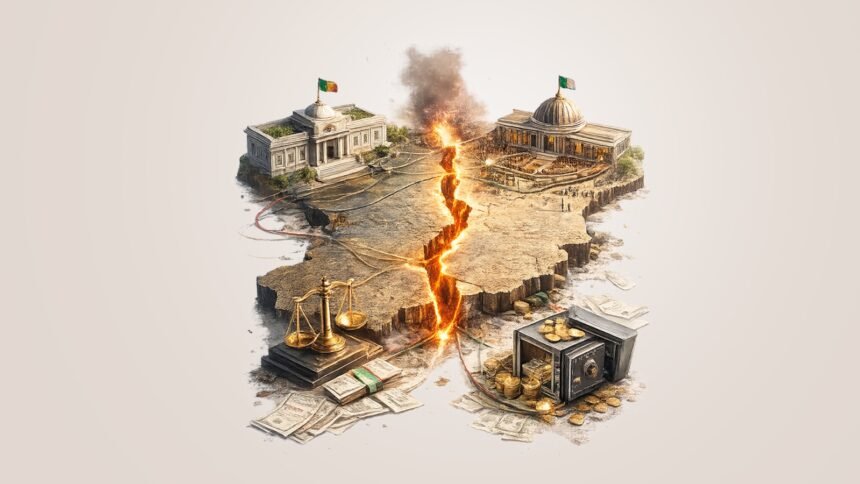
The escalating power struggle between the two leaders reached a definitive breaking point on May 22, 2026, when President Faye issued a sweeping executive decree dismissing Prime Minister Sonko and dissolving the entire cabinet. This dramatic move followed months of mounting ideological and operational friction over how to manage the country’s severe fiscal crisis. The tension became untenable as the two men operated parallel agendas within the government. While Sonko positioned himself as an unyielding opposition firebrand who refused to acquiesce to executive directives unthinkingly, President Faye increasingly viewed the premiership as a source of administrative paralysis. The final fracture came to a head during a parliamentary session where Sonko openly acknowledged deep-seated differences with the head of state, forcing Faye to break the political alliance to assert absolute presidential authority over a divided executive branch.
Reform Government Challenges: The Macroeconomics of Hidden Debt
The collapse of the ruling coalition was deeply accelerated by a catastrophic macroeconomic discovery that severely limited the government’s fiscal options. A comprehensive state audit revealed that the previous administration had hidden billions of dollars in national liabilities, pushing Senegal’s public debt to an unprecedented $40 billion, or approximately 132 percent of its gross domestic product. In response to this misreporting, the International Monetary Fund froze a critical $1.8 billion lending program, starving the state of essential liquidity. The handling of this $13 billion hidden debt burden became the primary battleground between the president and the prime minister. Sonko strongly opposed any Western-mandated debt restructuring or fiscal austerity. At the same time, Finance Minister Cheikh Diba warned that the country’s fuel subsidy bill could exceed budget allocations by $2 billion if global oil prices continued to rise. Sonko’s refusal to approve domestic fuel price increases or engage with international lenders left the state’s financial strategy deadlocked.
Democracy Struggles: Legislative Control and Constitutional Uncertainty
Senegal’s sudden executive dissolution introduces a volatile new element into its ongoing struggle to stabilize democratic governance. Both Faye and Sonko were former tax inspectors who had been jailed by the previous regime, only to be released just ten days before the 2024 election. While the legislature recently passed electoral code reforms that could allow Sonko to contest the presidency in 2029, his immediate removal leaves his political future and the orientation of his party, Pastef, deeply uncertain. Because Pastef holds a dominant position in the National Assembly, the president’s decision to govern without Sonko risks creating a hostile legislative environment, potentially paralyzing the passage of critical structural reforms needed to secure international bailouts and resume formal negotiations with global financial institutions.
The Way Forward: Reclaiming Fiscal Stability and Sovereign Trust
The way forward for Senegal requires an immediate transition from ideological posturing to disciplined, pragmatic crisis management. Reclaiming the path to economic recovery depends on the swift formation of a unified cabinet capable of speaking with a single voice to domestic citizens and international investors. The government must advance its planned resumption of negotiations with international lenders, aiming to secure a transparent and sustainable fiscal agreement that addresses the hidden debt crisis without completely eroding the social protections promised to the population. Success will be defined by the state’s ability to protect the independent regulatory audits of its oil, gas, and mining sectors while maintaining the constitutional checks and balances that prevent executive overreach, ensuring that Senegal’s democratic journey remains an enduring model of stability and institutional resilience for the entire continent.