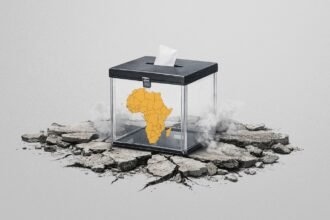






The lingering shadows of conflict across Africa manifest as landmines, silent threats that undermine peace, prosperity, and human dignity. As international aid wanes, a paradigm shift toward self-funded demining emerges as a beacon of autonomy and resilience. This article delves into the historical burdens, contemporary challenges, and forward-looking strategies for African nations to reclaim their soils through indigenous initiatives, drawing on urgent narratives from regions such as Zimbabwe’s borderlands, where funding cuts have exacerbated vulnerabilities.
Pan African Horizons
Across the vast expanse of the continent, landmines mark a shared scar left by colonial legacies, liberation struggles, and internal strife. From the Rhodesian-era explosives along Zimbabwe’s frontiers with Mozambique to the dense minefields in Angola’s war-torn landscapes, these remnants have plagued Africa since the mid-20th century. Historical contexts reveal patterns: during the 1970s and 1980s, conflicts in southern and eastern Africa saw millions of mines deployed, often indiscriminately, to control territories and disrupt economies. Angola stands as a stark emblem, with estimates of up to 15 million devices embedded in its earth, a byproduct of protracted civil wars that ended only in the early 2000s.
Leading the charge in demining are nations like Angola, Ethiopia, and Zimbabwe, which have developed national capacities through government-led programs. Angola’s National Institute for Demining and Explosive Remnants of War exemplifies this, coordinating clearance operations that have reclaimed over a million square meters of land. Similarly, Ethiopia has confronted renewed contamination from recent conflicts, prioritizing clearance in agrarian zones vital for food security. Yet, the most contaminated countries—Angola, Sudan, the Democratic Republic of Congo, and Somalia—bear the heaviest loads, with mine densities sometimes exceeding thousands per kilometer in border areas. Casualty figures underscore the urgency: over the past decades, hundreds of thousands have been killed or maimed continent-wide, with recent annual tallies in the thousands, disproportionately affecting civilians in nations like Nigeria, Burkina Faso, Mali, and Ethiopia. These statistics not only reflect human loss but also economic stagnation, as mined lands hinder agriculture, infrastructure, and mobility.
The African Union (AU), in synergy with the United Nations, has forged continental frameworks to address this scourge. The AU’s Mine Action and Explosive Remnants of War Strategic Framework, alongside endorsements of the Ottawa Convention and the Maputo Declaration, calls for a mine-free Africa by extended deadlines. Joint AU-UN initiatives emphasize coordination, victim assistance, and awareness, yet they highlight a collective vulnerability: reliance on external donors amid global shifts in priorities.
Se-Mining Imperatives
Se-mining, or the strategic pursuit of self-empowered demining, embodies Africa’s quest for sovereignty in hazard removal. This approach shifts from donor-dependent models to internally driven mechanisms, fostering sustainability through local innovation and resource mobilization. In Somaliland, a pioneering example unfolds with the Humanitarian Mine Clearance Pioneer Corps, formed in the early 1990s by ex-combatants and clan elders. Initially voluntary and community-backed, this unit cleared vast swaths of territory using salvaged equipment, enabling refugee returns and reconstruction before international aid arrived. Operating under nascent governmental oversight, it demonstrated how grassroots mobilization can bridge immediate gaps, integrating demining with peacebuilding by employing former fighters and restoring communal trust.
Angola’s trajectory offers another lens: its government has pledged to eradicate mines by 2025, bolstering national institutions to lead operations. While challenges persist, such as vast contaminated areas and technical complexities, these efforts underscore a commitment to self-reliance, with state agencies coordinating surveys and clearances. In Zimbabwe, despite aid disruptions, local adaptations—such as community vigilance and government-mandated risk education—hint at emerging se-mining pathways. These imperatives demand technical upskilling, from manual probing to drone-assisted detection, tailored to Africa’s diverse terrains. By prioritizing indigenous knowledge, se-mining not only accelerates clearance but also cultivates expertise, reducing dependency on foreign operators.
Aid Cuts vs. Self-Funding
The dichotomy between dwindling aid and burgeoning self-funding reveals a critical juncture for African demining. Recent funding cuts, exemplified by U.S. policy shifts under previous administrations, have halted operations in Zimbabwe, forcing organizations like Apopo and the Halo Trust to downsize. In border regions near Mozambique, where mines from the 1970s liberation war persist, these reductions have left deadly fields uncleared, exacerbating poverty for communities reliant on agriculture and herding. Women, often the backbone of demining teams, face compounded hardships: loss of livelihoods, as seen in cases where single mothers could no longer afford education or housing, pushing them into precarious informal work.
Globally, while mine action funding topped $1 billion in recent years, Africa’s share remains meager, less than 1% for key nations over multiple years, diverted instead to hotspots like Ukraine. This imbalance compels a pivot to self-funding: governments allocating budgets from national revenues, public-private partnerships, or resource-backed financing. Angola’s model integrates demining into national development plans, drawing from oil revenues to sustain operations. Similarly, AU calls for national ownership, urging states to mobilize internal resources and propose continental mechanisms to pool funds and expertise. Self-funding mitigates aid volatility, ensuring continuity; however, it requires fiscal reforms to prioritize demining amid competing needs like health and education.
Protection Paradigms
At the heart of demining lies the imperative to safeguard lives and ecosystems. Protection paradigms in Africa evolve from reactive clearance to proactive prevention, embedding risk education in community fabrics. In contaminated zones, civilians, especially women and children foraging for resources, face disproportionate risks, with incidents maiming thousands annually. Self-funded initiatives enhance protection by localizing efforts: community-led mapping in Ethiopia identifies hazards, while Somaliland’s pioneer corps integrated clearance with disarmament, reducing explosive threats holistically.
Challenges abound: ongoing conflicts in Sudan and the Sahel continue to contaminate through improvised devices, complicating clearance. Environmental factors, like shifting sands in Mauritania or dense foliage in the DRC, demand adaptive technologies. Yet, self-funding fosters resilience, enabling rapid response without donor delays. By aligning with AU-UN protocols, these paradigms emphasize victim assistance, providing prosthetics and rehabilitation through national health systems, transforming survivors into advocates for safer futures.
Development Dimensions
Demining unlocks Africa’s developmental potential, converting hazardous lands into assets for growth. Mined areas stifle progress: in Zimbabwe, livestock losses have exceeded 120,000 since independence, crippling rural economies. Self-funded clearance reclaims arable fields, boosting food security and trade. Angola’s efforts have restored infrastructure, facilitating transport and investment in post-conflict zones.
Economically, demining spurs job creation, employing locals in clearance teams fosters skills transfer and gender inclusion, as women comprise significant portions of the workforce. Broader dimensions include tourism revival in mine-free landscapes and urban expansion, as in Somaliland’s repopulated cities. Challenges like high costs, hundreds per mine, necessitate innovative financing, such as integrating demining into mining concessions or eco-restoration projects. Future-oriented, self-funding, and aligned with the Sustainable Development Goals, ensuring that cleared lands support biodiversity and climate resilience.
Human Rights Horizons
Landmines infringe upon fundamental rights: to life, mobility, and dignity. In Africa’s context, they perpetuate inequality, disproportionately affecting marginalized groups. Self-funded demining affirms human rights by asserting state responsibility under international treaties. Victim narratives from Zimbabwe highlight rights violations, lost limbs leading to poverty and exclusion, demanding reparative justice.
AU advocacy pushes for universal treaty adherence, expanding horizons to include rights-based approaches: inclusive policies that ensure women’s participation and children’s safety. Challenges involve accountability for non-state actors deploying mines, but self-funding empowers enforcement through national laws. Ultimately, these horizons envision a continent where rights are not curtailed by hidden dangers, fostering equitable societies.
Solidarity Synergies
Solidarity underpins Africa’s demining renaissance, weaving national efforts into continental tapestries. AU mechanisms encourage knowledge sharing, with Zimbabwe’s experiences informing strategies in neighboring states. Self-funding amplifies synergies: regional blocs like the Southern African Development Community harmonize standards and pool resources for joint operations.
Community solidarity, as in Somaliland’s clan-driven initiatives, models inclusive action that bridges divides. Challenges like cross-border contamination require collaborative surveillance, while future synergies involve tech transfers and youth engagement. In solidarity, Africa charts a path to mine-free unity, where self-reliance fortifies collective security and prosperity.
In conclusion, as aid ebbs, self-funded demining emerges not as a necessity but as an empowerment. By harnessing internal strengths, African nations can overcome the perils of the past, paving the way for enduring peace and advancement.