





The Pan-African Paradigm of Public Health Sovereignty and Externalized Infrastructure
Across the African landscape, the contemporary configuration of international biomedical interventions intersects in a highly sensitive manner with the assertion of national judicial authority and territorial rights. The Pan-African vision for long-term health security and structural self-determination relies fundamentally on building an inclusive domestic medical infrastructure that serves local populations without creating layers of segregation or external dependency. When sovereign states permit the construction of specialized medical facilities that restrict access based on foreign nationality, it directly challenges the constitutional guarantees of equal protection and human dignity. Reclaiming the continent’s shared future requires a decisive transition toward transparent health governance, ensuring that international clinical partnerships expand domestic healthcare capacities equitably rather than serving as isolated outposts of externalized privilege.
Pathogenic Vulnerabilities and Transnational Bio-Surveillance
The contemporary epidemiological profile of sub-Saharan Africa is defined by recurring biological threats that test the structural resilience of national public health frameworks. High-consequence pathogens, such as the Ebola virus and its various zoonotic strains, present a continuous hazard to human security due to localized transmission vectors, weak rural sanitation networks, and delayed diagnostic response capacities. Managing these viral surges requires a highly synchronized, cross-border bio-surveillance infrastructure capable of tracking patient zero and containing localized clusters before they cross statutory borders. Because the socio-economic impacts of unchecked outbreaks can strain infrastructure rapidly and freeze regional trade corridors, continental planners place immense pressure on state health systems to maintain permanent readiness without compromising civilian legal protections.
The Legacy of Central African Epizootic Epicenters
The practical implementation of counter-epidemic protocols on the continent is heavily shaped by the historic and ongoing struggles within the Democratic Republic of Congo, which has functioned as a primary epizootic epicenter for the virus. Decades of fighting outbreaks in dense forest regions have provided the DRC with a deep reservoir of localized clinical knowledge. Yet the state continues to face significant hurdles due to community mistrust and severe equipment shortages. The virus’s ongoing mutations along the country’s eastern and western borders underscore that biological containment cannot be separated from broader challenges of state capacity and rural development. The lessons emerging from the Congolese interior demonstrate that top-down, militarized medical interventions frequently trigger civic resistance, underscoring that sustainable disease suppression requires integrating local leadership into the primary healthcare delivery model.
Multilateral Financing and the Geopolitics of Aid Allocations
The global architecture of epidemic containment relies heavily on a complex web of multilateral funding streams, technical assistance, and rapid-response assets deployed by Western entities such as the World Health Organization and the United States Centers for Disease Control and Prevention. These international organizations provide critical diagnostic technologies, laboratory networks, and experimental therapeutic protocols to help developing nations manage high-consequence outbreaks. However, the distribution of this transatlantic health aid is increasingly scrutinized for its geopolitical conditionalities. Critics within the global health community argue that international assistance programs often prioritize shielding Western cities from potential viral vector imports over funding sustainable public health clinics, creating a fragmented global aid regime where the strategic interests of donor nations overshadow the primary health needs of host populations.
Segregated Medicine and Sovereign Contradictions
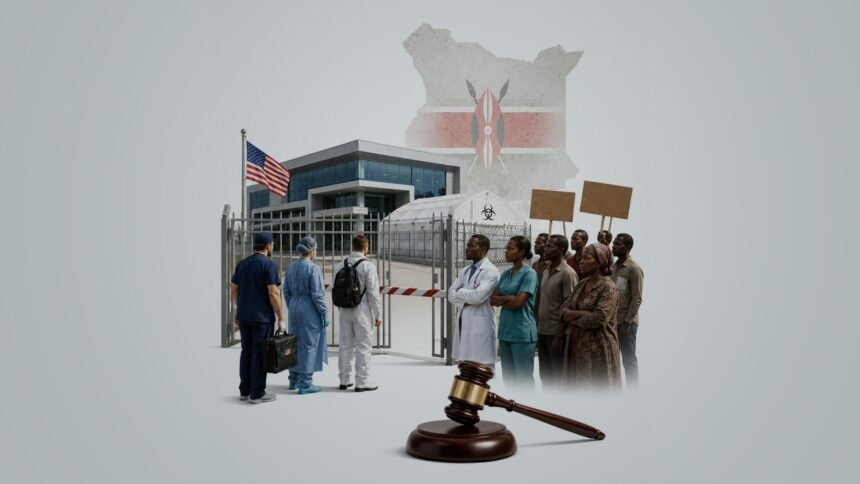
The tension between external health assistance and national sovereignty erupted into a major diplomatic and social crisis inside the Republic of Kenya following the establishment of a controversial, highly restricted medical compound. The Ministry of Health authorized the construction of a state-of-the-art Ebola isolation and treatment center funded primarily by Western capital. However, public outcry intensified when it was revealed that the facility was explicitly designated as a “US-only” clinic, restricting its advanced medical services and isolation wards exclusively to American citizens, diplomats, and military personnel operating within East Africa. This model of segregated medicine triggered immense anger across the country, as local medical practitioners, civil society groups, and legal scholars condemned the state for permitting an external power to operate an exclusive, discriminatory health enclave on Kenyan soil. In contrast, local public hospitals faced severe resource shortages.
The Contempt Mandate Against Executive Defiance
The domestic controversy quickly escalated into a landmark constitutional showdown within the country’s senior judicial architecture. Civil rights organizations and public health advocates filed emergency lawsuits challenging the segregation of the clinic, arguing that a public health facility operating within Kenya’s sovereign borders cannot legally deny treatment to citizens based on national origin. In a decisive judicial intervention, the Kenyan High Court issued an absolute injunction ordering the Ministry of Health to dismantle the restrictive access protocols and open the facility to all patients regardless of nationality.
When the executive branch attempted to bypass the judicial directive to preserve its diplomatic understandings with Washington, the judiciary acted firmly. The court formally found the Health Minister in contempt of court for deliberate non-compliance, issuing a severe warning to law enforcement agencies to enforce the judicial mandate, thereby asserting that executive diplomatic arrangements cannot override constitutional equality.
Shook Nairobi and the Disruption of Public Order
The judicial finding of contempt against the Health Minister served as an immediate catalyst for widespread public backlash and civil unrest across major urban centers. Thousands of citizens, university students, and members of independent labor unions took to the streets of Nairobi to protest executive defiance and foreign interference in domestic health systems. Holding demonstrations outside the parliament building and the Ministry of Health headquarters, protestors demanded the immediate resignation of the Health Minister and the complete nationalization of the restricted isolation facility. The scale of the public outrage disrupted central transport lines. It forced the closure of several commercial sectors, as local communities used the crisis to express broader frustrations regarding inflation, public service shortages, and the perceived subversion of national sovereignty by external donor agencies.
Balancing Executive Agendas with Judicial Independence
The institutional standoff over the segregated Ebola facility highlights the ongoing struggles for democratic maturity and civic inclusion across the contemporary East African corridor. The crisis exposes a profound tension between executive governing bodies—who often favor rapid, technocratic agreements with international partners to secure foreign capital—and independent judiciaries committed to upholding the rule of law and constitutional protections.
When central governments use emergency public health declarations to ignore judicial rulings or suppress political opposition, they weaken the baseline structures of representative democracy. True democratic resilience depends on the state’s capacity to institutionalize transparent decision-making processes, ensuring that international development projects are subject to strict legislative oversight, public debate, and inclusive civic participation to prevent the fracturing of the underlying social contract.
Building Comprehensive and Self-Determining Medical Grids
The path forward for Kenya and its regional economic partners requires a decisive transition away from fragmented, donor-dependent medical outposts toward the development of comprehensive, self-determining national health systems. Relying on ad hoc, externally managed isolation facilities to handle high-consequence biological threats leaves the domestic population structurally vulnerable to the shifting priorities of foreign capitals.
National planning ministries must prioritize sustained capital investments to expand universal health system coverage, upgrade municipal hospital networks, and ensure that advanced medical facilities are equally accessible to all citizens. By combining disciplined fiscal management with a unified commitment to medical equity and constitutional integrity, the republic can transform its public health response from a site of geopolitical friction into a pillar of national sovereignty, securing a stable, inclusive, and completely self-determining future for its citizens.