





The Pan-African Paradigm of Human Mobility and Structural Accountability
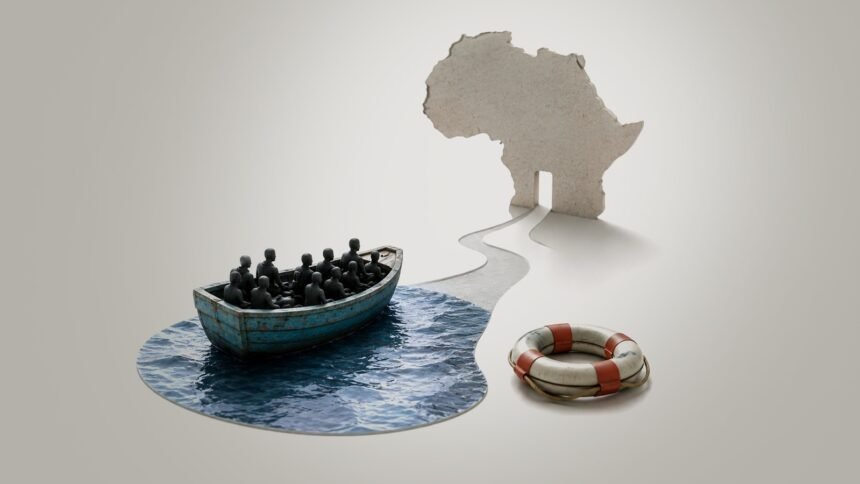
Across the African landscape, the movement of people in search of dignity and opportunity has collided ever more violently with an international system unwilling to build legal pathways commensurate with the scale of demand. The confirmation by the United Nations refugee agency that 144 people are dead or missing after a string of disembarkations off Mauritania’s coast is not merely a tragedy of individual misfortune; it is the latest data point in a structural failure spanning the entire Atlantic migration corridor, from the beaches of Gambia and Senegal to the Canary Islands and beyond. When a single vessel can drift for twenty-five days with 143 people dying aboard before rescue, the asymmetry between the desperation driving departure and the institutional response awaiting arrival becomes impossible to ignore. This is not a Mauritanian problem, nor a Gambian one; it is a continental and transcontinental accountability crisis that implicates the education systems, labor markets, and development financing structures that have failed to give young Africans viable alternatives at home. Reclaiming agency over this migration narrative demands treating it as a matter of structural justice, not simply border management.
The Vessel from Bufaloto: A Voyage’s Fatal Arithmetic
The starkest single tragedy embedded in this week’s UNHCR toll involves a vessel that departed from Bufaloto, Gambia, and was not rescued until July 18, after twenty-five harrowing days adrift at sea. Of those aboard, 143 people died during the crossing. At the same time, only 38 survivors were pulled from the boat upon its arrival in Nouadhibou, Mauritania, where UNHCR staff were present to provide emergency support. Spokesperson Matt Saltmarsh told a Geneva briefing that among the survivors were two children who had lost every member of their family during the journey and were now recovering in hospital, with authorities still unable to determine whether the deaths resulted from drowning, dehydration, starvation, or some combination of causes. The victims, Saltmarsh confirmed, came from across sub-Saharan Africa, a detail underscoring how the Atlantic route has become a convergence point for displacement pressures originating far beyond West Africa’s immediate coastline.
A Pattern, Not an Anomaly: Three Rescues in Five Days
The Bufaloto vessel was not an isolated incident but one of three rescue operations UNHCR recorded in Mauritania between July 14 and July 18 alone. A separate vessel that disembarked on July 14 carried at least one person who was dead on arrival. Across all three operations, 387 people survived, a figure that illustrates both the scale of ongoing departures and the narrow margin separating survival from catastrophe on any given crossing. Since the start of 2026, Mauritania’s ports of Nouadhibou and Nouakchott have recorded 17 separate disembarkations, with a cumulative total of 2,147 individuals rescued, a statistical density that points to an institutionalized, near-continuous flow of departures rather than sporadic, isolated attempts. This systemic pattern reflects the entrenchment of the Atlantic route as a semi-permanent feature of West African mobility, sustained by smuggling networks that have adapted their operations even as enforcement along the corridor intensifies.
Falling Arrivals, Rising Deaths: The Cruel Recalibration of Risk
Perhaps the most structurally revealing figure in UNHCR’s disclosure is the divergence between arrival numbers and mortality trends. Sea arrivals to Europe along the major migration routes have fallen by more than a third this year, with just over 40,000 recorded compared to 65,407 during the first half of 2025, according to U.N. data. Yet UNHCR was explicit that deaths and disappearances remain at what it termed alarming levels despite this decline in overall traffic. This asymmetric recalibration, fewer people attempting the journey but a persistently or even increasingly lethal per-capita risk, suggests that tightened interdiction and enforcement measures across the corridor may be pushing smuggling operators toward longer, more dangerous routes and more overcrowded vessels rather than deterring departures altogether. It is a pattern migration researchers have long warned accompanies enforcement-first policy architectures: the suppression of volume without a corresponding suppression of desperation displaces risk onto those who continue to attempt the crossing.
UNHCR’s Structural Prescription: Education, Labor, and Alternatives
In response to the toll, UNHCR renewed its call for expanded access to education and labor market opportunities as a durable alternative to dangerous sea crossings, a recommendation that reframes the crisis away from purely humanitarian rescue response and toward the developmental root causes driving departure in the first place. This structural framing matters: it positions the Atlantic corridor’s death toll not as an inevitability of geography but as a consequence of policy choices, both African and international, that have left young people in Gambia, Senegal, Mauritania, and neighboring states without sufficient institutional pathways to build futures at home. Building that alternative architecture, vocational training systems, regional labor mobility agreements, and investment in coastal economies would require a level of coordinated financing and political will that has so far eluded both African governments and their international development partners, even as the human cost of inaction accumulates in monthly UNHCR briefings.
Reclaiming the Corridor: Toward a Sovereign Migration Architecture
The tragedy off Mauritania’s coast ultimately poses a challenge to the continent’s capacity for self-determination in an arena where African governments have too often been reduced to enforcement subcontractors for European border policy. A genuinely sovereign approach to the Atlantic migration corridor would center African-led investment in the coastal economies, generating outward migration, alongside honest regional dialogue about labor mobility that does not simply externalize Europe’s border anxieties onto Mauritanian and Senegalese coastguards. As the toll from this week’s rescues is absorbed into the broader statistical record of a deadly year, the imperative for African institutions, from ECOWAS to the African Union, is to assert a structural role in shaping migration governance rather than remaining passive hosts to a crisis whose root causes lie squarely within the continent’s unfinished development agenda. Only through that kind of assertive, home-grown architecture can the corridor’s death toll begin to fall for reasons other than fear.