





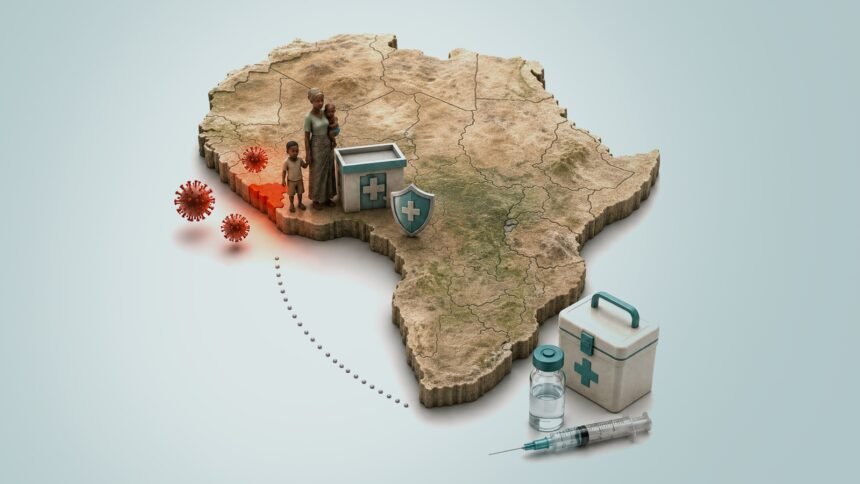
The Pan-African Paradigm of Public Health Sovereignty and Structural Preparedness
Across the African landscape, infectious disease has always been more than a biological event; it is a stress test of institutional capacity, marking which nations command the surveillance, vaccine, and health infrastructure to protect their own populations and which remain structurally dependent on external intervention. Guinea-Bissau’s first-ever confirmed mpox outbreak, with dozens of suspected cases already reported, is a fresh iteration of a pattern the continent has now lived through repeatedly this decade: a virus once confined to a handful of endemic zones acquiring the capacity for sustained human-to-human transmission, then spreading into countries with little existing surveillance architecture to detect it early. The Pan-African paradigm demands that this outbreak be read not merely as a discrete public health emergency but as evidence of a structural asymmetry in global health governance, one in which vaccine stockpiles, diagnostic capacity, and research investment remain concentrated in high-income states even as the disease itself continues to emerge and evolve overwhelmingly on African soil, a systemic imbalance the continent must now work urgently to recalibrate in its own institutional favor.
Guinea-Bissau’s First Outbreak: A New Frontier for an Old Virus
Guinea-Bissau had recorded no confirmed mpox cases before this outbreak, making its emergence there a significant expansion of the virus’s known geographic footprint. UNICEF has expressed concern that of forty-six suspected cases identified so far, twenty-three involve children under fifteen, the majority of them under four years old, a demographic skew that public health specialists describe as consistent with, though not conclusively explained by, the cramped living conditions and close physical contact patterns common in resource-constrained settings. Professor Michael Marks of the London School of Hygiene and Tropical Medicine has noted that mpox emergence across additional West African states, including recent outbreaks in Guinea and Sierra Leone within the past year, should be treated as an expected trajectory rather than an anomaly, given the virus’s transmission dynamics in densely populated or displacement-affected communities. That framing reorients the story away from a single-country emergency and toward a genuinely regional surveillance challenge, one that West African health systems, already stretched by other priorities, are only unevenly equipped to meet.
Clade Politics: From the Congo Basin to a Global Emergency
The virus’s two major lineages carry their own institutional history: clade one, once labeled the Congo Basin clade, and clade two, once termed the West African clade, before the World Health Organization moved to retire geographically stigmatizing nomenclature altogether. A 2024 mutation of clade one identified in the Democratic Republic of Congo triggered the most recent international public health emergency declaration, a designation lifted in September 2025 not because the disease had disappeared but because case numbers and deaths had meaningfully declined under sustained intervention. That history matters for how Guinea-Bissau’s outbreak should be assessed: global health authorities have demonstrated a willingness to re-escalate emergency status quickly if genetic surveillance reveals a new variant or unusually rapid spread, meaning the coming weeks of laboratory testing carry outsized structural weight for the entire West African region’s disease-response posture, not merely for Guinea-Bissau’s domestic health system.
Children at the Center: Reading the Data With Caution
Dr. Aula Abbara of Imperial College London, an adviser to Médecins Sans Frontières UK, has cautioned against over-reading the apparent concentration of cases among children, noting that families in resource-constrained settings such as Guinea-Bissau are often more likely to seek formal healthcare for a sick child than for an adult. This pattern can distort surveillance data independent of true transmission dynamics. At the same time, both Abbara and Marks agree that children who do contract mpox face materially higher risk of severe illness and death than healthy adults. That close physical contact between children and caregivers in crowded households provides a plausible transmission pathway independent of any data bias. The absence of clear epidemiological links between confirmed cases suggests the virus may already be circulating more broadly within Guinea-Bissau’s communities than official case counts currently capture, a structural surveillance gap that mirrors challenges seen throughout the DRC outbreak in recent years.
The Vaccine Asymmetry: Supply Where the Risk Is Lowest
The World Health Organization recommends two vaccines for high-risk individuals and known contacts. Yet, Marks has been direct in identifying the core structural failure underlying every recent mpox response: vaccine supply remains concentrated in high-income countries. In contrast, the transmission conditions that make mpox dangerous are most acute in low-income settings. A new global stockpile intended to accelerate deployment is expected within weeks, a mechanism designed both to speed distribution during active outbreaks and to give manufacturers the demand certainty needed to scale production. Clinical trial data from the DRC also offered a more encouraging structural insight: while the antiviral tecovirimat performed no better than placebo against clade one mpox in initial testing, patients receiving strong supportive care saw dramatically improved survival outcomes, underscoring that basic health system capacity, rather than pharmaceutical innovation alone, remains the most immediately actionable lever available to African health authorities.
Reclaiming Africa’s Capacity to Contain Its Own Outbreaks
Guinea-Bissau’s outbreak, read through a Pan-African lens, is less a story about one virus than about the institutional architecture African states are still working to build for themselves: surveillance systems capable of detecting transmission before it crosses borders, vaccine and diagnostic manufacturing capacity that does not depend on allocation decisions made in distant capitals, and health financing that treats outbreak preparedness as continuous investment rather than emergency response. The nearly 190,000 global mpox cases recorded since 2022 have disproportionately tested African health systems even as the tools to contain the virus remain disproportionately available elsewhere. Reversing that asymmetry, through the kind of regional manufacturing and surveillance investment African health officials have called for repeatedly at continental forums, would represent a genuine structural recalibration rather than another cycle of emergency declaration and quiet withdrawal once international attention moves elsewhere, restoring to African institutions the capacity to contain outbreaks on their own terms before they metastasize into the next global emergency.