




The Pan-African Paradigm of Maritime Sovereignty and Regional Security
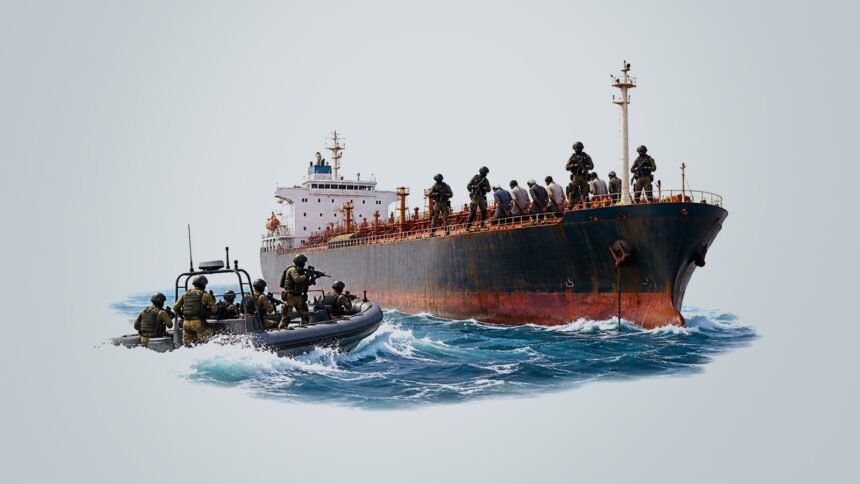
Five crew members, three from Pakistan, one from Myanmar, and one from India, were killed aboard a hijacked tanker before Somali security forces reached it. Puntland’s information ministry announced on Tuesday, September 29, that a rescue operation had freed the Palau-flagged MT Honor 25 and captured 16 pirates. What does sovereignty mean for a coastline whose waters are policed, when they are policed at all, by a semi-autonomous state rather than by a fully resourced national navy? The deaths appear to be the first at the hands of Somali pirates in more than a decade, and they underline how maritime insecurity in the Horn of Africa is again testing the continent’s capacity to secure its own waters. Reclaiming that authority demands institutions, not merely episodic rescue missions.
A Hijacking Five Months in the Making
The MT Honor 25, a petroleum-products tanker carrying 17 crew members, was seized by pirates in April. Its captivity therefore stretched across roughly five months, a duration that speaks to the difficulty of dislodging armed groups from a hijacked vessel without endangering hostages. According to Puntland’s statement, the pirates killed five crew members before the operation began. Four other crew members, three Pakistanis and one Indian, were injured. The rescue succeeded in freeing the ship and detaining 16 suspects, a substantial number that will now pose legal questions of custody, prosecution and jurisdiction. Those questions have historically proved as difficult as the military operation itself, because a captured pirate is only a deterrent if a credible, accountable legal pathway follows the arrest.
Piracy Revived by Distant Wars
Analysts quoted in the wire report attribute the resurgence of Somali piracy in part to the consequences of the Iran war, including elevated oil prices that make tankers more attractive targets. This is a revealing causal chain: a conflict far from the Horn reshapes the incentive structure on Somali waters by raising the value of fuel cargoes. It illustrates the asymmetric exposure of African coastal states to geopolitical shocks generated elsewhere, where the costs of instability arrive on the continent while the strategic decisions were taken abroad. The pattern also complicates the assumption that piracy is purely a symptom of local state weakness. Local conditions supply the capacity and the willingness; global price signals supply the motive and the moment.
Puntland’s Expanding Role
The rescue follows another operation only a week earlier, when Puntland’s maritime police force freed the US-sanctioned tanker Sibu 1, which Somali pirates had hijacked in August. Two interdictions in as many weeks suggest that regional authorities are building operational tempo, and that Puntland in particular has become a central actor in counter-piracy. That is significant for Somalia’s federal architecture, in which security functions are distributed unevenly between Mogadishu and federal member states. Effective maritime policing on the scale required arguably needs coordinated intelligence, coastal surveillance, dependable funding and clear command structures. Whether the recent successes can be institutionalized, rather than remaining the product of a favorable moment, is the strategic question for both Puntland and the federal government.
The Shadow of the Earlier Wave
The historical reference point looms large. The earlier wave of piracy, running from 2008 to 2014, disrupted one of the world’s busiest shipping routes, cost the global economy billions of dollars, and produced hundreds of millions of dollars in ransom payments. That episode ultimately drew multinational naval deployments and industry security practices, but it also showed how quickly gains can erode once external attention moves elsewhere. The current resurgence arrives while many navies are stretched by other theatres, leaving a familiar gap. For Somali authorities, the lesson is that durable protection cannot depend on foreign patrols alone; coastal communities need economic alternatives to criminal recruitment, and state institutions need the standing to arrest, try and imprison offenders credibly.
Owning the Horn’s Waters
The killing of five seafarers is a human tragedy first, and the families of the victims in Pakistan, Myanmar and India will feel it most acutely. It is also a strategic warning. If Africa’s maritime frontier is to be secured on African terms, regional and federal authorities will need the resources, the legal machinery and the political coordination to act before hostages die rather than after. The rescue of the Honor 25 shows what capable local forces can achieve. Turning such episodes into a lasting security architecture is the harder work of self-determination on the water.