


The Pan-African Paradigm of Pharmaceutical Access and Criminal Opportunity
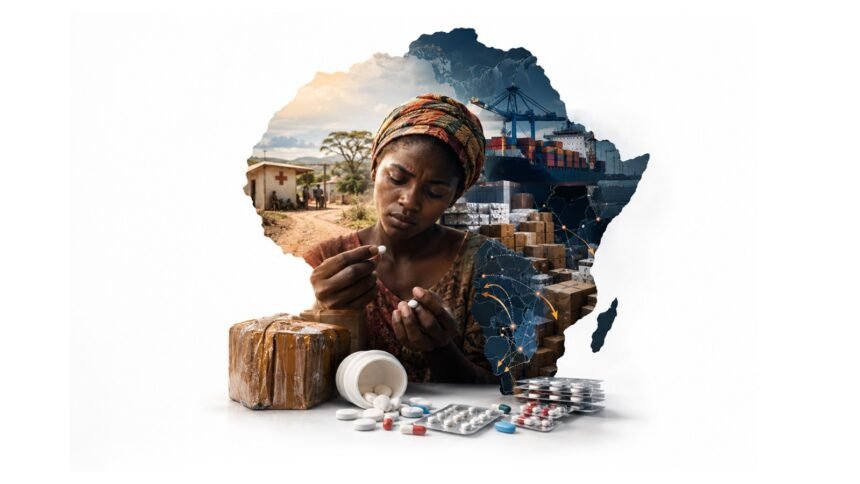
What does a patient do when a box of twelve tablets costs more than she can pay, and the nearest hospital with emergency care is hours away? In the Central African Republic, consumers told United Nations researchers that informal sellers let them buy one or two tablets for about 100 CFA francs, roughly 20 US cents, instead of a full box at a pharmacy. That small transaction, repeated millions of times, is the foundation of a criminal economy that a new report by the UN Office on Drugs and Crime (UNODC), the World Health Organization and the Economic and Monetary Community of Central Africa (CEMAC) calls a major threat to public health, development and security.
The Scale of Seizure
Authorities seized more than 251 tonnes of medical products between 2020 and 2025, according to UNODC. Annual seizures rose from about five tonnes in 2020 to nearly 116 tonnes in 2024, before exceeding 97 tonnes in 2025. Cameroon alone accounted for nearly all of the 2025 total, with 96 tonnes intercepted, compared with 2.5 tonnes five years earlier. The seized products include antibiotics, antimalarials, anti-inflammatory drugs, painkillers and psychoactive substances such as tramadol and pregabalin.
UNODC itself cautions against reading these figures as a simple measure of growth, since larger seizures can reflect both more trafficking and more aggressive enforcement, and the data vary considerably between countries and years. The sources also differ slightly on coverage: Africanews lists six countries, including Equatorial Guinea, while UNODC’s feature names five. What is not in doubt is the direction of concern.
Demand Built by Scarcity
The report’s most important finding is about demand. Malaria, tuberculosis and HIV remain widespread, while health systems struggle to provide treatment. In 2023, WHO’s universal health coverage index placed all six CEMAC countries among the world’s poorest performers, with Chad scoring 26 out of 100 against a global average of 71. In the Central African Republic and Chad, more than half the population lived at least two hours from a public hospital providing emergency care, and in Chad a prefilled insulin syringe cost nearly 16 days’ wages for the lowest-paid government employee, according to data cited by UNODC.
Under those conditions, the street market is less an alternative to the formal health system than a substitute for its absence. The report argues that cutting off illicit supply without addressing shortages, prices and distances risks leaving the market largely intact.
When the Formal Chain Is Also Compromised
The danger is not confined to roadside stalls. WHO’s surveillance system recorded incidents involving 228 medical products in the CEMAC bloc between 2013 and 2025; 71 percent were classified as falsified, 11 percent as substandard, and a third of the incidents were detected inside regulated supply chains. UNODC notes that in April 2025, WHO reported falsified batches of amoxicillin in Cameroon and the Central African Republic that did not contain the active ingredient listed on their labels. In 2023, twelve children in Cameroon died after taking a pediatric syrup made with contaminated ingredients.
The wider toll is hard to measure but grave. WHO estimates that falsified or substandard antimalarials could be associated with between 72,000 and 267,000 deaths a year in sub-Saharan Africa, and poor-quality antibiotics for childhood pneumonia with up to 169,271 deaths annually. Bad medicines also accelerate antimicrobial resistance, eroding the effectiveness of the drugs that still work.
Routes, Networks and Armed Actors
Trafficking follows the arteries of legitimate commerce. Ports of Apapa in Nigeria and Douala in Cameroon, along with river ports in Brazzaville and Bangui, are major entry points, and authorities seized 7.3 tonnes at regional airports between 2020 and 2025. Diverted products mostly originate in major exporting countries in Asia and Europe, while falsified products are also made in clandestine laboratories in CEMAC states and their neighbors. The networks are diverse: clandestine manufacturers, wholesalers, informal vendors, couriers, health workers, corrupt officials and online sellers. In the Central African Republic, armed groups loot health centers and levy taxes on shipments crossing their territory, turning medicine into conflict finance. Late last month, Gabonese customs seized 17,000 tramadol tablets, which officials blamed on cross-border traffickers from Cameroon.
Pharmaceutical Sovereignty as Regional Project
UNODC’s regional representative Sylvie Bertrand said no state can tackle this transnational challenge alone, and the CEMAC Commission says it is drafting a regional action plan and a strategy against transnational organized crime. The building blocks exist: a CEMAC Common Pharmaceutical Policy adopted in 2013 and the African Union’s African Medicines Agency, established in 2019. But structural sovereignty over medicines will not come from seizures alone. It requires harmonized regulation, laboratories able to test what is sold, local and regional production that reduces dependence on distant suppliers, and health systems close and affordable enough that patients no longer have to buy their treatment two tablets at a time. Until that asymmetric gap between need and access closes, traffickers will keep filling it.