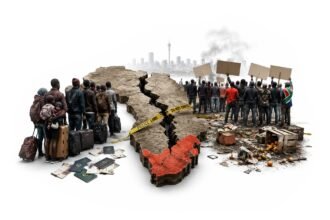






A Consulate on a Contested Frontier
How do two neighbors that each insist they want no war keep edging towards one? Ethiopia’s latest answer came on Wednesday, when it ordered six Sudanese diplomatic staff members to leave the country within 48 hours. The six work at Sudan’s consulate in Assosa, the administrative center of Ethiopia’s Benishangul-Gumuz Regional State, which lies along the border with Sudan. A senior Ethiopian official confirmed the order on condition of anonymity, citing the matter’s sensitivity, and gave no reason. The office of the Ethiopian prime minister had not commented, and Addis Ababa had made no public announcement of its own when this brief was prepared.
The expulsion is the newest step in a dispute that has moved quickly from accusations to formal complaints. Days earlier, Sudan’s army-aligned government said it had lodged complaints against Ethiopia with the United Nations Security Council and the African Union Peace and Security Council. Khartoum accuses Addis Ababa of allowing the paramilitary Rapid Support Forces (RSF) to use Ethiopian territory to launch drone attacks against civilian infrastructure inside Sudan. Ethiopia, for its part, accuses Khartoum of backing the Tigrayan rebels involved in renewed fighting in northern Ethiopia. Both governments deny the allegations made against them.
Two Wars, One Border
The diplomatic quarrel sits on top of two wars that are now pressing against the same frontier. Sudan’s war, which began in April 2023 between the Sudanese Armed Forces and the RSF, has displaced more than 14 million people, according to United Nations figures, and has become one of the gravest humanitarian crises in the world. In northern Ethiopia, fighting in the Tigray, Amhara and Afar regions erupted again in late September, nearly four years after the November 2022 Pretoria Agreement ended the two-year war between federal forces and the Tigray People’s Liberation Front.
Each conflict gives the other side a grievance. For Khartoum, the drones that have struck energy and fuel facilities and markets are the most visible threat, and it has chosen to argue its case at the Security Council and the African Union rather than on the battlefield. For Addis Ababa, the renewed Tigrayan offensive is the main danger, and it has accused not only Sudan but also Egypt and Eritrea of supporting the rebels who launched it in September. Egypt and Eritrea both deny that charge.
An independent investigation has tested neither set of allegations, and none of the accused governments has accepted any of them. That is why the expulsion order matters: it is a concrete act in a quarrel that, until now, has been fought mainly with statements and letters to international bodies.
The Cost Inside Sudan
Whoever is launching them, the drone strikes are reshaping daily life in Sudan. The UN Resident and Humanitarian Coordinator in Sudan, Denise Brown, has described an intense pattern of strikes over recent weeks on what appear to be targeted attacks on civilian infrastructure, which is protected under international humanitarian law. Energy and fuel sources, she said, appear to be systematically targeted and destroyed.
The effects are immediate. At a hospital just outside Khartoum with no generator and no solar panels, the electricity went out after strikes, and 25 patients who needed dialysis had their treatment stopped. In Khartoum, people queue for kilometers to buy fuel, and tuk-tuk drivers who earn a daily wage wait several days in a row without income. Hundreds of UN aid trucks are stuck for lack of fuel. Markets and displacement sites have also been hit. “This is not about politics. This is about people,” Brown said, urging governments to help end the fighting and to fund the response.
Families on the Move Again in the North
On the Ethiopian side of the frontier, the renewed fighting is undoing fragile returns. The United Nations says families who had recently gone back to their homes in Tahtay Adiyabo district of northwestern Tigray have been forced to flee again. Thousands of displaced people are now in Shire town in northwestern Tigray and in Debre Birhan in the Amhara region. This city already hosts people who fled West Shewa, East Wollega and West Wollega in Oromia and who face long shortages of food and shelter.
Insecurity and movement restrictions are disrupting aid delivery. In Amhara, insecurity is limiting movement on key roads linking Gonder with Debark and with Metema, the main crossing point towards Sudan. The UN has not given a breakdown of the newly displaced population by location or said when the latest movements began, and it says it is preparing to scale up assistance for those with the most urgent needs.
A Neighborhood of Expulsions
The expulsion also fits a wider pattern in Ethiopia’s diplomacy. On 1 October, Ethiopia’s Ministry of Foreign Affairs announced the closure of its embassy in Asmara. It declared ten Eritrean diplomats in Addis Ababa persona non grata, giving them 48 hours to leave. The ministry cited what it called Eritrea’s direct and indirect acts of hostility and belligerence, without publicly describing specific incidents. With Eritrea, Sudan and Egypt all now accused by Addis Ababa of backing its armed opponents, the number of neighbors with which Ethiopia has normal working relations is shrinking.
Khartoum has signaled restraint, at least in words. Amjad Farid, a political and foreign affairs adviser to Sudan’s Transitional Sovereignty Council, has said Sudan remains committed to defending its territory but is making every effort to avoid an open war with Ethiopia. The removal of consular staff from Assosa, a town close to the border and to the regions where the two crises meet, narrows one of the few practical links through which officials on both sides could manage incidents on the ground.
Who Decides the Horn’s Future
The danger for the region is that two internal wars become one regional war by accumulation rather than by decision: each expulsion, complaint and denial adds to the last until neither capital can step back without appearing to concede. The African Union Peace and Security Council now holds a formal complaint, and so does the UN Security Council. That gives African institutions a chance, and an obligation, to test the competing allegations on evidence rather than leaving them to rival intelligence briefings and outside patrons.
For Africans in the Horn, the stakes are not abstract. Displaced families in Shire and Debre Birhan, dialysis patients outside Khartoum and drivers waiting days for fuel are already paying for a dispute they did not choose. Real self-determination for Sudan and Ethiopia means settling their quarrels through their own regional bodies before foreign interests turn them into proxy fronts. Keeping consulates open, rather than closing them, would be a modest first sign that both governments mean what they say about avoiding war.