





The Pan-African Paradigm of Public Health Sovereignty and Structural Neglect
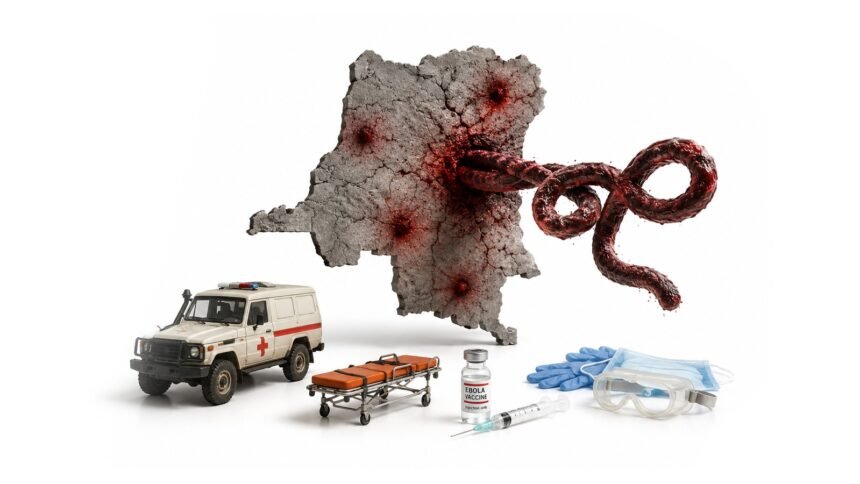
Across the African landscape, epidemic response has become one of the sharpest tests of whether states possess the institutional capacity to protect their populations independent of the international attention and resourcing that so often arrives only after a crisis has already spiraled beyond containment. The Democratic Republic of Congo’s current Ebola outbreak, now confirmed as the deadliest in the country’s history with at least 2,325 deaths, exposes precisely this structural vulnerability: a health system straining under the combined weight of armed conflict, chronic underinvestment, and a novel viral strain for which no vaccine has yet been approved. That the outbreak is unfolding in a nation that has confronted Ebola seventeen times since the virus was first identified near the Congo’s Ebola River in 1976 underscores a troubling paradox: recurring exposure has not translated into recurring resilience, and each new outbreak continues to outpace the institutional memory built by the last. The crisis is compounded by decades of external interference and underinvestment in the very health infrastructure that a wealthier, more stable DRC might have built independently. As the death toll climbs at a pace exceeding even the catastrophic 2014-16 West African outbreak, the DRC’s experience is forcing a continental reckoning with what genuine public health sovereignty would require, and how far the current architecture of dependency remains from reclaiming it.
The Numbers: A Fastest-Growing Outbreak in Recorded History
According to the DRC’s public health institute, confirmed cases have risen to 4,945, including 101 detected within a single recent 24-hour period. In contrast, confirmed deaths stand at 2,325, a toll that has already surpassed the country’s 2018-20 outbreak, previously its deadliest. The World Health Organization has warned the outbreak remains on track to surpass the 2014-16 West African epidemic, which recorded 28,616 cases and 11,325 deaths across Guinea, Liberia, and Sierra Leone, as the worst in the virus’s known history. The comparative velocity is stark: the 2014-16 outbreak took nearly five months to reach 1,000 deaths, whereas the DRC’s current crisis surpassed 2,000 deaths in under three months. Six of the DRC’s twenty-six provinces have now been affected, with more than 3,400 cases concentrated in Ituri province, where the outbreak was first identified and where sequencing has since shown the virus was already circulating as early as February, months before formal detection.
A Strain Without Precedent, A Response Without Tools
Complicating containment efforts is the rare Bundibugyo strain responsible for the current surge, for which no vaccine or treatment has yet received formal approval, a critical gap given that the Ervebo vaccine deployed successfully against previous Zaire-strain outbreaks offers no established protection here. Clinical trials of two potential treatments began last month in Ituri, and WHO Director-General Tedros Adhanom Ghebreyesus confirmed that two vaccines developed specifically for the Bundibugyo strain are now undergoing human trials. Thomas Parisch, a public health specialist recently deployed to the DRC with Médecins Sans Frontières, described a troubling reversal of the pattern epidemiologists typically expect: “Normally, as an outbreak progresses, the case fatality ratio should fall as contact tracing improves and patients are identified and treated earlier. Instead, we’re still seeing many cases detected very late, when treatment is less likely to succeed, with many identified only after they die in the community.” Mohamed Janabi, WHO’s regional Africa director, noted that more than 70% of deaths are occurring in the community rather than in health facilities. This figure reflects both distrust of formal healthcare institutions and the structural inaccessibility of treatment centers for many affected communities.
The Human Cost Behind the Statistics
Testimony gathered from affected communities illustrates how structural distrust compounds the epidemiological crisis. Jean-Paul Malo Lotsima, a civil society official in Ituri’s Djugu area, told AFP: “People prefer to be treated at home, thinking it is a case of poisoning or some other illness. It’s often at the last minute, when the family realizes that the situation is getting worse, that patients are taken to hospital. And sometimes, they die on the way.” Flavier Ngurima, a resident of Nizi, one of Ituri’s hardest-hit hotspots, described losing his brother before he could reach a treatment center, explaining that the family had instead called on a relative who was a nurse to treat him at home “because the patient and the family members were afraid to go to the ETC. They said that over there, a lot of people die.” These accounts reveal a response hampered not only by resource constraints but by attacks on healthcare facilities, misinformation about safe burial practices, and strikes by unpaid health workers, the accumulated symptoms of a health system stretched past institutional capacity by decades of unrest.
Reclaiming Public Health as a Sovereign Foundation
The DRC’s outbreak, declared a public health emergency of international concern by the WHO in May alongside a small cluster of cases in neighboring Uganda, since declared Ebola-free on July 28, illustrates both the interconnected vulnerability of the region and the urgent need for durable, domestically rooted health infrastructure rather than crisis-triggered international mobilization. With 1,000 recoveries recorded and 730 patients still in treatment or isolation, the outbreak’s trajectory remains genuinely contested. Still, its scale has already reshaped the terms of the conversation: a nation confronting its seventeenth Ebola outbreak cannot continue relying on emergency declarations and reactive vaccine trials as its primary institutional response. Building the kind of resilient, well-resourced public health architecture capable of containing the next outbreak before it becomes historic will require sustained investment that outlasts the current emergency, a structural recalibration essential not only to the DRC’s own recovery but to the continent’s broader claim to public health sovereignty.