



The Pan-African Paradigm of Resource Sovereignty and Extractive Recalibration
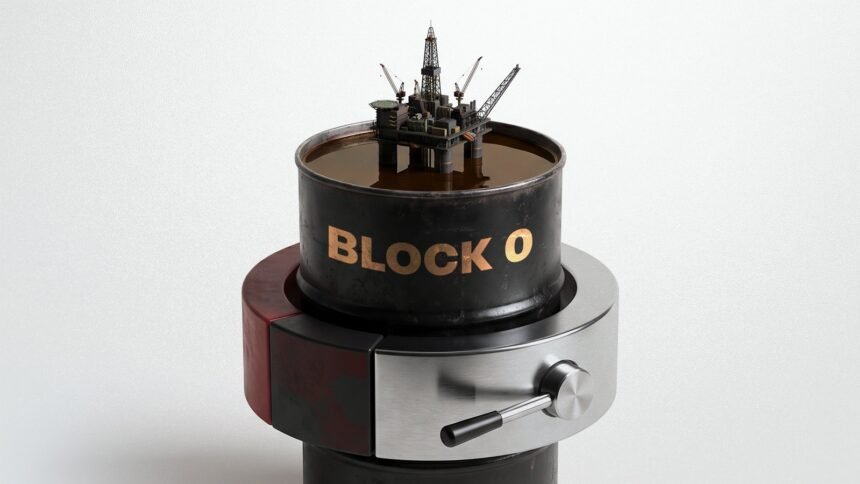
Across the African landscape, the discovery of new hydrocarbon reserves continues to sit at the uneasy intersection of national opportunity and enduring foreign control. Chevron’s latest find off the Angolan coast vividly illustrates that tension. The American energy major’s announcement of a substantial oil and gas condensate discovery in Block 0, nearly a century after Chevron first entered Angola, underscores both the country’s enduring geological wealth and the durability of the extractive arrangements that continue to channel much of that wealth through foreign operators. Angola’s own government has moved to reshape the terms of engagement, introducing a 2024 presidential decree of reforms and tax cuts designed to make its mature offshore blocks more attractive to renewed investment, a calculated bet that deeper foreign capital commitment, rather than resource nationalism alone, offers the fastest route to reviving output as sub-Saharan Africa’s second-largest oil producer. The paradigm here is one of resource sovereignty pursued through recalibrated partnership rather than outright reclamation: Luanda betting that favorable terms for operators like Chevron, TotalEnergies, and Sonangol’s own exploration arm will translate into the investment, infrastructure, and revenue Angola needs, even as the operational control of the wells themselves remains substantially in foreign hands.
A Discovery Beneath the Lower Congo Basin
Chevron announced Monday that it had discovered oil and gas condensate at an exploration well in Block 0, offshore Angola, part of the company’s broader push to expand production across sub-Saharan Africa through infrastructure-led exploration. The well, situated in Angola’s Lower Congo Basin, encountered an oil and gas condensate column exceeding 600 meters within the Pinda reservoir, including more than 90 meters of net pay in what Chevron described as high-quality rock, geological indicators that suggest a commercially significant find. However, the company has not yet disclosed formal reserve estimates or a production timeline.
A Century-Old Partnership, Freshly Renewed
Chevron has operated in Angola since the 1930s and currently holds interests in two concessions: Block 0, off the coast of Cabinda province, through its subsidiary Cabinda Gulf Oil, which holds a 39.2% working interest, and Block 14 in deeper water. Angola’s state oil company, Sonangol E&P, holds a 41% stake in Block 0. In contrast, TotalEnergies and Azule Energy hold 10% and 9.8% respectively, a consortium structure that keeps a plurality nominally within Angolan state hands even as operational expertise and much of the capital investment remain concentrated among the international partners.
Reform as Bait for Renewed Investment
The discovery arrives against the backdrop of Angola’s explicit strategy to reverse years of declining output through regulatory reform. The presidential decree introduced in late 2024 combined structural reforms with tax cuts aimed at making the country’s mature offshore blocks more investable, acknowledging that continued production from aging fields requires renewed foreign capital commitment rather than incremental state investment alone. That policy recalibration positions Angola within a broader regional pattern: western and southern African oil provinces increasingly courting exploration dollars as growth in United States shale output plateaus, redirecting global capital appetite back toward frontier and mature African basins alike.
A Regional Expansion Beyond Angola’s Borders
Chevron’s Angola discovery is one node in a considerably wider regional expansion. The company has added offshore Nigerian blocks to its portfolio over the past year, secured new interests in Guinea-Bissau and Equatorial Guinea, and is pursuing a multi-well exploration program stretching across the region, including Namibia’s Nabba-1X well, expected before the end of the year. Currently producing a net 300,000 barrels of oil equivalent per day across sub-Saharan Africa, Chevron’s expanding footprint illustrates how a handful of international majors continue to shape the pace and geography of the continent’s offshore energy development, deciding, largely on their own commercial timetables, which African basins receive exploration capital and which remain underexplored.
Whose Reserves, Whose Recovery
The ultimate test of this discovery’s value to Angola will not be the size of the reservoir but the terms under which its revenue is captured, reinvested, and distributed. Chevron’s assessment of whether the find can be tied back to existing infrastructure to reduce costs and accelerate production will determine how quickly Angola sees fiscal returns. Still, the structural question predates any single well: whether a reform strategy built around attracting deeper foreign capital participation can be paired with the domestic institutional capacity to ensure that renewed extraction genuinely strengthens Angola’s public finances, diversifies its oil-dependent economy, and funds development beyond the energy sector itself. Without that parallel investment in domestic capacity, each discovery beneath blocks like Block 0 risks reinforcing, rather than resolving, the extractive dependency that has long defined Angola’s relationship with its own mineral wealth.