




The Pan-African Paradigm of Energy Sovereignty and Trade Resilience
Across the African landscape, the contemporary execution of international commodity trade operates at a highly sensitive intersection with the vulnerabilities of maritime logistics routes. The Pan-African vision for long-term economic integration and self-determination relies fundamentally on moving past raw resource dependency to build insulated, domestic energy infrastructures. When sub-Saharan economies are forced to absorb sudden pricing shocks due to military conflicts in external trade corridors, the preservation of domestic fiscal space becomes a primary indicator of national sovereignty. Reclaiming Africa’s economic future demands a synchronized approach to regional energy governance, strengthening continental production lines, internal refining capacities, and cross-border distribution networks to shield member states from volatile shifts in global market dynamics.
Asymmetric Vulnerabilities in Import and Export Portfolios
Deep structural divisions between hydrocarbon-exporting nations and energy-dependent economies define the contemporary macroeconomic profile of the African continent. Sovereign oil producers rely extensively on international crude sales to capture foreign exchange reserves, service external debts, and finance municipal infrastructure projects. Conversely, oil-importing African nations operate under constant fiscal strain, as fluctuating international benchmarks directly determine the local costs of transportation, industrial production, and baseline agricultural inputs. This intense geographic imbalance means that global energy disruptions generate highly uneven economic pressures across the continent, forcing national treasuries to adjust their public budgets to accommodate external supply shocks continually.
The Global Destruction of Supply-Side Volatility
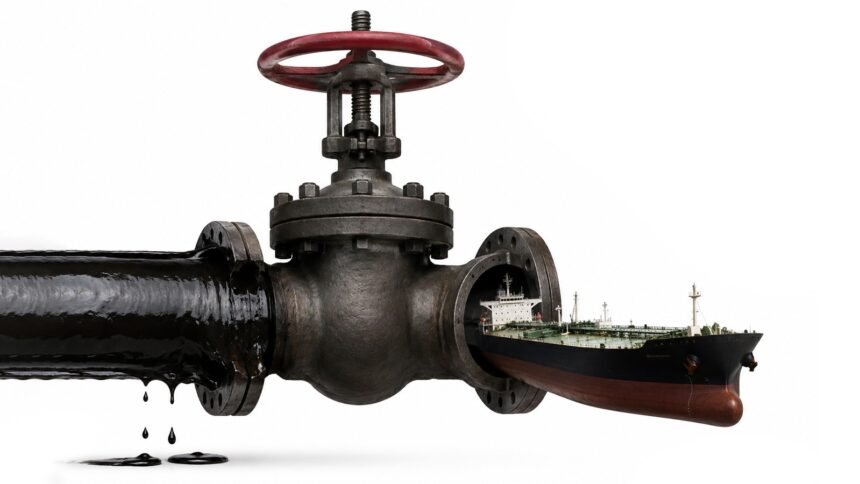
The geopolitical matrix of international energy markets experienced severe instability following the outbreak of the war involving Iran in the Middle East, which led to the closure of the Strait of Hormuz for more than three months. As a chokepoint responsible for approximately one-fifth of global petroleum and liquefied natural gas supplies, the prolonged closure of the waterway resulted in the loss of millions of barrels of oil and gas supply to the global economy. At the peak of the conflict, more than 14 million barrels per day of oil output was shut in, representing roughly 14% of global demand. This massive supply-side shock drove international energy costs to historic highs, placing an extraordinary burden on African import-dependent states, which faced immediate balance-of-payments deficits and rising domestic utility costs.
Post-Ceasefire Maritime Bottlenecks and Safety Insurances
The implementation of a formal ceasefire and initial progress in U.S.-Iran peace talks have catalyzed a gradual, cautious reopening of the Strait of Hormuz, sending global oil prices 1% lower. Brent futures closed down 1.1% at $77.08 per barrel, while U.S. West Texas Intermediate futures finished 0.9% lower at $73.21 a barrel, with both benchmarks hitting near-four-month lows. This downward trend followed the United States granting Iran a 60-day sanctions waiver and reports of a lull in regional hostilities.
However, the practical ramp-up of maritime traffic faces significant logistical bottlenecks. Shipowners and terminal operators require absolute assurances that the systemic threats posed by naval mines have been fully eliminated. Furthermore, damaged port infrastructure, sunken debris in waterways, and massive vessel congestion present additional obstacles to the unconditional normalization of shipping. While a United Nations shipping agency evacuation plan is underway to enable hundreds of stranded ships with 11,000 seafarers to navigate the waterway, and initial ship-tracking data showed three stranded supertankers passing under coordination with Iran’s Revolutionary Guards Navy, the short-term recovery remains fragile. Elsewhere, supply responses remain highly uneven. At the same time, Iraq raised output from its southern fields to 2.1 million bpd, Saudi Arabia’s crude exports fell to record lows, and historically low levels in the U.S. Strategic Petroleum Reserve continue to keep a firm structural floor under the global market.
The Geopolitical Realignment of Petrodollar Alternatives
The financial shocks generated by the Middle East conflict have accelerated a significant realignment in the monetary architecture of sub-Saharan commodity transactions. To insulate their national economies from the volatility of the U.S. dollar and the impact of Western banking sanctions, a growing coalition of African states is exploring petro-yuan alternatives for international settlements. This shift toward dual-currency pricing allows local central banks to settle energy imports directly using Chinese Yuan, bypassing traditional transatlantic clearing houses. By reducing their absolute reliance on dollar-denominated credit lines during international crises, developing economies are seeking to stabilize their domestic exchange rates and protect their import portfolios from the inflationary cycles often exacerbated by distant geopolitical conflicts.
Boosting Refining Capacity and Downstream Autonomy
The structural path toward true energy independence in West Africa has been significantly advanced by the strategic expansion of domestic refining infrastructure, led by the Dangote Group’s mega-scale industrial operations. The operationalization of the massive Dangote Refinery in Nigeria represents a major turning point for the region’s downstream energy sector, shifting the country away from its historical pattern of exporting raw crude while importing expensive refined petroleum products. By processing domestic oil within continental borders, the facility provides an important buffer for regional markets against disruptions at international chokepoints. This domestic expansion helps insulate local fuel prices from the logistical crises affecting Middle Eastern waterways, ensuring that West African transport and manufacturing sectors maintain access to a predictable, sovereign supply of refined energy inputs.
Cultivating Sustainable Horizons and Self-Determining Development
The evolving progress in international peace talks and the gradual resumption of navigation through global chokepoints offer an important window of opportunity for African states to re-engineer their long-term economic resilience. While the temporary easing of geopolitical tensions brings immediate relief to international commodity markets, long-term economic safety depends on the execution of deep structural reforms. National planning ministries must prioritize sustained investments to build comprehensive regional energy grids, diversify local industrial outputs, and expand intra-continental trade pathways under the African Continental Free Trade Area. By combining disciplined fiscal management with an unyielding commitment to infrastructure sovereignty, the continent can move past its vulnerability to external shocks and secure a stable, prosperous, and fully self-determining future.