




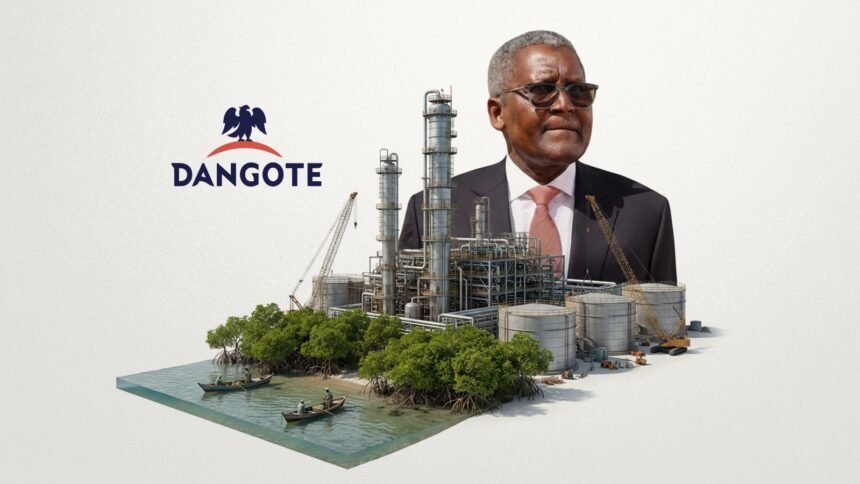
Nigerian billionaire Aliko Dangote is facing early resistance to plans for a massive oil refinery in Kenya’s coastal Lamu County as environmental groups and local residents question the project’s potential impact on ecosystems, livelihoods, and land rights.
The proposed refinery, estimated to cost between $15 billion and $17 billion, would be built in Lamu County and is expected to process 700,000 barrels of crude oil per day. If completed, it would become the largest oil refinery in East Africa.
The project is part of Dangote Industries’ broader strategy to expand refining operations beyond Nigeria. The company has indicated that financing would come from a combination of internal cash flow, bond issuance, and a planned initial public offering (IPO).
The announcement comes as Dangote’s refinery in Lagos continues to scale up operations. The Nigerian facility recently processed about 700,000 barrels per day during performance tests and is targeting a future expansion beyond 1 million barrels per day, strengthening the group’s ambition to become a major refining player across Africa.
Environmental Concerns Emerge Quickly
Opposition to the Lamu project surfaced almost immediately after the proposal became public. Environmental organizations, including Greenpeace Africa, argue that the refinery could threaten one of Kenya’s most ecologically sensitive coastal regions. Campaigners say the development may increase pollution, greenhouse gas emissions, and the risk of oil spills from tankers, pipelines, storage facilities, and refinery operations.
They warn that any major spill could damage mangrove forests, coral reefs, and marine habitats that support thousands of artisanal fishers and underpin the local tourism economy.
Activists are also calling for a comprehensive environmental and social impact assessment and broader public participation before regulatory approvals are granted. Some groups have indicated they could challenge approvals in court if they believe environmental safeguards are inadequate.
Communities cite past development disappointments. Skepticism is not limited to environmental organizations. Many residents of Lamu say they are approaching the refinery proposal cautiously because of previous experiences with large infrastructure projects.
The Lamu Port-South Sudan-Ethiopia Transport (LAPSSET) Corridor and the expansion of Lamu Port were promoted as transformative investments that would create jobs and stimulate economic growth. However, some community members argue that the projects delivered fewer local employment opportunities than expected while contributing to land and compensation disputes and to environmental degradation.
That history has made sections of the community wary of another mega-project, despite its potential economic benefits.
Strategic Importance For East Africa
Supporters of the refinery say it could significantly reduce East Africa’s dependence on imported petroleum products, improve regional fuel security, and support industrial development across neighboring countries.
For Kenya, the project could help position the country as a regional refining and energy hub. For Dangote Industries, it would represent a strategic extension of its refining business, which has already begun reshaping fuel markets in West Africa through the Lagos refinery.
A Test Of More Than Engineering And Finance
The emerging resistance underscores a broader challenge facing large industrial investments across Africa: securing financing and engineering expertise is no longer enough.
Projects increasingly depend on community acceptance, environmental compliance, and regulatory credibility. In Lamu, those issues are already becoming central to the debate.
Whether the refinery moves forward will likely depend not only on Dangote’s ability to fund and build the facility, but also on whether the company can address environmental concerns and convince local communities that this project will deliver benefits that earlier development promises failed to provide.