






Pan African Panorama: Debt’s Pervasive Pulse Across the Continent
Africa’s debt panorama unfolds as a pervasive pulse of fiscal strain and strategic maneuvering, where a $90-95 billion external repayment wall in 2026 tests continental resilience amid 4.5% GDP growth projections. Sub-Saharan liabilities, at $707 billion, devour 15% of revenues in interest, with 40% nations in distress, diverting $89-101 billion from SDGs like health and education. This pulse, triple 2012 repayments, stems from COVID-19 disruptions, commodity volatility, and climate shocks, which cost $28 billion annually, entrenching cycles of high 9.8% yields and concentrated revenues. East Africa’s $27 billion Egyptian dues underscore regional heft, while West Africa’s Nigerian $15 billion humps reflect oil dependencies. Pan-African reforms via Johannesburg’s G20 Compact, automatic suspensions, and $150 billion swaps offer a salve, yet creditor schisms delay; private-sector 43% opacity thwarts parity; U.S. tariffs on Iran tie costs. BRICS inflows of $47 billion and AfCFTA’s $650 billion uplift by 2043 promise diversification, transforming debt’s pulse from peril to potential across the panorama’s diverse terrains.
Highland Hurdles: Ethiopian Debt’s Labyrinthine Landscape
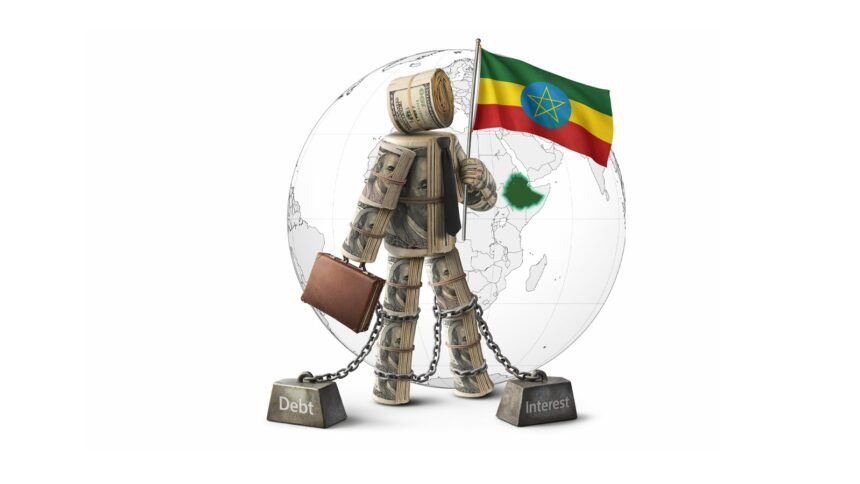
Ethiopia’s debt landscape, a labyrinth of highland hurdles, navigates $28.9 billion external stock, 100%+ of exports, amid 9.2% 2025 growth and persistent imbalances. The odyssey, sparked by Tigray’s November 2020 war and COVID’s fiscal fissures, collapsed a $2.9 billion IMF pact, triggering acute foreign exchange shortages that led to import bans in October 2022. Addis Ababa’s $1 billion Eurobond default in December 2023, which missed a $33 million coupon payment, slashed ratings, and amplified 30% inflation and a birr devaluation. Hurdles mount: a $3.4 billion IMF facility in July 2024 unlocked reforms, yet bondholder disputes, over 20% haircuts, escalated to February 2025 IMF accusations, and January 2026 preliminary pacts were rejected by official creditors such as China and France. Legal threats from ad hoc committees loom, delaying the solvency process. In this labyrinth, Ethiopia’s 7% East African lead masks vulnerabilities: 120 million people are food insecure, and drought spikes divert revenues. Yet, landscape levels with Paris Club suspensions and $8.4 billion restructurings, freeing $3.5 billion for infrastructure, charting paths from hurdles to highland horizons.
Abyss’s Anatomy: Debt Crisis’ Core Contours and Catalysts
Ethiopia’s debt crisis contours an abyss of intertwined catalysts, where war’s $10 billion drain and pandemic’s revenue collapse forged insolvency’s core. At 70% GDP, liabilities, half concessional, devour 20% budgets, with $27 billion East African repayments mirroring continental peaks. Catalyst cascade: The Tigray conflict’s disruptions halted IMF talks until June 2022, triggering forex bans and China’s August 2023 suspensions. Core fractures in December 2023: bond slides, ratings cuts, and amplifying 14.4% inflation by April 2025. The crisis deepens with official rejections of the January 2026 pacts, demands for comparability, and renewed negotiations amid the shadow of lawsuits. Abyss’s anatomy reveals systemic scars: private-creditor opacity delays the Common Framework, U.S. geopolitical frictions inflate yields. Yet, contours carve exits: the IMF’s $261 million January 2026 disbursement bolsters reforms, the birr float stabilizes, and growth is projected at 7%. In this context, Ethiopia’s crisis embodies Africa’s: catalysts of shock and structural demands for core recalibrations for ascent.
Fiscal Forging: Financial Policy Management’s Measured Maneuvers
Financial policy maneuvers in Ethiopia forge fiscal fortitude through measured reforms, blending IMF imperatives with domestic dexterity to manage the debt burden. Birr’s July 2024 float, which devalued by 30%, met IMF demands, unlocking a $3.4 billion facility and $261 million in reviews, stabilizing the forex amid a 25% reserve dip. Maneuvers include October 2024 parallel bondholder talks, expediting overhauls, and March 2025 official pacts formalized in July, suspending service for breathing space. Policy’s measured arc: revenue mobilization via tax hikes, expenditure curbs targeting a 3.5% deficit, and liability management, with buybacks easing $1 billion bond humps. Yet, forging falters: official vetoes of January 2026 deals demand renegotiations, risking legal entanglements. Management’s maneuvers extend to diversification: BRICS ties with Iran, $150 million pacts counter U.S. tariffs, while AfDB synergies bolster resilience trusts. In this forging, Ethiopia’s policies, reform momentum yielding S&P stabilizations, maneuver from the heat of default to the tempered strength of solvency.
Horizon’s Harvest: Development in Debt’s Receding Shadow
Development’s harvest in Ethiopia is set to extend beyond the receding shadow of debt, with restructuring’s resolution by mid-2026 promising $3.5 billion in fiscal space for SDG outcomes. Amid 9.2% growth, harvests sow infrastructure: energy pacts powering 120 million, countering drought’s food insecurity. Shadow recedes with IMF-backed reforms: birr stability curbs inflation by 14.4%, enabling consumption-led booms. Development’s arc: $850 million bond exchanges post-haircut foster investor confidence, unlocking FDI chilled by default. Yet, harvest hazards persist: legal disputes delay agreements, geopolitical frictions with U.S. tariffs strain ties. Horizon gleams with Pan-African synergies: AfCFTA integrations are lifting exports, and AU forums are amplifying voice in the $90 billion continental wall. In this harvest, Ethiopia’s development, private-sector-led, 7% growth projections, transmute debt’s shadow into bountiful yields, seeding the enduring fields of inclusive growth.


