





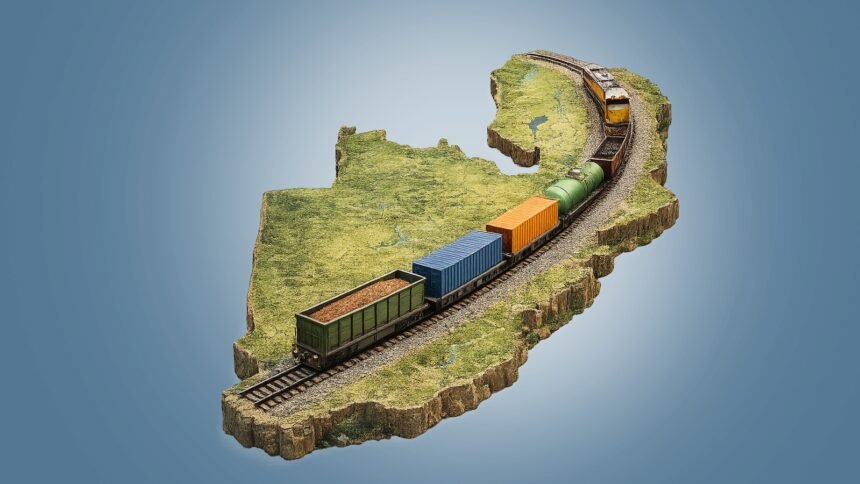
Pan-African: Rail Connectivity as the Backbone of Integration
Across the African landscape, the revitalization of rail infrastructure is increasingly recognized as the primary catalyst for realized regional integration. For decades, the continent’s logistics have been hampered by fragmented networks and a reliance on road transport that is both costly and inefficient. A unified Pan-African railway system is essential for transforming the continent from a collection of isolated markets into a cohesive economic bloc. By linking landlocked resource hubs to global maritime gateways, these “iron arteries” provide the structural foundation for the African Continental Free Trade Area, ensuring that the movement of goods and people is commensurate with the continent’s vast economic potential.
Zambia’s Railway Outlook: A Strategic Pivot to the Atlantic
The railway outlook for Zambia in 2026 is defined by a historic strategic pivot toward the Atlantic coast. As a landlocked nation at the heart of Africa’s copper belt, Zambia’s economic survival depends on efficient export corridors. The current focus is the development of a new rail line connecting the mining heartlands directly to the Lobito Corridor in Angola. This project aims to drastically reduce transit times for critical minerals, shifting Zambia’s primary logistical orientation from the congested southern routes toward a more direct western path to global markets. The 2026 outlook is one of transition, where legacy infrastructure is being bypassed in favor of a modern, high-capacity network designed for the demands of the 21st-century energy transition.
Infrastructure & Transportation: The Lobito Extension Project
The center of Zambia’s transportation strategy is the extension of the Lobito Atlantic Railway. This ambitious infrastructure project involves the construction of a new rail link from northwestern Zambia to the existing Angolan network. In April 2026, the Africa Finance Corporation (AFC) announced a targeted financial close for this project by the fourth quarter of 2027, with debt and equity fund-raising set to commence in the third quarter of this year. This extension is a cornerstone of the U.S.-backed Lobito Corridor, representing a major push to modernize regional transport. By providing a dedicated, high-efficiency rail link, the project will allow for the rapid transport of strategic metals, bypassing the “bottlenecks” that have historically stalled Zambian mineral exports.
Oil & Non-Oil Trade: Securing the Green Energy Supply Chain
Zambia’s rail development is inextricably linked to the global trade in “non-oil” strategic minerals, specifically copper and cobalt. As the world transitions toward renewable energy, the demand for these metals, essential for electric vehicle batteries and green grids, has reached a fever pitch. The new railway is a strategic asset in this “green energy” supply chain, ensuring that Zambian resources can reach the Atlantic coast with minimal logistical friction. While the “Iran war” has destabilized global oil trade and increased the cost of road transport, the shift toward rail provides a more stable and cost-effective alternative for Zambia’s non-oil exports, protecting the nation’s primary revenue stream from the volatility of international energy prices.
Zambia-South Africa Relations: Diversification Away from Traditional Routes
The development of the Lobito Corridor signals a significant shift in the logistical relationship between Zambia and South Africa. Historically, Zambia has been heavily dependent on South African ports, such as Durban, for its overseas trade. However, persistent congestion and operational challenges at South African hubs have spurred a move toward diversification. While Zambia-South Africa relations remain a vital pillar of regional trade, the pursuit of the Atlantic route represents Zambia’s need for logistical autonomy. By creating a viable western alternative, Zambia reduces its exposure to the systemic inefficiencies of the southern corridor, fostering a more balanced regional transport ecosystem where multiple gateways compete for continental cargo.
AU-AfDB Efforts: The Multilateral Push for Continental Corridors
The revitalization of Zambian rail is supported by a robust multilateral compact involving the African Union and the African Development Bank (AfDB). These bodies view the Lobito extension as a “Priority Project” within the Program for Infrastructure Development in Africa. The AfDB provides the critical de-risking mechanisms and technical support necessary to attract private capital to large-scale rail projects. These AU-AfDB efforts are focused on ensuring that national projects like the Zambian rail extension are integrated into a broader “Continental Corridor” strategy, moving away from “island” infrastructure toward a seamless, trans-continental network that supports long-term industrialization.
Investments & Development: Counter-Influence and Mineral Sovereignty
The investment landscape for Zambia’s railway is a focal point of global geopolitical competition. The U.S. and its G7 partners have identified the Lobito Corridor as a key initiative to counter Chinese influence in Africa and secure access to strategic metals. This influx of Western capital represents a major developmental opportunity for Zambia, providing the resources to build world-class infrastructure without sole reliance on a single external partner. However, for Zambia, development is about more than being a pawn in a “multipolar tug-of-war”; it is about reclaiming “mineral sovereignty.” By building the infrastructure to manage its own exports, Zambia is ensuring that the wealth generated from its subsoil is utilized to drive domestic industrialization and build a more resilient, self-sufficient national economy.