




For much of the world, Joseph Kony is a name that flared into brief notoriety during the social-media wildfire of the early 2010s and then quietly receded into the background. But for millions of people across northern Uganda, parts of South Sudan, the Central African Republic, and the Democratic Republic of the Congo, Kony is not an internet footnote—he is a living ghost of trauma. The International Criminal Court’s confirmation of 39 war-crimes and crimes-against-humanity charges against him is not merely a procedural development; it is a moment thick with history, unfinished grief, political complexity, and unresolved justice.
For years, Kony’s Lord’s Resistance Army (LRA) carved a trail of horror across vast swaths of central Africa. Entire communities lived in perpetual fear of night-time raids. Children were abducted and turned into soldiers or forced “wives.” Villages were razed, families were scattered, and generations were shaped by violence so persistent it became the grim rhythm of daily life. The LRA’s brutality was so extreme, and Kony’s messianic self-image so delusional, that the world struggled to comprehend how a rebel movement could sustain itself through such methods for so long.
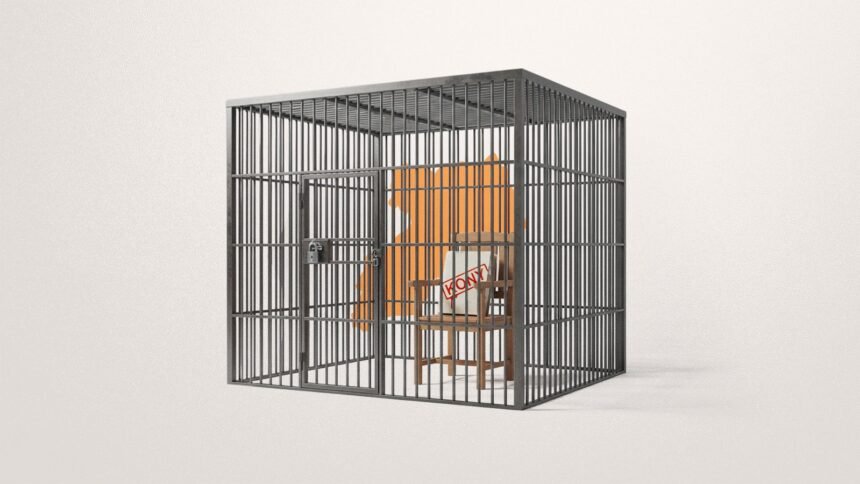
The ICC’s renewed action signals that, even decades later, accountability is not off the table. But the confirmation of charges also underscores a paradox: Kony may still be alive, but he remains elusive, slipping through forests, borderlands, and conflict zones with an agility that continues to frustrate militaries and intelligence agencies. The ICC has spent years building the legal architecture for the case, but without Kony in custody, justice remains suspended—poised, but incomplete.
What makes the reinstated urgency around these charges particularly significant is the sheer breadth of the alleged crimes. Among the 39 counts are murder, enslavement, sexual slavery, forced marriage, forced pregnancy, conscription of child soldiers, pillaging, and attacks on civilian populations. This is not merely a case of wartime misconduct; it is a catalogue of human suffering that reflects an entire ecosystem of violence. For survivors, each charge corresponds to a memory, a scar, a missing relative, a stolen childhood.
Uganda’s government has responded with cautious approval of the ICC’s move, though the relationship between Kampala and The Hague has never been straightforward. Uganda was among the early supporters of the ICC, referring the LRA situation to the court in 2004. But as the political landscape shifted, so too did the dynamics. Kampala has since expressed frustration with the ICC’s approach while simultaneously relying on it to reinforce international legitimacy. The confirmation of charges brings that relationship back into the spotlight, raising questions about whether Uganda might increase cooperation in tracking Kony or whether political priorities elsewhere will overshadow the case once again.
Meanwhile, the regional dimension cannot be ignored. The LRA’s dispersal strategy, long after its military strength waned, exploited porous borders and the absence of effective governance in remote territories. South Sudan’s civil wars created pockets where LRA remnants could operate; instability in the Central African Republic provided refuge; and the jungles of eastern Congo offered cover. Though greatly diminished, the group’s shadow persists. Small bands of fighters remain active, periodically resurfacing in attacks or looting raids. For communities living in these vast, ungoverned spaces, the announcement of new ICC charges is less a moment of relief and more a reminder that fear, even if muted, still hangs in the air.
The emotional impact of the charges is particularly profound inside Uganda. Survivor groups, civil-society organizations, and community elders have long advocated for recognition of the LRA’s victims. For many, justice has always been about more than just capturing Kony. It is about rehabilitating abducted children who returned home with deep psychological wounds; it is about supporting families who lost sons and daughters to the bush; it is about rebuilding villages destroyed by years of terror. The ICC’s confirmation of charges does not solve these deeper social and economic needs, but it does provide a measure of moral clarity: what happened was criminal, not just tragic. And it deserves full accountability.
Yet not everyone sees the ICC’s move as uncomplicated progress. Some critics argue that international justice mechanisms, especially in African contexts, often arrive late and operate in ways that feel removed from the communities most affected. They raise concerns that focusing on Kony alone risks flattening the narrative, ignoring other actors—state and non-state—whose roles in the conflict were also complex. Others worry that renewed attention may reopen wounds in fragile post-conflict communities where reconciliation has been imperfect but functional.
Still, the symbolic weight of this moment cannot be overstated. The ICC’s decision to press forward with the case, decades after the earliest crimes were committed, sends a message that atrocity crimes, no matter how distant, do not simply fade into historical haze. It is a reminder to the international system—and to perpetrators everywhere—that impunity should never be guaranteed by time or terrain.
Whether Joseph Kony will ever be captured remains an open question. His health, whereabouts, and command structure remain shrouded in speculation. Intelligence reports suggest he may be moving with a shrinking circle of loyal fighters in border regions where state authority is weakest. Others believe he may be operating through intermediaries, maintaining enough secrecy to avoid detection. But even if Kony were to be captured tomorrow, the path to justice would be long, involving complex legal proceedings and delicate political negotiations.
For now, the ICC’s confirmation of charges is less an endpoint and more a reawakening of a long-dormant chapter of international justice. It brings renewed attention to victims whose stories risk being overshadowed by newer conflicts. It challenges governments and regional actors to recommit to ending the LRA threat completely. And it forces the world to reckon with a simple truth: even the most elusive fugitives cannot outrun accountability forever—not if the world refuses to forget.
Kony once claimed he was guided by spiritual forces, chosen to lead a divine struggle across the continent. Today, the only force shaping his legacy is a legal one—the weight of 39 charges that collectively testify to the suffering of an entire region. Whether the world ever sees Kony in the dock remains uncertain. But the ICC has made one thing clear: history has not closed the book on him yet.


