




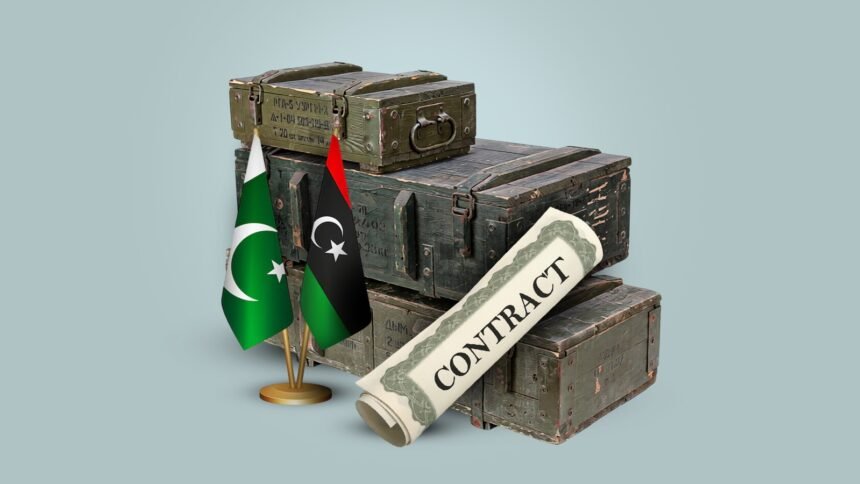
The February 2026 engagement between Pakistan and Libya’s eastern Libyan National Army, culminating in a multibillion-dollar arms agreement, marks a pivotal escalation in the nation’s protracted division, potentially tipping scales toward Field Marshal Khalifa Haftar’s de facto authority. Valued at over $4 billion, the deal, encompassing 16 JF-17 Thunder fighter jets co-developed with China, 12 Super Mushshak trainers, and assorted land, sea, and air equipment, follows Haftar’s high-level visit to Islamabad, where discussions with Prime Minister Shehbaz Sharif and Army Chief Asim Munir underscored mutual defense collaboration. This pact, one of Pakistan’s largest arms exports, arrives amid Libya’s enduring schism: the UN-recognized Government of National Unity in Tripoli grapples with a December 2025 plane crash that decimated its military command, while Haftar’s forces consolidate eastern oilfields and southern expanses. By extending diplomatic overtures, including talks for a Benghazi consulate, Pakistan inadvertently bolsters Haftar’s legitimacy, challenging Pan-African unity efforts and UN mediation, as external alignments deepen internal fractures in a land where resource wealth fuels perpetual rivalry.
Pan African Entanglements: Libya’s Rift in Continental Context
Within the Pan-African framework, Libya’s bifurcation serves as a cautionary tale about how post-colonial fractures invite external incursions, undermining collective sovereignty and amplifying regional spillovers. Once a proponent of African integration under centralized rule, Libya’s descent into dual governance post-2011 has reverberated across the Sahel and beyond, with Haftar’s eastern stronghold channeling arms flows that sustain Sudanese conflicts and Sahelian insurgencies. The Pakistan deal, formalized during Haftar’s visit to Islamabad, exemplifies this entanglement: by arming one faction, Islamabad risks complicity in continental destabilization, in which Libyan oil, controlled largely by Haftar’s domain, finances transactions that evade UN sanctions. This transaction, spanning two-and-a-half years, not only equips Haftar’s air capabilities but also signals a shift in Pan-African power dynamics, as Asian actors like Pakistan and China, through joint JF-17 production, penetrate markets traditionally dominated by Russian or European suppliers. Such entanglements erode the African Union’s aspirations for self-reliant security, linking Libya’s internal strife to broader continental vulnerabilities, in which economic imperatives eclipse unity pledges.
Libya’s Enduring Schism: Factions Forged in Turmoil
Libya’s enduring schism, rooted in the 2014 civil war, pits Haftar’s self-styled Libyan National Army against Tripoli’s fragile administration, a divide that the Pakistan arms infusion threatens to entrench further. Haftar, a former Gaddafi-era general turned eastern potentate, commands vast territories, including key oil infrastructure, and leverages alliances with Russia. Pakistan is now challenging the legitimacy of the Western Government of National Unity. The deal’s genesis traces to Saddam Haftar’s July 2025 visit to Islamabad, evolving into Munir’s December Benghazi accord, in which commitments to “professional cooperation” mask the strategic bolstering of Haftar’s arsenal amid Tripoli’s setbacks, such as the fatal Ankara crash that claimed its army chief. This schism, marked by intermittent clashes and stalled UN-brokered talks, sees Haftar’s forces profiting from oil smuggling rackets, estimated at $20 billion in recent years. At the same time, Western militias grapple with internal disarray. Pakistan’s involvement, which prioritizes export revenues over neutrality, underscores Libya’s role as a geopolitical chessboard, where arms inflows perpetuate a cycle of division that undermines post-uprising democratic visions.
War-torn Libya: Arms Flows Fueling Perpetual Conflict
In war-torn Libya, the influx of foreign arms has sustained a decade of conflict, with Pakistan’s $4 billion pact poised to arm Haftar’s eastern bastion and exacerbate the imbalance against Tripoli’s beleaguered forces. Since the 2011 NATO intervention, Libya’s arsenal, once Gaddafi’s stockpiles, has dispersed among militias, fueling skirmishes that claimed thousands and displaced multitudes. Haftar’s 2019 siege of Tripoli, repelled by Turkish drones, highlighted this arms race; now, Pakistani JF-17s could enhance his aerial dominance, countering Western vulnerabilities exposed by the 2025 command decapitation. Oil corruption, orchestrated by Haftar’s kin through fuel swaps that devour state coffers, finances such acquisitions, thereby intertwining military might with economic predation. This perpetual conflict, where ceasefires like 2020’s falter amid proxy meddling, transforms Libya into a fractured arena: eastern consolidation under Haftar risks renewed offensives, while western fragmentation invites exploitation. Pakistan’s deal, amid Benghazi consulate talks, not only arms one side but legitimizes its grip, prolonging a war that hemorrhages human potential and regional stability.
Two-Governments in the same country: Parallel Powers in Perpetual Standoff
The anomaly of two governments in the same country defines Libya’s paralysis, in which Haftar’s Tobruk-aligned authority rivals Tripoli’s UN-backed entity, a duality that the Pakistan pact may solidify by conferring implicit recognition on the east. Emerging from the 2014 HoR split, this parallel structure sees Haftar’s Libyan National Army governing oil-rich expanses, while Dbeibah’s administration clings to western urban centers amid militia dependence. The standoff, unbroken by failed 2021 elections, manifests in bifurcated institutions: dual central banks, separate oil revenues, and conflicting foreign policies. Pakistan’s engagement, Haftar’s February 2026 meetings yielding defense commitments, directly, and the tilt toward eastern empowerment, potentially encouraging other nations to engage with Benghazi, as consulate plans suggest. This duality perpetuates inefficiencies: resource revenues siphoned through corruption fund rival militaries, while national dialogue stalls over power-sharing. In this fractured sovereignty, Haftar’s bolstered legitimacy through arms and diplomacy risks entrenching separation and challenging UN efforts to forge a unified polity amid escalating external validations.
Political Recognition vs. Political Agenda: Haftar’s Gains in Global Gambits
The tension between political recognition and political agenda in Libya intensifies with Pakistan’s overtures, where arms deals mask bids for influence that elevate Haftar’s eastern regime over Tripoli’s nominal authority. UN recognition favors the West, yet Haftar’s alliances, with Russia supplying mercenaries and Pakistan now furnishing jets, confer de facto legitimacy through military force. The $4 billion agreement, encompassing advanced hardware, aligns with Islamabad’s agenda: exporting surplus arms amid economic strains, while Haftar secures aerial superiority to deter Western advances. Benghazi consulate discussions, linked to the pact, signal recognition’s creep: joining the sparse diplomatic presence there bolsters Haftar’s claim as a sovereign equal, potentially drawing more partners wary of Tripoli’s instability following the plane crash. This versus dynamic exposes agendas: Western backers, such as Turkey, prioritize unity, whereas Eastern patrons exploit divisions to secure resource access. Haftar’s gains risk sidelining inclusive agendas, transforming recognition into a tool for agenda-driven dominance that perpetuates Libya’s geopolitical tug-of-war.
National Dialogue: Stalled Paths to Reconciliation
National dialogue in Libya remains stalled, with external deals, such as Pakistan’s arms infusion to Haftar, undermining UN-led efforts to bridge the east-west divide through inclusive talks. Initiatives since the 2020 ceasefire, envisioning elections and unified governance, have faltered amid mutual preconditions: Dbeibah demands Haftar’s disarmament, while eastern factions insist on veto power over power-sharing. The Pakistan pact, amid Haftar’s high-profile visits, amplifies this impasse: bolstered militarily, Haftar may eschew concessions, viewing arms as leverage in dialogues. Corruption scandals, implicating Haftar’s son in fuel heists, further erode trust, as dialogues devolve into recriminations over resource mismanagement. Pan-African mediation, through African Union synergies, advocates endogenous solutions, yet foreign arms flows, including Pakistani jets, prioritize agendas over reconciliation. Reviving dialogue demands de-escalation: sanctioning enablers, fostering militia integration, and prioritizing electoral roadmaps to transcend the dialogue’s perennial hurdles.
Unity Horizons: Forging a Cohesive Libyan Future
Unity horizons for Libya hinge on transcending arms-fueled divisions, in which agreements such as Pakistan’s pact with Haftar necessitate recalibrated international pressures to prioritize cohesion over factional empowerment. Envisioning a unified state requires dismantling parallel structures: merging militaries, centralizing oil revenues, and enacting constitutional reforms that have been stalled since 2011. The pact’s implications, which elevate Haftar’s legitimacy through consulates and jets, demand countermeasures: UN sanctions on arms inflows, AU-led forums for demilitarization, and incentives for dialogue participation. Pan-African solidarity, channeling Libyan resources toward continental development, could mitigate internal rivalries, fostering unity through shared prosperity. Ultimately, horizons brighten with endogenous agency: youth-driven reforms, anti-corruption drives, and inclusive governance that relegate external agendas to the periphery, repositioning Libya from fractured battleground to unified beacon in North Africa’s mosaic.


