



As a new solar mini‑grid hums to life in rural Nigeria and global lenders push an ambitious plan called Mission 300, African analysts are asking whether this will finally be the decade the continent lights up on its own terms.
On a hot afternoon in Plateau State, central Nigeria, the sound of an electric rice mill now drowns out the cough of old diesel engines in the farming town of Namu.
Inside a low concrete building, women feed grain into steel hoppers powered by a 50‑kilowatt solar mini‑grid, commissioned by Nigeria’s Rural Electrification Agency with support from the United Nations Development Programme and the Global Environment Facility under the Africa Minigrids Programme.
Until recently, the work depended on fuel deliveries that sometimes never came. When prices spiked, the machines fell silent and rice spoiled in storage. Now, according to the project partners, the mini‑grid supplies reliable electricity to more than 1,500 people, around 100 households, 180 women rice processors, a school, a health centre, and several small shops, linking clean power directly to agricultural value chains and local incomes.
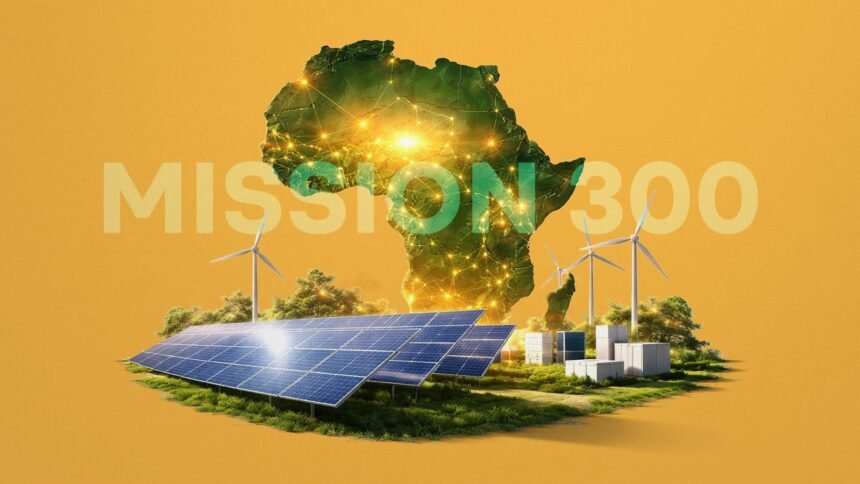
Projects like this are multiplying across the continent. At the same time, a massive initiative, Mission 300, led by the World Bank Group and the African Development Bank, promises to connect 300 million Africans to electricity by 2030.
Together, these efforts underpin a growing view among African commentators that the mid‑2020s, and 2026 in particular, may mark a genuine pivot in how the continent tackles energy poverty and climate risk.
Sub‑Saharan Africa remains the epicentre of the world’s electricity access crisis. Nearly 600 million people still live without power, limiting everything from basic healthcare to digital education and manufacturing. Progress has been real in some countries, but overall, it has been too slow to keep up with population growth.
Mission 300 is the most visible attempt yet to change that trajectory. Launched in 2024, the initiative commits the World Bank Group to support connections for 250 million people and the African Development Bank for another 50 million by the end of this decade.
The plan combines grid expansion with decentralised technologies such as solar mini‑grids and stand‑alone systems, acknowledging that traditional grid extension alone will not reach remote communities quickly or cheaply enough.
By 2025, the World Bank reported that its operations in Africa had already connected more than 31 million people to electricity through projects aligned with Mission 300, with programmes underway that could reach many tens of millions more.
A separate development briefing noted that early Mission 300‑linked efforts had begun to show “first successes,” from rural demand‑stimulation schemes in Zambia to new mini‑grids in several countries.
In parallel, African and international analysts have started to frame 2026 as a possible “turning point” or “breakthrough year” for the continent’s clean‑energy transition.
Opinion pieces in outlets such as Citizen Digital and African Leadership Magazine point to growing solar pipelines, new storage projects, and an emerging class of distributed systems, from home solar kits to mini‑grids like Namu’s.
Those arguments rest on a wider backdrop of promises. The 2023 Africa Climate Summit in Nairobi produced a declaration calling for Africa’s renewable capacity to rise from about 56 gigawatts in 2022 to at least 300 gigawatts by 2030.
At COP30 in Brazil, global leaders reaffirmed a goal to triple renewable capacity worldwide to 11,000 gigawatts by 2030 and, according to a widely cited Kenyan commentary, pledged more than 50 billion dollars in new commitments for African renewables, including off‑grid solar and mini‑grids.
Human Stories and Real‑World Examples
For residents of Namu, those big numbers show up in small, concrete ways. The Rural Electrification Agency and UNDP describe the town’s mini‑grid as a model for linking electricity access to agriculture. The system runs rice mills, cassava graters, and cold storage, in addition to providing lighting for homes and public services.
Women processors now mill at night if a daytime delivery arrives late. Farmers have an incentive to bring more grain to market, knowing they can process it locally.
“This is not just about electrifying a community; it is about energizing lives, livelihoods, and local economies,” UNDP’s resident representative in Nigeria, Elsie Attafuah, said at the commissioning ceremony in March 2026.
REA’s managing director, Abba Aliyu, called it the first project under the Africa Minigrids Programme in Nigeria and “more than access to power, it’s access to opportunity.”
Across Africa, similar ideas are being tested. The Africa Minigrids Program, a country‑driven technical assistance initiative led by UNDP with core funding from the Global Environment Facility, now works with 21 African countries to make low‑carbon mini‑grids more financially viable and attractive to commercial investors.
Programme documents say it aims to reduce hardware and financing costs, strengthen regulations, and help governments design mini‑grids around household needs, social services, and productive uses like irrigation and small industry.
Industry groups such as the Africa Minigrid Developers Association argue that these systems are one of the most practical tools for closing Africa’s energy‑access gap while limiting emissions and powering rural economies. In their view, mini‑grids complement, rather than replace, national utilities: they reach places the grid will not reach for years, if ever, and can later be interconnected.
Policy, Debate, and Expert Views
Mission 300 and the mini‑grid push share a common bet: that public‑private partnerships and blended finance can finally unlock clean‑energy investment at scale.
The World Bank’s Mission 300 overview emphasises reforms to make utilities more efficient, attract private capital, and improve regional power trade, alongside its connection targets. The Africa Minigrids Program focuses on technical assistance, regulatory and de‑risking support, leaving actual project development to governments and companies.
Supporters say this approach reflects lessons from past efforts. Purely state‑driven projects often struggled with underfunded utilities and political interference; purely private schemes sometimes bypassed the poorest communities.
By sharing risk and setting clearer rules, advocates argue, governments can draw in investment while still steering outcomes.
But there is no guarantee that 2026 will truly be a turning point. The opinion pieces that use that phrase present it as an opportunity, not a certainty. Many African countries continue to wrestle with debt stress, currency volatility, and climate shocks that can delay projects or derail reforms.
Critics warn that mini‑grids remain heavily dependent on concessional funding and that tariffs acceptable to regulators may still be too high for poor households, or too low to cover long‑term maintenance.
Civil society groups add an equity concern: if the focus stays narrowly on “bankable” projects, the most remote and marginalised communities could be left behind unless subsidies and social protection are built in from the start. There is also a deeper strategic debate about how quickly African countries can, or should, move away from fossil fuels while still delivering reliable power for industry and jobs.
What Comes Next
For now, the story looks different depending on where you stand. In Namu, the solar‑powered mill and the lit‑up homes are proof that clean‑energy projects can move from PDFs to power lines.
In boardrooms and ministries from Abuja to Nairobi to Washington, Mission 300 and the Africa Minigrids Program are test cases for whether the current wave of pledges, reforms, and partnerships can coalesce into something more than another “decade of promise.”
Whether 2026 is remembered as a real inflection point will depend less on the rhetoric of turning points and more on what happens next: how many of the planned projects get built, how inclusive the benefits are, and how firmly African governments can shape an energy transition that works for their people as well as the planet.