




Gold Pits as a War Economy
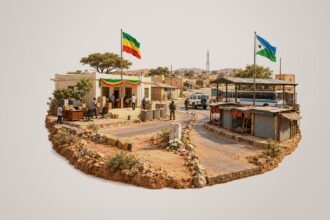
At about one o’clock in the morning on 1 September, more than 60 fighters on motorbikes rode into an artisanal gold mining site about 1.5 kilometers northwest of Soubo village, in the Ouahigouya district of Burkina Faso’s northern Yatenga province. Many of the people there were asleep; others were still working. The fighters opened fire on them and on those who tried to run. A restaurant owner, 37, later described how the gunmen moved from shed to shed and shot two of her customers at point-blank range in front of her before setting her restaurant on fire.
Human Rights Watch says the attackers belonged to the Group for the Support of Islam and Muslims, known by its Arabic acronym JNIM, an armed group linked to Al-Qaeda. In a report published on 4 November, the organization says JNIM killed at least 27 civilians in two attacks in Yatenga in September: 24 people at the Soubo mine and three people, including a five-year-old boy, killed four days later by an explosive device on a dirt track near Mera village. It calls both attacks apparent war crimes.
How the Night at Soubo Unfolded
Witnesses told Human Rights Watch the assault lasted about two hours. At least 20 people were injured, many by bullets, others with broken limbs from falling as they fled; those with gunshot wounds were treated at the regional university hospital in Ouahigouya. The fighters burned sheds, huts used as small restaurants, motorcycles, mills, water pumps and mining tools. Residents identified the attackers by their clothing, turbans, and a white flag with black writing that they associate with JNIM.
The organization interviewed 15 people remotely in September and October, including four witnesses to the Soubo attack and three to the Mera blast. It verified and geolocated four videos posted online showing the aftermath, and used NASA fire-detection data that registered numerous fires at the site at 1:11 a.m. on 1 September. Satellite images from 26 August show at least 800 structures at the site; images from 10 October show hundreds destroyed or no longer visible. Residents provided a list of 24 named victims, three women and 21 men aged between 27 and 45. One miner who returned three days later said he saw at least 20 bodies and helped carry them for burial in the cemeteries of Soubo, Pirgo and Sissamba.
Two Accounts of Who Was Killed
JNIM disputes the description of the victims. In a written response dated 30 September, the group’s Sharia Committee acknowledged that its forces attacked Soubo. Still, it said those killed were members of the Volunteers for the Defense of the Homeland, the government-allied militia known by its French initials VDP, and “not civilians”. Witnesses gave a different account: they said neither soldiers nor VDP members were present during the attack or stationed at the site, although patrols occasionally passed through the surrounding area. Human Rights Watch concluded the victims were civilians.
Some witnesses believed the attack was revenge. They noted that JNIM’s fighters include many ethnic Fulani, and that Fulani people who had also worked at the mine had been killed or abused by the army and the VDP, who viewed them as collaborators. One man hiding in a pit said he heard a fighter shout: “You chased us away, but you won’t exploit this place.” Another fighter told the restaurant owner to tell the men that the mining areas belonged to the group.
The Bomb on the Road to Mera
On 5 September at about 9:30 a.m., an explosion tore through a motorcycle on a dirt track about three kilometers from Mera, on the route to Soubo and Sissamba. It killed the 40-year-old driver and his two passengers, a woman aged 65 and a five-year-old boy. Witnesses had seen at least four fighters on that track the evening before. Soldiers who arrived afterward found and defused three more devices so that residents could recover the bodies.
Human Rights Watch could not verify what kind of device was used or how it was set off, and residents’ belief that JNIM planted it rests on the group’s presence in the area and its repeated use of improvised explosive devices. Devices triggered by a victim’s presence or contact work as anti-personnel mines and are banned under the Mine Ban Treaty, which Burkina Faso ratified in 1998. In 2024, the country recorded more than 200 casualties from landmines and explosive remnants of war, among the highest totals in the world.
A State That Suspended Mining but Never Came
The Soubo killings also expose how thinly the state reaches into the countryside. In June, the territorial administration minister suspended artisanal mining in Ouahigouya district from 1 July to 30 September because of the risk of landslides in the rainy season. Yet about a thousand people, including miners, shopkeepers, cooks and children, were at the site on the night of the attack. Residents said no official ever came to enforce the suspension.
Gold sites matter to JNIM because they produce money. The group raises revenue through “taxation” and extortion at mines, recruits fighters there, and uses them to extend its territorial control. Data from the Armed Conflict Location and Event Data project count 125 JNIM attacks across Burkina Faso from January to August, killing 188 civilians, at least 16 of them in explosive-device attacks. Abuses run in both directions: in April 2026, Human Rights Watch documented killings of Fulani civilians by the army and allied militias that it described as ethnic cleansing of entire communities.
Protection as the Measure of Self-Rule
Burkina Faso’s military authorities have built their legitimacy on the promise of restoring security and national control over the country’s resources, gold above all. The Soubo attack tests that promise on both counts: a lucrative mining site was left unprotected, and the people working it were treated by an armed group as spoils in a war over territory. “The authorities should urgently strengthen protection for threatened communities, investigate abuses, and fairly prosecute those responsible,” said Ilaria Allegrozzi, senior Sahel researcher at Human Rights Watch, who also urged better demining and help for victims of explosive devices.
Genuine control over Burkina Faso’s resources will not come from decrees issued in Ouagadougou alone. It requires a state present at the mine and on the rural track. These investigations cover abuses by every armed actor, including government-allied forces, and justice that the families of Soubo and Mera can see. Without that, the gold of Yatenga will keep funding the very groups that make it so deadly to dig.