


Pan-African: The Continental Weight of Forced Displacement
Across the African landscape, the movement of displaced populations remains one of the most pressing challenges to the Pan-African vision of stability and shared prosperity. The ideal of a borderless, integrated continent is frequently tested by the reality of hundreds of thousands of people fleeing localized conflict, seeking safety in neighboring states that often face their own economic and social constraints. The situation in East Africa, particularly regarding the influx of displaced persons into Burundi, reflects a broader continental struggle: the need for a unified, rights-based approach to migration that balances national security with the fundamental African value of providing sanctuary to those in need.
Burundi’s Refugee Camps Outlook: A Landscape of Scarcity
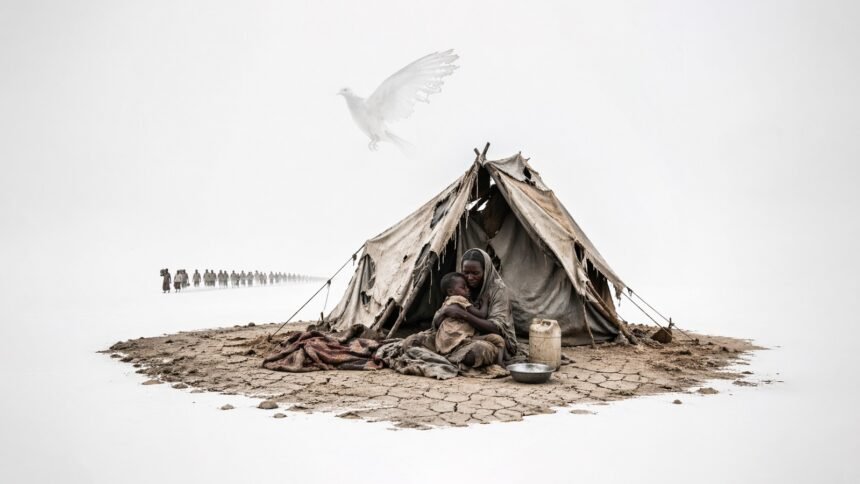
The current outlook for refugee settlements in Burundi is defined by a rapid and overwhelming expansion that has outpaced the nation’s internal capacity to provide even the most basic human necessities. Since early 2025, the intensification of clashes in the eastern Democratic Republic of the Congo (DRC) has funneled tens of thousands across the border, bringing the total number of Congolese refugees in Burundi to over 80,000. New settlements, such as the Busuma camp established in December 2025, have become symbols of this crisis. These sites are characterized by a profound lack of infrastructure, where families are forced to sleep on the ground without adequate shelter, blankets, or consistent food supplies, creating a landscape of acute physical and psychological vulnerability.
International Community Obligations: The Deficit of Global Solidarity
The deteriorating conditions in Burundi’s camps highlight a significant deficit in the fulfillment of international community obligations. While Burundi, one of the world’s poorest nations, has kept its borders open, the global humanitarian response has struggled to keep pace with the scale of the need. The principle of “burden-sharing,” enshrined in international refugee law, dictates that the responsibility for the displaced should not fall solely on the shoulders of neighboring host states. However, the lack of blankets, medicine, and nutritional support in sites like Musenyi suggests that the international commitment to these vulnerable populations is currently falling short of the required humanitarian standard.
Political Unrest in Burundi: The Internal Fragility Factor
The management of the refugee crisis is complicated by Burundi’s own internal political and economic landscape. Any nation facing its own socio-political sensitivities is naturally constrained in its ability to host large foreign populations. The memory of past political unrest and the persistent challenge of domestic poverty create a delicate environment for the administration in Gitega. For a country navigating its own path toward stability, the “sudden influx” of tens of thousands of people creates a dual pressure: the government must ensure that the humanitarian crisis in the camps does not translate into broader domestic instability or communal friction, particularly in border regions already sensitive to regional shifts.
Refugee Integration & Inclusion: The Barrier of Social Marginalization
True sanctuary requires more than just the provision of space; it necessitates a pathway toward integration and inclusion. However, in the current Burundian context, the sheer struggle for survival acts as a barrier to social cohesion. Many refugees, such as those in Busuma, find themselves socially and economically marginalized, attempting to earn a pittance through informal labor like charcoal production just to feed their children. Without institutional programs that facilitate education, healthcare access, and the right to work, these populations remain trapped in a state of “permanent temporariness,” disconnected from both their home country and their host society.
AU-UN Efforts: The Limits of Multilateral Intervention
The response to the crisis is currently anchored by the collaboration between the African Union and United Nations agencies, including the UNHCR and the World Food Programme. These multilateral efforts are focused on stabilizing the “fast-growing” camps and providing the logistical scaffolding for emergency aid. However, these interventions are often reactive, limited by the volatility of regional conflicts and the chronic underfunding of African humanitarian appeals. While the AU provides the political framework for regional peace-building, the “M23” rebellion and other armed movements continue to drive the displacement, illustrating the limits of multilateral intervention in the face of persistent asymmetric warfare.
Recent Developments: The Escalation of Human Suffering
The most significant recent developments in the region are the tragic reports from the frontlines of the camps in April 2026. Relief workers have documented a rise in child mortality rates, driven by a lethal combination of exposure to the cold and chronic malnutrition. As the “fall of Uvira” and other urban centers in the eastern DRC continues to push new waves of people across the border, the situation in camps like Busuma has transitioned from a localized emergency into a full-scale humanitarian catastrophe. The recent evidence of families sleeping on bare earth without blankets in one of the world’s poorest countries serves as a stark reminder that without an immediate and massive influx of international support, the “sanctuaries” of Burundi will continue to be sites of profound and preventable human loss.