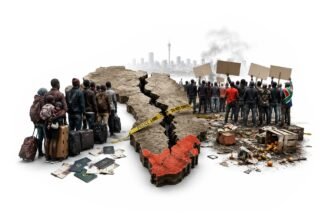






Pan-African: Continental Solidarity and External Interventions
The African continent’s relationship with the global north has historically been defined by a tension between sovereign development and external intervention. Pan-Africanism, at its core, advocates for the self-determination of all African peoples and the dismantling of racial hierarchies that once defined the colonial era. However, when external powers implement migration policies that appear to prioritize specific racial or ethnic subgroups within an African nation, it challenges the spirit of continental solidarity. Such selective asylum programs can be perceived as an attempt to re-litigate internal African social dynamics from afar, potentially undermining the collective efforts of African states to build integrated, non-racial societies.
South Africa-USA Relations: The Friction of Exceptionalism
The bilateral relationship between Pretoria and Washington has entered a period of strategic friction, shaped by divergent views on global governance and human rights. While the United States remains a significant trade partner, South Africa’s independent foreign policy, characterized by its leadership within the BRICS bloc and its vocal stance on international justice, has frequently placed it at odds with U.S. administrations. The introduction of specific refugee pathways for South African citizens, based on claims of domestic discrimination, adds a layer of diplomatic complexity. This dynamic suggests a move toward “exceptionalist” diplomacy, where migration policy is utilized as a tool to signal political disapproval of a sovereign state’s internal social contract.
Afrikaners & South Africa: Identity and Land in the Post-1994 Era
The Afrikaner community, descendents of primarily Dutch, German, and French settlers, has occupied a complex position in the South African landscape for centuries. Since the transition to multiracial democracy in 1994, this community has had to navigate a fundamental shift in its political and social status. Central to current anxieties are debates over land reform and the legacy of economic disparities. While many Afrikaners remain deeply integrated into the nation’s professional and agricultural sectors, a vocal minority has expressed fears regarding “farm attacks” and the impact of Broad-Based Black Economic Empowerment (B-BBEE) policies. These concerns have become the primary narrative used to advocate for international refugee status, framing a domestic debate over resource redistribution as a case of systemic persecution.
Post-Apartheid South Africa & Now: The Struggle for the Rainbow Nation
Thirty years into its democratic journey, South Africa continues to grapple with the “original sin” of apartheid: extreme systemic inequality. The current era is defined by the governing party’s efforts to rectify centuries of racialized dispossession while maintaining economic stability. While the “Rainbow Nation” ideal remains a powerful cultural touchstone, the reality is a country still divided by deep economic chasms. Government initiatives aimed at redressing historical wrongs, such as land expropriation without compensation, are viewed by the state as essential for long-term peace, but are characterized by critics and some international observers as a threat to minority property rights, fueling the push for external asylum.
Refugee Program in the USA: The Priority Expansion
Under the current U.S. administration, the refugee program has seen a controversial expansion specifically aimed at white South Africans. Recent policy discussions have centered on increasing the existing 7,500-person refugee cap by an additional 10,000 slots to accommodate this group. This program classifies eligible applicants as victims of “racial discrimination,” a designation that has already seen the first groups of white South Africans granted refugee status and resettled in the United States. This program represents a significant departure from traditional U.S. refugee policy, which typically prioritizes populations fleeing state-sponsored violence, war, or total societal collapse, marking instead a focus on “perceived” discrimination in a functioning democracy.
Political Disputes Between South Africa & the USA: Sovereignty vs. Oversight
The expansion of the U.S. refugee program for South Africans has intensified existing political disputes between the two nations. Pretoria has viewed such moves as an affront to its sovereign judicial and political processes, arguing that South Africa possesses robust constitutional protections for all its citizens. Washington’s willingness to grant refugee status based on internal South African policy debates is interpreted by many as an intrusive form of “human rights oversight” that ignores the historical context of the country. This friction is compounded by broader geopolitical disagreements, resulting in a relationship where migration policy has become a surrogate for deeper ideological conflicts over race, land, and the legacy of colonialism.
The Way Forward: Toward a Non-Racial Global Protocol
The way forward requires a recalibration of how international asylum programs intersect with the domestic policies of sovereign African states. To prevent the weaponization of refugee status, the global community must adhere to non-racial protocols that prioritize those in the most objective and immediate danger. For South Africa and the United States, a more productive path involves transparent dialogue on land reform and economic justice, rather than the implementation of selective migration schemes that risk exacerbating internal divisions. Ultimately, a stable future for the region depends on supporting the construction of a non-racial society where all citizens feel secure, ensuring that the need for “sanctuary” is rendered obsolete by the success of the democratic project.