



Pan-African Ecological Security: Re-engineering Continental Resilience
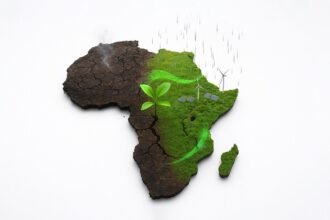
Across the African landscape, the contemporary execution of macroeconomic and environmental policy faces a critical turning point as climate change reshapes traditional livelihoods. The Pan-African vision for a self-sustaining continent, as articulated in the African Union’s Agenda 2063, is being severely tested by environmental crises that cross national borders and overwhelm local institutions. In the Horn of Africa, the breakdown of historic agricultural cycles has transformed vulnerable territories into permanent ecological emergencies. Reclaiming the continent’s shared future requires a fundamental shift away from short-term crisis management toward a unified, proactive defense of human security. This approach must prioritize the structural protection of smallholder farmers and pastoralists, ensuring that ecological resilience is treated as a core element of national sovereignty rather than a peripheral humanitarian issue.
The Dynamics of Absolute Scarcity: Mapping the Fragility of Local Agriculture
The contemporary food security outlook for Somalia is defined by an absolute collapse of agrarian output, pushing the population into a deep humanitarian crisis. More than 6.5 million citizens, representing nearly a third of the national population, have been pushed to the brink of severe hunger. This profound scarcity is driven by a recursive environmental loop in which traditional agricultural zones are systematically stripped of their productive capacity. For millions of families whose survival depends on harvesting maize, beans, sesame, and vegetables, the loss of reliable seasonal inputs has turned formerly fertile river valleys into barren dust basins. The resulting deficit in basic nutrition has triggered a secondary crisis, with nearly 1.9 million children under the age of five now facing acute malnutrition. This situation has completely overwhelmed rural trade networks and left the domestic food supply deeply vulnerable to ongoing external shocks.
Macroeconomic Pressures: Energy Disruptions and the Fiscal Cost of Survival
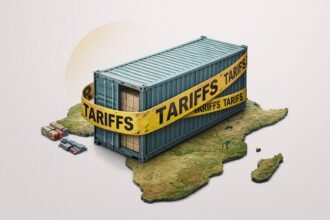
The domestic survival crisis is heavily worsened by intense international economic shocks that complicate national fiscal planning. The formal outbreak of the international conflict involving Iran and the resulting naval disruptions in the Strait of Hormuz have sent shockwaves through regional markets. For a net-importing economy like Somalia, the sharp increase in global fuel prices has driven up the cost of transport and food distribution. This energy inflation occurs alongside significant cuts to international aid, creating a severe budget crunch. The rising cost of basic commodities has drained the purchasing power of ordinary citizens, forcing families to exhaust their remaining assets to secure a single daily meal. This dynamic proves how global geopolitical conflicts can directly worsen localized famine risks in peripheral states.
Executive Deadlock: Constitutional Stalemates and Institutional Paralysis
The execution of a coordinated, state-led response to the escalating hunger crisis is paralyzed by an acute executive and constitutional crisis in Mogadishu. The official mandate of the federal parliament expired on 14 April 2026, followed closely by the presidential term on 15 May 2026. While controversial constitutional amendments were enacted to extend the term of the sitting government under President Hassan Sheik Mohamud, opposition coalitions have aggressively rejected these extensions as an illegal power grab. This political friction spilled over into public unrest when police forces utilized lethal force to disperse large civic demonstrations, resulting in civilian casualties. As political factions focus entirely on a tense standoff over the national electoral process, structural governance has reached an impasse, leaving the state’s administrative organs unable to address or manage the humanitarian emergencies unfolding across the country.
The Climate Paradox: Asymmetric Shockwaves of Drought and Deluge
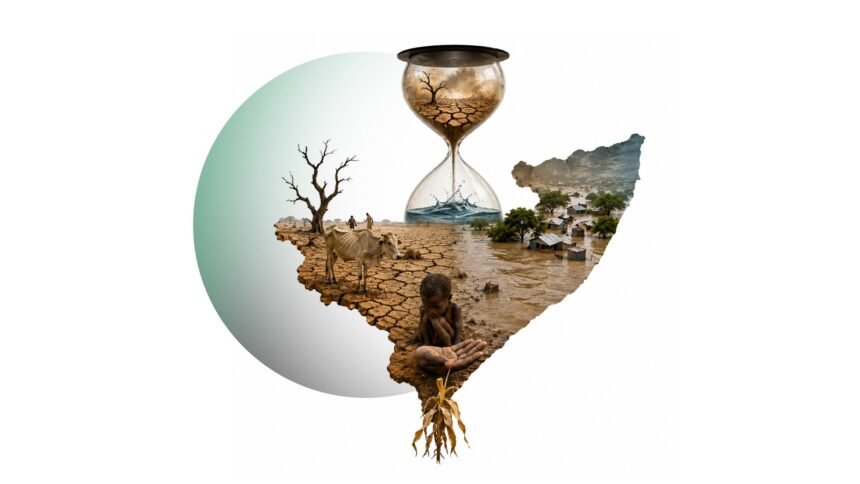
The physical driver of rural displacement in Somalia is characterized by an erratic climate paradox: protracted periods of absolute drought are immediately followed by destructive flash floods. For over three consecutive years, central regions such as Burhakaba experienced a complete absence of precipitation, drying up local reservoirs and decimating livestock herds. However, when rains finally returned, the parched, uncultivable topsoil was unable to absorb the moisture, generating massive flash floods that swept through towns like Janale in the Lower Shabelle region. This climate crisis operates alongside active conflict, as government forces deploy military drones to combat al-Shabaab militants in the same rural zones. Trapped between environmental shocks and high-tech warfare, rural communities are stripped of their livelihoods and forced into rapid, unplanned displacement.
Multilateral Gridlock: Shrinking Budgets and Clinic Closures
Bilateral and multilateral interventions spearheaded by the United Nations World Food Program (WFP), the Food and Agriculture Organization (FAO), and the African Union are navigating extreme operational constraints. During a visit to the region, the UN humanitarian chief, Tom Fletcher, expressed deep frustration over the shrinking capacity of aid agencies to respond to the crisis due to severe funding shortfalls. This resource deficit has had devastating consequences on the ground, forcing the permanent closure of nearly 500 vital nutrition clinics across the country. The few remaining stabilization centers, such as the International Committee of the Red Cross facility at Kismayo General Hospital, are under immense pressure, forced to manage a constant influx of severely malnourished children with limited medical supplies. This structural failure highlights the limits of a global humanitarian framework that relies on unpredictable voluntary donations during a permanent climate emergency.
Enclaves of Despair: The Rapid Growth of Informal Settlements in Mogadishu
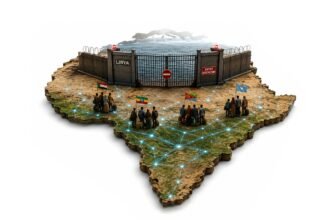
The failure of rural production has triggered a massive wave of internal displacement, turning the peri-urban fringes of Mogadishu into vast enclaves of informal settlements. More than one million displaced persons have crowded into basic, overcrowded camps across districts like Kahda, living in temporary shelters constructed from sticks, old clothes, and salvaged plastic. Inside these settlements, access to clean water, sanitation, and hygiene infrastructure is nonexistent, creating fertile ground for secondary disease outbreaks. Displaced families, predominantly women and children, face absolute economic exclusion; with no formal skills outside farming, many mothers are forced to beg in urban centers like the Bakara market to avoid returning empty-handed. In these settings, the struggle for basic physical survival has become so overwhelming that broader human development goals, including basic primary education for children, have been entirely abandoned.
Reclaiming the Social Contract: Strategic Frameworks for Durable Recovery
The way forward for Somalia requires a fundamental transition away from temporary emergency relief toward a long-term strategy of structural resilience and civic reconciliation. Reclaiming the path to sustainable development depends on immediate, high-level political dialogue to resolve the constitutional electoral stalemate, allowing the state to re-focus its administrative capacity on public welfare. The government, in close cooperation with continental partners, must invest in climate-adaptive infrastructure, including the construction of managed boreholes, advanced irrigation systems, and protected agricultural corridors. Furthermore, international donors must reverse aid cuts and provide predictable, long-term financing to reopen closed nutrition clinics and formalize the economic status of displaced populations. Success will ultimately be measured by the state’s capacity to build a resilient governance architecture that protects its citizens from both environmental shocks and political instability, securing a dignified and self-sustaining future for the republic.