






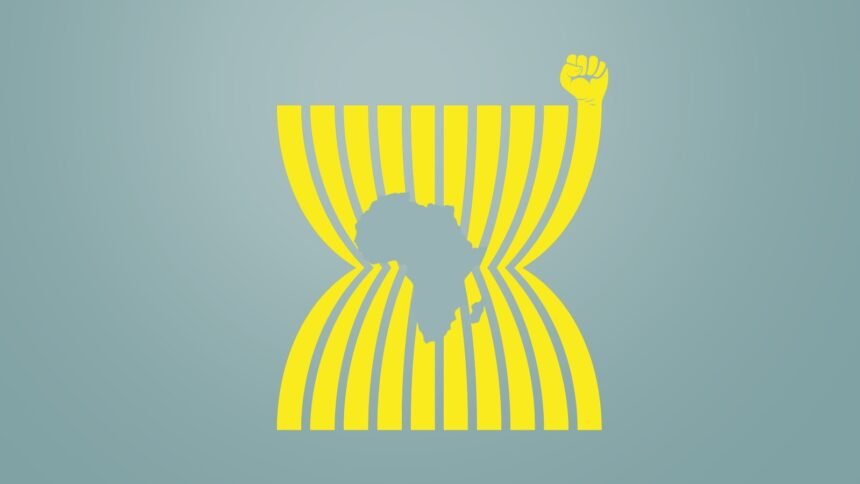
Pan-African Resurrection: From Bandung Spirit to AfCFTA Realism
The dream of a self-reliant Africa never died; it merely slept. It was born in the 1955 Bandung Conference, where Asian and African nations first declared a joint refusal to be pawns in the Cold War chessboard. That same spirit animated the founding of the Organisation of African Unity in 1963 and lives today in the African Continental Free Trade Area (AfCFTA), launched in 2021 and now the world’s largest free-trade zone by number of member states. With a combined GDP approaching $4 trillion and a population of 1.4 billion (65% under thirty-five), Africa is no longer a continent of charity cases but an emerging single market whose gravitational pull is finally being felt in Southeast Asia.
ASEAN, founded four years after the OAU in the furnace of the Vietnam War and Confrontation, was itself a child of the Bandung generation. Indonesia, Malaysia, the Philippines, Singapore, and Thailand came together not out of ideological uniformity but out of a shared realisation that small and medium-sized nations could only survive by pooling diplomatic weight and economic complementarities. Over five decades, that instinct produced a bloc whose combined GDP now exceeds $3.8 trillion, whose middle class numbers 350 million, and whose ports handle 40% of global container traffic between Asia and Europe. The resurrection of Pan-African ambition and the maturation of ASEAN pragmatism are now converging at a moment when both regions seek to escape the middle-income trap and the geopolitical crossfire of larger powers.
The ASEAN Way Re-Visited: Lessons in Loose Integration for a Fractured Continent
The European Union is often held up as the gold standard of regional integration. Yet, its supranational institutions, single currency, and enforceable legal order are politically impossible in Africa and were never desired in Southeast Asia. ASEAN’s alternative model—inter-governmental, consensus-based, sovereignty-obsessed, and proudly messy—offers Africa a far more realistic template.
Where the EU demands harmonised regulations before trade can flow, ASEAN has spent fifty years lowering tariffs and non-tariff barriers while allowing each member to keep its own labour laws, environmental standards, and foreign policy. The result: intra-ASEAN trade rose from 15% of total trade in 1980 to nearly 25% today, without a single country surrendering its veto. Africa, with fifty-four sovereign states and deep linguistic, legal, and colonial inheritances, can study how Brunei (population 450,000) and Indonesia (275 million) sit at the same table as equals, how Buddhist Thailand and Muslim Malaysia resolved maritime disputes through quiet bilateralism rather than Strasbourg-style courts.
Practical blueprints already exist. ASEAN’s Initiative for ASEAN Integration (IAI), launched in 2000 to narrow the gap between the six older members and the newer quartet of Cambodia, Laos, Myanmar, and Vietnam, has disbursed targeted capacity-building funds without the humiliation of structural adjustment programmes. Africa could replicate this through an AfCFTA Narrowing-the-Gap Facility, financed jointly by Nigeria, South Africa, Egypt, Kenya, and Morocco, to bring landlocked, least-developed states into continental value chains. The ASEAN Single Window—a digital platform that allows a container to clear customs once for the entire region—has cut trade costs by 15%. Roll that model out to the AfCFTA’s eight existing Regional Economic Communities, and the continent could save $450 billion in logistics costs over a decade.
Dragon, Eagle, and the Art of Omnidirectional Hedging
No analysis of ASEAN–Africa relations can ignore the elephantine contest between China and the United States. Beijing has been Africa’s largest bilateral trading partner since 2009 and its largest lender since the early 2000s. By 2024, Chinese contractors had built or financed more than 10,000 kilometres of railway and 100,000 kilometres of highway across the continent. Yet the same period has seen African debt to China rise to $150 billion, with at least 12 countries spending more than 20% of government revenue on debt service to Chinese entities.
ASEAN’s experience is instructive because it lives next door to the dragon. China is ASEAN’s largest trading partner ($900 billion in two-way trade in 2024) and its most significant source of tourists, students, and infrastructure finance. Yet every ASEAN member (even Cambodia and Laos, which are ostensibly pro-China) has simultaneously deepened security and technology ties with the United States, Japan, India, and the European Union. The Philippines fights China in the South China Sea but sends 30% of its exports there. Vietnam builds factories for Apple and Intel while importing 40% of its intermediate goods from China. This omnidirectional hedging—never putting all eggs in one geopolitical basket—is second nature to ASEAN diplomats and is increasingly the playbook for sophisticated African capitals.
Africa does not need to choose sides; it needs to master the same balancing act. Rwanda hosts Africa’s largest Chinese-built convention centre yet signed a minerals-for-infrastructure deal with the European Union in 2024. Kenya borrows from China to build the Standard Gauge Railway but awarded the data-centre contract for its new tech city to American firms. The Democratic Republic of Congo, holder of 70% of global cobalt, is negotiating separate critical-minerals partnerships with Indonesia, Malaysia, and South Korea—ASEAN countries that possess refining capacity but not the raw ore. These triangular arrangements allow Africa to capture more value while giving ASEAN downstream access shielded from U.S.–China trade wars.
Trade Reimagined: From Raw Exports to Continental Value Chains
In 2024, Africa–ASEAN merchandise trade crossed $70 billion for the first time—still modest beside Africa–EU ($300 billion) or Africa–China ($290 billion), but growing at 12–15% annually since 2019. The composition, however, remains stubbornly colonial: 68% of African exports to ASEAN are crude oil, unrefined metals, and agricultural commodities; 72% of ASEAN exports to Africa are manufactured goods—palm oil derivatives, electronics, motorcycles, textiles, and pharmaceuticals.
The opportunity is to flip this pattern. Indonesia, the world’s largest producer of palm oil, imports soybeans and maize for animal feed; Nigeria and Tanzania are among the few tropical countries with surplus arable land and can become swing suppliers. Malaysia and Singapore dominate the refining of nickel and tin, metals produced in abundance by the DRC, Zambia, and Zimbabwe. South Africa’s automotive industry already assembles BMWs and Mercedes for Europe; it could just as easily assemble Proton and Perodua vehicles for the African market under licence, using ASEAN designs and African labour.
Services trade is the sleeper hit. ASEAN is home to three of the world’s ten largest e-commerce platforms (Shopee, Lazada, Tokopedia). Africa’s Jumia, Takealot, and new pan-African entrants are hungry for payment gateways, logistics algorithms, and last-mile solutions perfected in the archipelagic chaos of Indonesia and the Philippines. Conversely, Africa’s mobile-money revolution—M-Pesa, MTN MoMo, Orange Money—has leapfrogged traditional banking in ways that still elude much of Southeast Asia outside Singapore. Cross-investment in fintech could create the first genuinely global South digital payment corridor.
Investment Flows: Sovereign Funds, Family Conglomerates, and Patient Capital
ASEAN’s outward FDI stock in Africa reached $28 billion by mid-2025, concentrated in four sectors: agribusiness (Thai Charoen Pokphand and Wilmar in East Africa), telecommunications (Singapore’s Singtel and Malaysia’s Axiata across West Africa), energy (Malaysia’s Petronas in Sudan and Mozambique), and manufacturing (Indonesia’s Indorama in Nigeria’s textiles and Ethiopia’s cement). These are not fly-by-night portfolio flows but multi-decade commitments by family-owned conglomerates that understand political risk and are willing to train local workforces.
Africa’s own sovereign funds and pension funds are waking up to ASEAN’s stable 6–8% returns. Nigeria’s Sovereign Investment Authority quietly built a $350 million portfolio in Indonesian toll roads and Vietnamese real estate by 2024. South Africa’s Public Investment Corporation holds stakes in Singapore REITs and Thai hospital chains. As African pension assets grow past $1 trillion over the next decade, ASEAN offers diversification away from overpriced U.S. treasuries and volatile European equities.
Green Industrialisation: The Next Frontier
Both regions face the same existential deadline: decarbonise while industrialising. ASEAN aims for net-zero by 2050–2065; Africa has even less fiscal space to buy its way out of a coal- and diesel-lock-in. Yet both sit on enormous renewable potential—Southeast Asia’s equatorial sun and Africa’s Sahara and Congo Basin hydropower—and both need the critical minerals to build the batteries and grids of tomorrow.
The just energy transition partnership model, pioneered in South Africa (with $8.5 billion from G7 countries), is too slow and too conditional. An ASEAN–Africa Green Growth Compact could be faster and fairer: Indonesia and Malaysia bring floating solar expertise, Vietnam offers the world’s cheapest utility-scale solar tariffs ($0.03/kWh), and Africa brings land, irradiance, and minerals. Joint ventures in Namibia’s green hydrogen valleys, Morocco’s solar parks, and Kenya’s geothermal fields could be bankrolled by blended finance from the Asian Infrastructure Investment Bank, the African Development Bank, and ASEAN’s own green bond issuers (Singapore and Malaysia issued $45 billion in green bonds in 2024 alone).
A New Geography of Hope
The old geography pitted North against South, developed against developing, donor against recipient. ASEAN and Africa are writing a new one: two formerly colonised regions, 2.2 billion people strong, with median ages below 30, sitting on raw materials, markets, and the demographic energy to build the first truly post-Western economic order.
This will not be a formal alliance with flags and annual summits. It will be quieter, more transactional, and therefore more durable: Indonesian refiners in Kinshasa, Kenyan coders in Jakarta, Ghanaian cocoa processed in Johor Bahru, Vietnamese wind-turbine technicians in the Moroccan desert. Trade corridors, digital bridges, and green supply chains will do what ideology and rhetoric never could—bind the Global South not through solidarity slogans but through shared prosperity.
The 21st century will not belong to the North Atlantic. It may not even belong exclusively to the Dragon or the Eagle. Quietly, persistently, and with growing confidence, it is beginning to belong to the monsoon lands and the equatorial belt—to the archipelagos of Southeast Asia and the vast savannahs, rainforests, and deserts of Africa, learning from each other how to stand tall in a world that once looked down on them both.


