





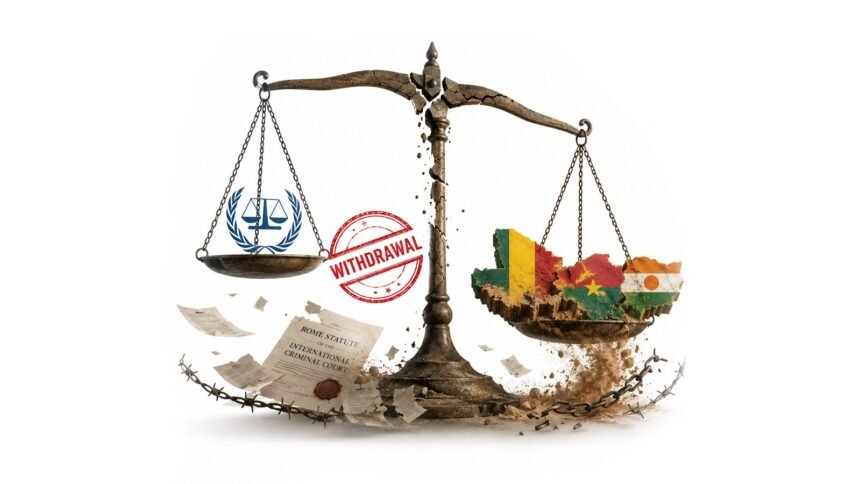
The Institutional Assertion of National Autonomy
Across the African landscape, the structural relationship between sovereign states and international judicial architectures is undergoing a historic realignment. The Alliance of Sahel States (AES) represents a radical expression of modern Pan-African agency, explicitly rejecting external oversight mechanisms in favor of uncompromised national authority. By asserting that local administrative institutions must hold exclusive jurisdiction over domestic matters, these nations are challenging the legacy frameworks of global governance. This institutional pivot reflects a broader continental debate regarding the balance between universal legal oversight and the fundamental right of African nations to manage their internal political, military, and legal systems without external coercion.
The Consolidation of Regional Power
The macro-political landscape of the Sahel in 2026 is defined by the consolidation of a highly integrated, military-led bloc comprising Burkina Faso, Mali, and Niger. Operating collectively as the Alliance of Sahel States, these administrations have systematically decoupled their foreign policies from traditional Western-backed alliances. A strong emphasis on state survival, institutional centralism, and a shared rejection of regional bodies like ECOWAS characterizes the political outlook. This unified political front has enabled the three capitals to synchronize their domestic agendas, presenting a coordinated challenge to the post-colonial administrative structures that have historically shaped West Africa’s geopolitical landscape.
The Realities of Asymmetric Warfare
The operational environment across the Sahel remains intensely compromised by the presence of deeply entrenched Islamist insurgencies that control significant expanses of territory. Throughout 2026, militant networks have escalated their tactical campaigns, launching frequent high-intensity attacks against core military targets and civilian infrastructure. This complex asymmetric warfare has placed immense pressure on the armed forces of Burkina Faso, Mali, and Niger. The fluid nature of these cross-border insurgencies has turned the central Sahelian rangelands into a continuous theater of conflict, forcing the state apparatus to treat counter-terrorism operations as an absolute prerequisite for sovereign survival.
Engineering a Unified Command
In response to the transnational nature of the insurgent threat, the Alliance of Sahel States has established a highly coordinated security framework designed to maximize joint operational capacity. This alliance has facilitated synchronized border operations, shared intelligence networks, and mutual defense protocols that allow the armed forces of one state to operate seamlessly within the territory of another. By engineering this indigenous security command, Burkina Faso, Mali, and Niger aim to bridge the logistical and tactical gaps that have historically hindered regional counter-insurgency efforts, demonstrating a capacity to manage complex military operations independent of Western security scaffolding.
Restructuring Paramilitary Alliances
The structural realignment of Sahelian defense strategies is heavily supported by the integration of private paramilitary organizations, most notably Russian private military contractors operating under state-directed frameworks. This operational partnership has seen the deployment of foreign tactical advisors and combat personnel to support the national armies of Mali and Burkina Faso in active conflict zones. While this security cooperation has provided the military-led states with immediate access to advanced weapons systems and frontline combat support, it has also complicated the regional security dynamic, introducing new geopolitical actors into the Sahelian corridor and shifting the strategic focus toward high-intensity kinetic warfare.
The Limits of Multilateral Mediation
Multilateral interventions spearheaded by the African Union (AU) and the United Nations (UN) have faced significant structural constraints when engaging with the Alliance of Sahel States. As the military-led administrations increasingly view international peacekeeping mandates and diplomatic missions with skepticism, the leverage of traditional multilateral bodies has noticeably diminished. Global human rights groups have frequently raised concerns regarding possible atrocities committed by both insurgent factions and state armed forces in the theater of war. However, the lack of institutional alignment between the central Sahelian states and Western-led international agencies has limited the effectiveness of external reporting, highlighting the growing divide between global accountability mechanisms and local defense realities.
Rejecting the Rome Statute
The defining institutional development of the current period occurred on July 2, 2026, when the International Criminal Court (ICC) officially confirmed that Burkina Faso, Mali, and Niger had formally initiated the year-long process of withdrawing from the Rome Statute. This coordinated legal departure follows an initial announcement in September, where the member nations of the Alliance of Sahel States denounced the permanent war crimes tribunal as “a tool of neocolonial repression”.
The presidency of the ICC’s governing body confirmed that the three states had submitted their official letters of withdrawal, starting a mandatory one-year transition period before the separation is complete. The primary catalyst for this historic exit is the deep systemic friction between the court’s universal mandate and the state’s insistence on absolute military flexibility during an existential security crisis. The AES states argue that the tribunal’s focus on individuals within state armed forces undermines national morale and compromises their capacity to wage war against asymmetric insurgent networks.
Reimagining Accountability Mechanisms
The impending withdrawal of the Alliance of Sahel States from the International Criminal Court represents a profound challenge to global efforts designed to end impunity. While the ICC leadership has emphasized that the decision to withdraw from the treaty does not retroactively release a state from legal obligations incurred while it was a party to the treaty, the move effectively limits the tribunal’s future enforcement capacity. Reimagining justice in the post-ICC Sahel requires the urgent development of indigenous, high-integrity transitional justice mechanisms at the national and regional levels. Success in the region will be defined by whether the Alliance of Sahel States can construct localized accountability structures that can genuinely investigate violations and protect civilian populations, ensuring that the rejection of external courts leads to a stricter, more sustainable domestic rule of law.