





The Pan-African Paradigm of Technology Co-optation and Resource Sovereignty
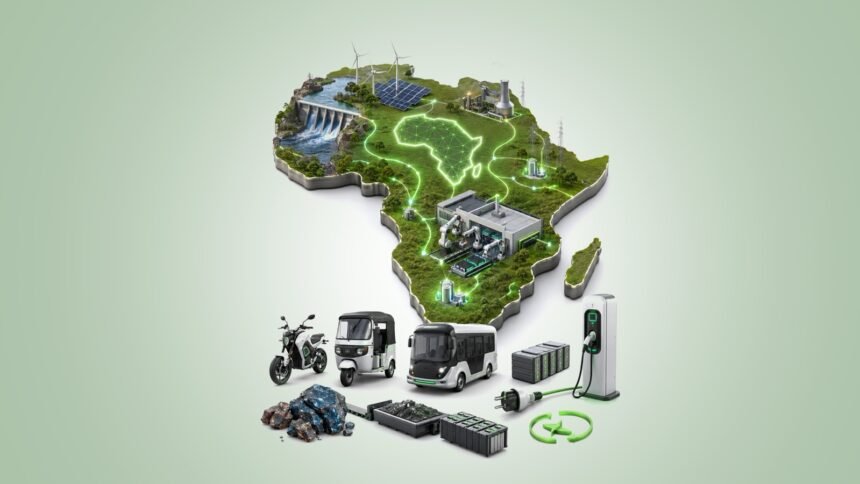
Across the African landscape, the contemporary configuration of global energy governance places intense pressure on developing nations to balance rapid logistics modernization with the preservation of structural sovereignty. The Pan-African vision for complete economic self-determination requires a decisive transition away from historical reliance on external fossil-fuel supply lines toward self-sustaining, clean infrastructure networks. When sub-Saharan transport corridors are structurally tied to highly volatile global commodity markets, domestic development remains vulnerable to geopolitical disruption. Reclaiming the continent’s shared future demands a coordinated approach to technological co-optation that enables African states to leapfrog legacy carbon-intensive transport systems. By integrating localized manufacturing hubs with independent regional energy generation, the continent is transforming a moment of international resource crisis into a sovereign catalyst for industrial autonomy, clean public transport, and the retention of mineral value within continental borders.
Global Supply-Side Friction and Local Cost Volatility
The geopolitical matrix of sub-Saharan Africa has faced intense fiscal strain following the outbreak of war in the Middle East involving Iran. The closure of the strategic Strait of Hormuz—a crucial maritime corridor handling roughly one-fifth of global crude oil and liquefied natural gas flows—triggered immediate supply-side shocks that unanchored domestic pricing baselines across the continent. These logistics bottlenecks caused severe inflationary pressures, driving up national fuel import bills and placing immense pressure on state treasuries to manage untargeted fuel subsidies.
At the community level, this energy crisis translated into severe volatility in the cost of living; for example, average daily fuel expenses for ubiquitous urban motorcycle taxis rose by over 20 percent, from $4.20 to $5.10. Concurrently, nations like Kenya absorbed a devastating 30 percent increase in diesel pump prices over the course of the year, illustrating the acute financial vulnerability of peripheral transport systems to distant conflict zones.
Micro-Level Economics and Urban Two-Wheel Mobility
The compounding financial pressures of the international energy crisis have drastically shifted micro-level economics in favor of alternative transport options, triggering a major boom in demand for electric vehicles across the continent. This rapid technological transition is led not by luxury passenger sedans, but by high-velocity urban two-wheel and three-wheel mobility sectors, such as motorcycle taxis and “tuk-tuks”.
The operational cost structures have become overwhelmingly compelling for local operators. At the same time, a conventional combustion-engine motorcycle taxi requires over $5.10 in daily fuel; an equivalent electric motorbike can cover the same operational distance for just $2.30 in charging costs. This extreme cost differential has generated massive waiting lists for electric vehicle micro-financing facilities, forcing major regional fintech lenders like M-Kopa to temporarily halt the acceptance of customer deposits as consumer demand completely outstrips available equipment inventories.
Capitalizing on Regional Hydroelectric and Geothermal Grids
The rapid expansion of electric vehicle fleets across sub-Saharan Africa is structurally supported by a major domestic advantage: a high concentration of clean, localized renewable energy generation grids. Unlike Western industrial economies that frequently rely on fossil-fueled thermal plants to power their electrical grids, several pioneering African nations feature highly sustainable energy base-loads.
Ethiopia serves as a primary example, generating more than 90 percent of its total national electricity grid from extensive, low-cost domestic hydropower networks. Similarly, East African countries such as Kenya use advanced geothermal and hydroelectric power to supply their municipal grids. This regional resource availability means that charging an electric vehicle fleet does not redirect carbon emissions from tailpipes to smokestacks; rather, it allows local transport networks to run directly on clean, renewable domestic power, shielding national balance-of-payments portfolios from foreign exchange volatility.
Reducing Import Dependencies and Balancing Public Balances
For African macroeconomists and central bank governors, the current transition toward e-mobility represents a vital policy intervention to rebalance national trade profiles by actively substituting oil imports with non-oil industrial development. Historically, the import of refined petroleum products has functioned as the single largest drain on sub-Saharan foreign exchange reserves, forcing states to export raw mineral commodities to finance basic fuel requirements.
By aggressively implementing structural disincentives against internal combustion engines, regional governments look to stop this drain on public capital. The results of this policy shift are already visible: Ethiopia executed a total ban on the import of all internal combustion passenger vehicles in 2024, leading to over 115,000 electric vehicles entering its national roads, while Rwanda implemented strict restrictions against registering new combustion-engine motorcycle taxis in Kigali from January 2025.
Continental Manufacturing and Downstream Integration
The accelerating adoption of clean transport models has provided an immediate boost to domestic industrialization by expanding vehicle assembly factories within continental borders. E-mobility pioneers like Spiro and ARC Ride are actively running multi-country assembly networks, moving away from the passive importation of finished goods toward localized manufacturing.
Spiro, which sold 10,000 electric motorcycles in a single month and is targeting 1 million sales by 2027, is currently advancing plans to transform its local assembly plants into global capacity manufacturing hubs in Nigeria and Kenya. Guided by a commitment to source up to 90 percent of assembly materials locally by next year, these upcoming industrial facilities are being configured to manufacture specialized lithium-ion batteries directly on the continent, ensuring that rich African raw materials are processed, refined, and value-enhanced at a massive scale within Africa.
Venture Capital Mobilization and the China-Africa Supply Axis
The rapid structural transition of the sub-Saharan transport matrix requires a substantial mobilization of specialized venture capital and the consolidation of international supply linkages. Since mid-2026, specialized e-mobility startups have successfully secured over $300 million in record fundraising rounds dedicated exclusively to deploying battery-swapping backbones and charging networks.
This massive financing wave is closely linked to a powerful China-Africa supply chain, as Chinese components, engineering standards, and manufacturers dominate the global EV landscape. Highlighting this trend, Spiro finalized a major $55 million funding injection from New Trails Capital, a prominent Chinese emerging markets fund aligned with Belt and Road initiatives. Concurrently, Chinese automotive conglomerates like BYD are capturing dominant market share, accounting for 35 percent of all electric cars sold across the continent, proving that Middle Eastern energy crises have firmly solidified Beijing’s industrial dominance in the African marketplace.
Financing Large-Scale Infrastructure Backbones
To sustain this momentum and prevent localized grid overloads from capping private sector growth, international financial institutions are deploying substantial capital guarantees through dedicated infrastructure loans. The World Bank Group’s International Finance Corporation is actively leading multi-million-dollar funding rounds for regional e-mobility startups like ARC Ride to build out extensive, public-access battery-swapping networks.
At the macro-logistics level, these multilateral capital injections are supporting ambitious long-term corridor developments designed by regional startups like Kabisa. Kabisa is working to build a comprehensive charging network across three East African trade routes, with the long-term goal of installing high-capacity charging stations for 1,000 electric trucks across four additional trade corridors. Requiring an estimated $2.1 billion in aggregate investment, these multi-country charging networks are designed to de-risk commercial haulage, allowing heavy logistics firms to cut lifetime operational energy costs by 20 to 40 percent.
Consolidation of Green Corridors and Absolute Technological Autonomy
The path forward for African sovereign states requires an immediate consolidation of green corridors, the harmonization of regulatory incentives, and the unyielding pursuit of absolute technological autonomy. While early-stage adoption has demonstrated the microeconomic viability of electric motorbikes, the next phase of development depends on national planning ministries waiving import duties on zero-emission components and establishing universal, interoperable battery standards at border checkpoints.
Private operators who capture strategic locations along the 1,200km transport artery linking the East African coast to the interior are positioned to capture massive long-term financial returns. By combining disciplined fiscal incentives with a commitment to build continental battery factories, the republic can decouple its development from external conflicts, transforming a moment of global economic crisis into the foundation for an industrialized, green, and completely self-determining African century.