


Pan-African Unity: Weaving Resilience Amid Climate Turmoil
Africa’s journey in the global climate arena is a tapestry woven from threads of historical marginalization, ecological richness, and unyielding determination. Emerging from the shadows of colonialism, where resource extraction fueled industrial revolutions elsewhere while leaving the continent vulnerable, Africa has progressively asserted its voice since the inaugural United Nations Framework Convention on Climate Change in 1992. The African Group of Negotiators (AGN), a coalition of 54 nations coordinated by the African Union (AU), embodies this Pan-African unity. This strategic alliance transcends linguistic, cultural, and economic divides to advocate for a continent that emits less than 4% of global greenhouse gases but bears the heaviest burdens of their consequences.
This unity has been forged through pivotal moments: the Kyoto Protocol’s recognition of Africa’s developmental needs in 1997, albeit with limited follow-through; the Copenhagen Accord’s unfulfilled $100 billion annual pledge in 2009; and the Paris Agreement’s 2015 codification of “common but differentiated responsibilities and respective capabilities,” which the AGN fought to include, emphasizing that historical polluters must shoulder mitigation while supporting adaptation in the Global South. At COP26 in Glasgow, African advocacy highlighted the inadequacies of existing finance mechanisms, leading to incremental gains such as enhanced transparency in reporting. COP27 in Egypt marked a watershed with the establishment of the Loss and Damage Fund, a hard-won victory driven by AGN’s persistence, though its initial $700 million capitalization pales in comparison to Africa’s estimated $1 trillion in annual climate damages.
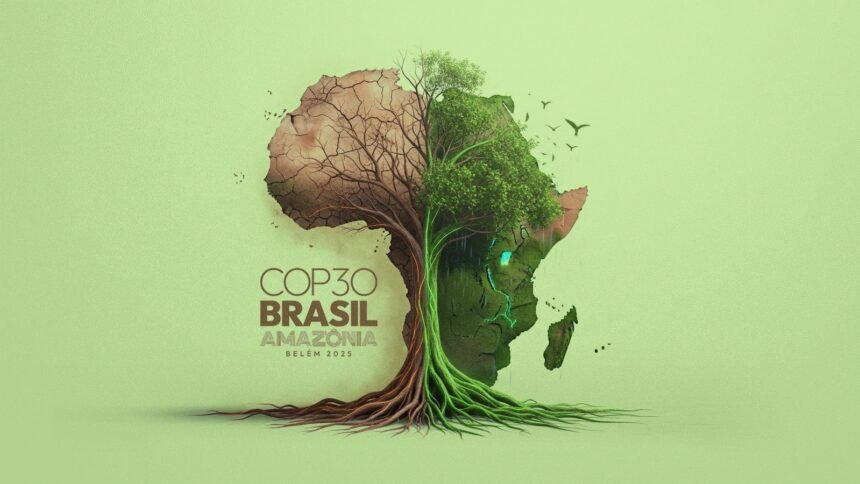
As COP30 unfolds in Belém, Brazil, from November 10 to 21, 2025, the AGN enters with heightened resolve, aligning its demands with the AU’s Agenda 2063—a blueprint for “The Africa We Want” — integrating climate resilience into aspirations for food security, industrialization, and peace. Recent pre-COP consultations in Zanzibar and Addis Ababa have honed the group’s positions, emphasizing solidarity amid diverse national contexts: oil-dependent economies like Nigeria and Angola seek just transitions. At the same time, agrarian nations like Ethiopia and Kenya prioritize drought-resistant agriculture. This Pan-African approach draws on indigenous wisdom, such as the Maasai’s communal land management in East Africa or the Dogon’s astronomical knowledge in Mali, to inform adaptive strategies that respect cultural heritage. Amid global tensions, including geopolitical shifts and economic slowdowns, the AGN’s unity serves as a bulwark, demanding not charity but equity in a world where Africa’s youth bulge—projected to reach 2.5 billion people by 2050—demands sustainable futures.
Brazilian Nexus: COP30’s Tropical Bridge to African Aspirations
Belém, the Amazonian gateway hosting COP30, symbolizes a profound convergence of ecosystems and struggles, linking Brazil’s vast rainforests with Africa’s Congo Basin, the planet’s second-largest carbon sink. As the first COP in a tropical forest setting, it evokes shared histories of colonial exploitation and contemporary battles against deforestation, illegal mining, and biodiversity loss. Brazil’s President Luiz Inácio Lula da Silva, recommitting to zero deforestation by 2030, has framed COP30 as the “COP of Implementation” and “COP of Truth,” resonating with African calls for accountability beyond rhetoric. This Brazilian presidency fosters South-South dialogues, building on historical ties such as the legacies of the transatlantic slave trade and modern BRICS partnerships to co-create solutions in renewable energy and sustainable agriculture.
For the African Group, Belém offers a platform to amplify bilateral synergies while addressing mutual challenges. On November 11, 2025, Africa Day at the COP30 Africa Pavilion, themed “Africa at the Forefront of Climate Action: Sustainable Financing for Resilient and Inclusive Green Growth,” showcased commitments from the AU, AfDB, and partners, pushing for 30% of climate finance to support African-led initiatives under the African Continental Free Trade Area (AfCFTA). AGN representatives, including those from Tanzania speaking on loss and damage, endorsed Ethiopia’s bid to host COP32 in Addis Ababa in 2027, signaling Africa’s intent to steer future summits. Brazilian-African collaborations, such as joint ventures in bioeconomy—valorizing African shea and baobab alongside Amazonian acai—aim to generate billions in sustainable revenue.
Yet, tensions simmer: Indigenous protesters stormed the venue on November 11, demanding inclusion and echoing African communities displaced by “green” projects like large-scale dams. The AGN navigates these by advocating for unified safeguards and invoking the July 2025 International Court of Justice opinion on climate obligations, which mandates that high emitters prevent harms. In Belém’s sweltering pavilions, African heads of state from Senegal to South Africa engage in high-level dialogues, forging alliances that extend to technology transfers, such as Brazil’s expertise in ethanol biofuels adapted to African sorghum crops. This Brazilian nexus thus illuminates pathways for mutual prosperity, transforming shared vulnerabilities into collective strength.
Climate Vortex: Worldwide Escalation and Africa’s Steadfast Core
The global climate landscape in late 2025 is a vortex of accelerating crises, with the World Meteorological Organization reporting the hottest decade on record, surpassing 1.5°C thresholds in multiple months. Atmospheric CO2 hovers at 425 ppm, driving extreme events such as megafires in Australia, heatwaves in Europe, and coral bleaching in the Great Barrier Reef. Sea levels rise by 4mm annually, threatening island nations, while biodiversity plummets, with 1 million species at risk, per the IPBES. IPCC projections warn of 2.7°C warming by 2100 without drastic cuts, exacerbating conflicts over water and migration, with 143 million climate refugees forecasted by 2050.
Africa, at the vortex’s core, endures amplified impacts: the Sahel’s desertification displaces 20 million annually, while East Africa’s locust swarms, fueled by erratic rains, devastate crops for 25 million food-insecure people. In Southern Africa, Cyclone Idai’s 2019 legacy lingers, with recurrent storms eroding infrastructure. Yet Africa’s core remains steadfast, harnessing endowments such as the world’s highest solar potential—capable of generating 10 terawatts—and vast geothermal resources in the Rift Valley. The AGN leverages these in COP30 negotiations, advocating for NDCs that blend mitigation with development, such as expanding Africa’s 209 GW hydropower potential to power 1.2 billion people.
Challenges intensify: a U.S. administration’s withdrawal from Paris commitments fragments unity, while fossil fuel interests—evident in the presence of over 1,200 lobbyists at COP30—push back against phase-outs. Economic headwinds, including a global recession, strain pledges, with Africa facing annual adaptation costs of $50 billion by 2030. The AGN counters with ethical framing, linking climate inaction to human rights violations, and demands reparations through debt relief to address the $1.2 trillion external debt burden, exacerbated by disasters. In this vortex, Africa’s resilience shines through community-led initiatives, such as Zimbabwe’s Pfumvudza farming, which conserves water amid droughts, positioning the continent as a model for global adaptation.
Alliance Forges: The African Group’s Strategic Negotiation Core
Within COP30’s negotiation core, the AGN functions as a cohesive forge, its AU-backed coordination ensuring synchronized advocacy across subsidiary bodies and high-level segments. Pre-COP retreats refine strategies, balancing diverse interests: coastal states like Mauritius prioritize ocean protections, while landlocked Burkina Faso focuses on soil restoration. Key pillars include increasing finance to $1.3 trillion annually by 2030, treating adaptation as a global goal with quantifiable metrics, and enhancing accountability through enhanced transparency frameworks.
Alliances bolster this core: intra-African solidarity, tested by resource disparities, is strengthened through mechanisms such as the African Risk Capacity, which pools insurance for disasters. South-South ties with Brazil and India facilitate knowledge exchanges, such as open-source climate modeling for African monsoons. Civil society, including youth from the African Youth Initiative on Climate Change, infuses grassroots perspectives, with women—comprising 60% of smallholder farmers—demanding gender-responsive funds. On November 11, AfDB VP Kevin Kariuki emphasized turning promises into action at Africa Day, highlighting pilots like debt-for-nature swaps.
Fractures, such as varying stances on gas as a transition fuel, require deft navigation, but the AGN’s endorsement of Ethiopia for COP32 underscores long-term vision. This forge transforms pressure into progress, ensuring African voices resonate in outcomes such as the New Collective Quantified Goal on finance.
Green Finance Horizons: Catalyzing Africa’s Just Flows
Green finance at COP30 represents horizons of opportunity, where the AGN seeks to redirect flows from meager trickles—Africa receives under 3% of global climate funds—to equitable torrents. The Loss and Damage Fund, now operational but underfunded at $800 million against $400 billion needs, prompts demands for $100 billion annual infusions, with simplified access for small island and least developed countries.
Innovative horizons include AfDB-led instruments: $25 billion in green bonds for renewables and blended finance to mobilize private capital for 10 GW of solar by 2030. Debt-for-climate swaps, successful in Barbados, could free $150 billion across the continent for mangrove restoration in Senegal or wind farms in Morocco. Challenges like carbon market volatility—risking land grabs in Tanzania—are addressed through AGN safeguards: community consent and benefit-sharing.
In Belém, these horizons align with Brazilian models, fostering cross-continental funding for reforestation and yielding $3 billion for the Congo by 2035. Green finance thus evolves from aid to empowerment, enabling Africa’s transition to a $5 trillion green economy by 2050.
UNFCCC-AU Synergy: Aligning Universal Frameworks with African Realities
The UNFCCC-AU synergy at COP30 harmonizes global mandates with African realities, building on their 2021 pact to integrate Agenda 2063 into Paris goals. Over 45 African NDCs now incorporate AU priorities, such as resilient infrastructure, under the Programme for Infrastructure Development in Africa.
This synergy manifests in COP30’s Capacity-Building Hub, running November 12-20, with themes such as the Means of Implementation Day, featuring AU sessions on early warnings. The Warsaw Mechanism incorporates African inputs on loss and damage, while youth programs train 2,000 delegates. Capacity gaps, such as limited technical support, prompt calls for regional UNFCCC centers in Lagos or Rabat.
Embedding African philosophies, such as Ubuntu—collective well-being—into frameworks ensures equitable outcomes, bridging global aspirations with continental action.
Climate Adaptation Vanguard: Africa’s Defensive Ramparts
Adaptation ascends as Africa’s vanguard at COP30, fortifying against inevitable impacts with a demanded $140 billion annual goal. Strategies span ecosystem-based approaches, such as restoring 100 million hectares under the African Forest Landscape Restoration Initiative, and tech innovations, such as AI-driven weather forecasting in Uganda.
Gender integration ensures women’s roles in adaptation —from Ethiopian coffee cooperatives to Namibian ecotourism —empowering communities. Challenges such as maladaptation—e.g., irrigation worsening salinization—are addressed through AU assessments. This vanguard reframes Africa as an innovator, leveraging minerals for green tech while securing adaptation as a right.
Future Trajectories: Africa’s Vision Beyond Belém
Post-COP30 trajectories envision binding finance roadmaps to $1.5 trillion, adaptation mainstreamed, and just transitions. With COP32 in Africa on the horizon, the AGN aims to domesticate gains: electrify 700 million and reclaim soils for food security. Vigilance against backsliding is key, but Africa’s trajectories promise a resilient renaissance, where Belém’s mandate fuels enduring hope.