



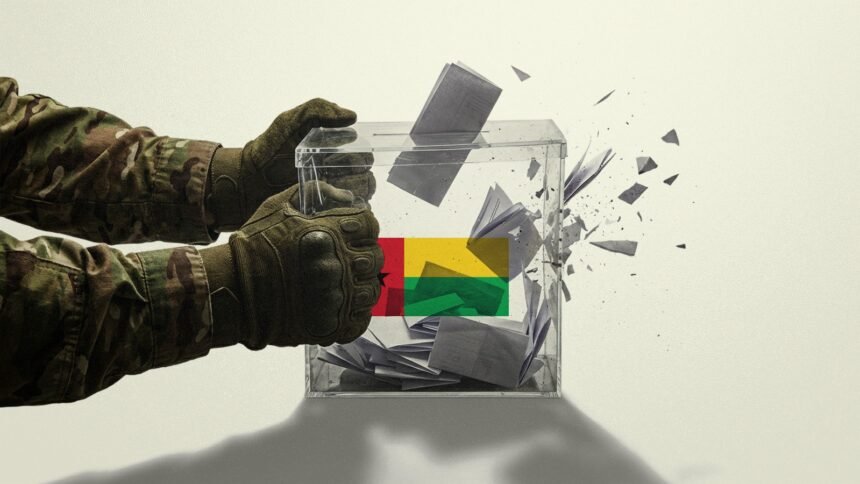
Pan African Fracture: A Continent’s Democratic Earthquake
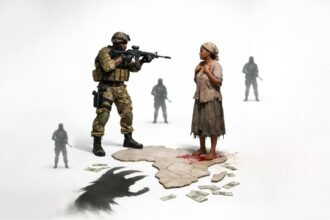
The African continent, birthplace of humanity and crucible of anti-colonial triumph, now quakes under the weight of its own institutional fragility. Guinea-Bissau’s military coup on November 26, 2025, marks the tenth successful putsch in this small West African nation since independence in 1974, and the ninth across West and Central Africa since 2020. This seismic event unfolded just 48 hours after the November 24 presidential election, transforming what was billed as a historic democratic milestone into another chapter of martial rule.
From the Sahel’s jihadist frontiers—Mali (2020, 2021), Burkina Faso (2022, 2023), Niger (2023)—to Central Africa’s dynastic upheavals in Gabon (2023) and Chad (2021), a “coup belt” now encircles 200 million people. Common denominators bind these eruptions:
- Youth unemployment averages 42% across the region
- Armies that consume 15-25% of national budgets, while teachers strike for salaries
- Narco-economies generating billions more than legitimate GDP in transit states
- External patrons auctioning influence—Russia’s Wagner mercenaries in Mali, French interests in Niger, Chinese infrastructure in Guinea
Guinea-Bissau’s rupture is no outlier but the purest distillation of this continental syndrome. As Major-General Horta Inta-a was sworn in as “transitional president” on November 27 in a nationally televised ceremony, his one-year transition pledge echoed the hollow promises of Mali’s Assimi Goïta (five years and counting) and Burkina Faso’s Ibrahim Traoré (refusing elections). The African Union’s immediate suspension and ECOWAS’s sanctions threaten isolation, but history suggests these measures more often harden juntas than hasten democracy. In this fractured panorama, Bissau emerges as both a laboratory and a warning: can Africa break its coup cycle, or will the barracks remain the continent’s default arbitrator?
Bissau’s Barracks Legacy: Fifty Years of Rifle Rule
Guinea-Bissau’s rendezvous with military rule is among the most tragic in modern history. The nation of 2.1 million—scattered across 88 islands and a mangrove-choked coastline—won independence from Portugal in 1974 after Amílcar Cabral’s legendary guerrilla war. Yet within six years, the revolutionary dream lay shattered:
Chronology of Military Interventions:
| Year | Event | Key Figure | Outcome |
| 1980 | First coup | João Bernardo “Nino” Vieira | 19-year dictatorship |
| 1998-99 | Civil war | Ansumane Mané | 2,000 dead, Vieira briefly ousted |
| 2003 | Kumba Ialá overthrown | Veríssimo Correia Seabra | Military transition |
| 2009 | Vieira assassinated | Army majors | Indecisive transitional council |
| 2012 | Pre-election coup | Military High Command | ECOWAS-mediated transition |
| 2022 | Failed palace attack | Unknown plotters | 11 dead, Embaló consolidates |
| 2025 | Election suspension | Horta Inta-a | Ongoing |
The November 26 Sequence unfolded with chilling precision:
- 04:30 AM: Heavy gunfire erupts near CNE headquarters
- 06:00 AM: Presidential Palace under siege
- 10:00 AM: Colonel Tomás Djassi seizes state radio
- 12:00 PM: “High Military Command” declares Embaló deposed
- 15:00: Borders sealed, nationwide curfew imposed
- November 27: Inta-a sworn in; Djassi named army chief
President Umaro Sissoco Embaló—himself a 2019 election victor amid fraud allegations—was detained at Amura Fortress alongside former Prime Minister Domingos Simões Pereira. By evening, ECOWAS diplomacy secured Embaló’s exile to Senegal via a special flight. The junta’s narrative crystallized: “narcotraffickers planned to capture democracy.” Missing from this account: any evidence, specific names, or timelines—hallmarks of legitimate security threats.
The Human Cost compounds daily:
- Medical crisis: Hospitals report medicine shortages; pharmacies shuttered
- Economic paralysis: Cashew exports (90% of GDP) halted at ports
- Communications blackout: Internet throttled to 10% capacity
- Civilian toll: Professor Julio Goncalves described “fear that paralyzes”: “Children cannot reach school, mothers cannot find medicine, everyone waits for the next gunshot.”
This is Guinea-Bissau’s eleventh such convulsion, where no elected president has completed two consecutive terms. The Balanta-dominated military views itself as the republic’s faithful guardian, with politics reduced to patronage battles over cashew quotas and cocaine transshipments.
Martial Patterns: The African Coup Playbook
Guinea-Bissau’s putsch follows a predictable choreography refined across 200+ African coups since 1960:
Phase 1: Electoral Tension (Days – Weeks)
- Incumbent faces a credible challenge
- Vote-counting delays breed suspicion
- Parallel tallies show a tight race
Phase 2: The Spark (Hours)
- Gunfire near key institutions
- The military claims “protecting democracy.”
- Rapid seizure of media/communications
Phase 3: Consolidation (Days)
- Transitional leader appointed
- Curfews/border closures
- Purge of rival officers
Phase 4: External Reaction (Week 1)
- AU/ECOWAS suspension
- Mediation teams dispatched
- Sanctions threatened
Phase 5: Entrenchment (Months – Years)
- Transition timeline extended
- Elections postponed
- New alliances formed
Comparative Timeline Analysis:
| Country | Coup Date | Promised Transition | Actual Outcome |
| Mali | Aug 2020 | 12 months | 5+ years, no elections |
| Burkina Faso | Jan 2022 | 24 months | Second coup Sep 2023 |
| Niger | Jul 2023 | 6 months | Junta coalition formed |
| Guinea-Bissau | Nov 2025 | 12 months | Ongoing |
The junta’s “narcotrafficker” justification mirrors Sudan’s 2021 generals claiming civilian leaders were “foreign puppets,” or Gabon’s 2023 coup leaders alleging election fraud. Missing: evidence. Present: control of key revenue streams. Guinea-Bissau’s 30-50 tonnes of annual cocaine transit—worth $1-2 billion—dwarfs its $1.3 billion GDP. The opposition’s pre-coup pledge to support UN-backed anti-narcotics investigations suddenly disappeared from discussion.
Democratic Collapse: When Ballots Become Bullets
The November 24 election represented Guinea-Bissau’s best hope for democratic consolidation. With 70% turnout across 4,000 polling stations, twelve candidates vied for power:
Key Contenders:
- Umaro Sissoco Embaló (incumbent) – 45% (provisional)
- Fernando “Nando” Gomes da Silva – 38% (provisional)
- Domingos Simões Pereira – 12% (provisional)
A run-off appeared inevitable, threatening Embaló’s incumbency. The CNE’s three-day counting silence fueled conspiracy: was the junta preempting an opposition victory, or protecting against incumbent fraud? Both narratives contain truth.
Continental Parallels:
- Kenya 2022: Supreme Court nullifies election
- Zimbabwe 2023: Pre-vote opposition arrests
- Madagascar 2025: Election violence triggers coup
Structural Democratic Deficits:
- No president has completed two full terms since 1974
- The judiciary is beholden to executive appointments
- Military budget (18% of GDP) dwarfs education (12%)
- Narco-financing corrupts all political actors
The opposition coalition’s November 27 demand—”publish the results!”—echoes across Africa. Without transparent tallies, trust evaporates. With military rule, reconciliation becomes impossible. The African Charter on Democracy (2007) lies in tatters.
Unrest’s Anatomy: From Twitter to Tear Gas
Guinea-Bissau’s streets witnessed familiar unrest patterns:
Pre-Coup (Nov 20-25):
- #KontaKriol protests in Bissau, Bafatá
- Youth demanding vote transparency
- 200-300 demonstrators dispersed
Coup Day (Nov 26):
- Tear gas outside Pereira’s residence
- Live rounds near Dias’s compound
- No confirmed casualties
Post-Coup (Nov 27):
- Small gatherings were crushed immediately
- Internet throttled to prevent coordination
- Military patrols intensify
This micro-unrest differs from continental flashpoints:
| Country | Scale | Duration | Outcome |
| Kenya 2024 | 1M+ participants | 6 weeks | Policy reversal |
| Nigeria 2024 | 500K+ | 3 weeks | Subsidy restoration |
| Madagascar 2025 | 100K+ | 6 weeks | Full regime change |
| Guinea-Bissau | <1K | 3 days | Military consolidation |
Why the difference?
- Low connectivity (25% internet penetration)
- Military dominance (no rival power centers)
- Economic dependence (cashew harvest season)
- Rapid response (6-hour coup execution)
The junta’s preemption prevented escalation, but underground networks persist. WhatsApp groups with 10,000+ members coordinate discreetly, awaiting opportunities.
Gen Z’s Muted Revolution: Digital Dreams, Analog Reality
Guinea-Bissau’s Generation Z (born 1997-2012) comprises 65% of the population—1.4 million potential revolutionaries constrained by infrastructure:
Digital Constraints:
- Internet penetration: 24.7% (2024)
- Smartphone ownership: 18% among under-25s
- Data costs: $4.50/GB (45% of monthly minimum wage)
Despite limitations, Gen Z organized:
text
#KontaKriol trends
– 15,000 posts (Nov 20-25)
– 87% local content
– Primary demands: vote counting, anti-corruption
#BissauDesperta trends
– 8,200 posts
– 62% youth-generated
– Focus: cashew export transparency
Continental Comparison:
| Country | % Youth Participation | Success Metric |
| Kenya | 78% | Parliament stormed |
| Nigeria | 65% | Policy reversed |
| Uganda | 52% | Internet blackout |
| Guinea-Bissau | 22% | Dispersed |
The junta’s swift clampdown on communications prevented the Kenyan-style conflagration. Yet Gen Z’s grievances persist:
- Unemployment: 68% for ages 15-24
- Cashew paradox: World’s 6th largest producer, 70% live on <$2/day
- Climate vulnerability: Rising seas threaten 40% of the population
Transitional Trap: Twelve Months to Nowhere
Major-General Horta Inta-a’s “12-month transition” follows the African junta playbook:
Historical Success Rate:
| Promised Duration | Actually Delivered | Success Rate |
| 6 months | 8% | 1/12 |
| 12 months | 22% | 4/18 |
| 24 months | 31% | 5/16 |
Current Actors:
text
ECOWAS Emergency Summit (Nov 27, virtual):
– Nigeria: Bola Tinubu – “No recognition.”
– Senegal: Bassirou Diomaye Faye – Mediator
– Côte d’Ivoire: Alassane Ouattara – Sanctions advocate
African Union:
– Suspended Guinea-Bissau membership
– Demanded the release of all detainees
– Called for election results publication
Junta’s Opening Moves:
- Personnel changes: Loyalists installed across the security apparatus
- Revenue control: Cashew export board restructured
- Media consolidation: State broadcaster under military command
- International outreach: Russia and China contacted for recognition
Critical Unknowns:
- Foreign observers: 150+ unaccounted for
- Opposition leaders: Pereira, Dias, fates unclear
- Military cohesion: Potential rival factions
- Economic lifeline: Cashew harvest (Dec-Jan) viability
Escape Scenarios:
- ECOWAS Success (15% probability): Rapid mediation, elections in 9 months
- Junta Entrenchment (65% probability): Extensions, new alliances
- Civil Conflict (15% probability): Factional military splits
- External Intervention (5% probability): Regional force deployment
The Continental Stakes: Guinea-Bissau’s fate ripples outward. Success breeds copycats; failure discredits regional bodies. The Sahel Alliance (Mali, Burkina Faso, Niger) watches closely, ready to welcome Bissau. Russia positions “security advisors.” China secures port concessions.
In Bissau’s humid silence, where soldiers patrol past shuttered markets and children study by candlelight, Africa confronts its defining question: Can the continent that defeated colonialism defeat its own praetorian tradition? The one-year clock ticks, but history whispers that such deadlines in Africa measure patience, not progress. The chains that bind Guinea-Bissau today threaten to encircle the continent tomorrow—unless African institutions summon unprecedented resolve.