




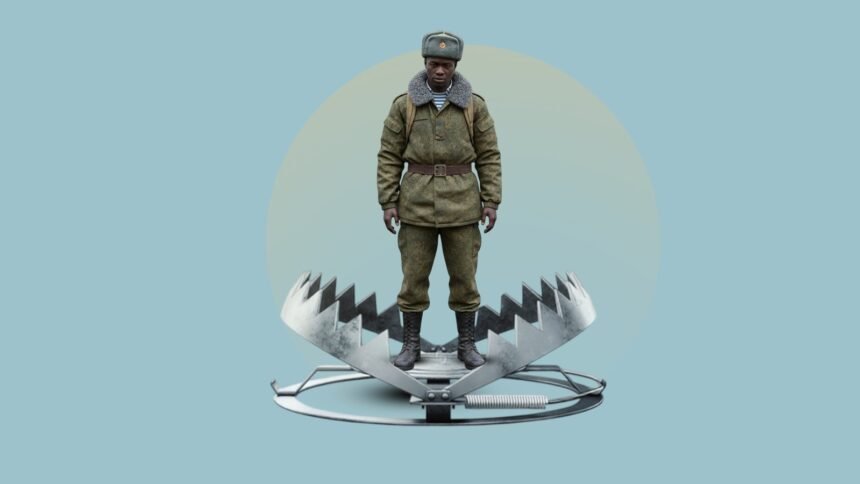
In the sweltering townships of KwaZulu-Natal and the shadowed alleys of Johannesburg, a storm of public fury has erupted over the plight of seventeen South African men—sons, brothers, and uncles—now ensnared in the frozen carnage of Ukraine’s Donbas frontlines. Lured in July 2025 with visions of elite bodyguard training for a nascent political movement or scholarships to Russian universities, these young men, aged 20 to 39, instead clutched rifles under Cyrillic contracts they could scarcely comprehend, thrust into the maw of Russia’s attritional war machine. By mid-December, as winter’s grip tightened on the trenches, the scandal had metastasized into a national reckoning, igniting accusations of human trafficking, elite predation, and a grotesque perversion of anti-imperial legacies. At its epicenter stands Duduzile Zuma-Sambudla, daughter of apartheid’s vanquisher Jacob Zuma, whose pro-Moscow fervor—once dismissed as eccentric—now fuels a torrent of public revulsion, framing her as the architect of a modern slave trade that mocks South Africa’s rainbow covenant. This crisis, unfolding against the backdrop of Sudan’s naval overtures to Moscow and a continental hemorrhage of over 1,400 African fighters to the Eurasian theater, exposes the fragility of Pan-African sovereignty, where poverty’s desperation collides with geopolitical opportunism, birthing a backlash that demands not just repatriation but a profound audit of alliances forged in the fires of historical solidarity.
Fractured Umkhonto: Pan-African Ideals Shattered by Proxy Wars
The entanglement of South African youth in the Russia-Ukraine maelstrom reverberates as a profound betrayal of the Pan-African ethos, in which the continent’s storied resistance to external domination—embodied in the ANC’s Soviet-era pacts and Nkrumah’s vision of collective self-determination—has curdled into unwitting complicity in imperial adventurism. Public discourse, amplified across social media and street protests from Soweto to Durban, frames this as a grotesque inversion: the very networks born from anti-colonial struggle now funneling the marginalized into foreign foxholes. By December 2025, hashtags like #BringOurBoysHome and #ZumaTrafficking trended with visceral intensity, amassing millions of impressions, as families shared voice notes of sons whispering from waterlogged craters—”We sleep in mud, no training, just death”—evoking the Sharpeville massacres’ raw grief but redirected at domestic elites.
This backlash transcends individual outrage, tapping into a broader continental unease over Africa’s neutrality in the Russia-Ukraine fray. From Nairobi’s refugee camps to Bamako’s juntas, voices decry the moral hazard of BRICS affiliations that prioritize grain shipments over guarding youth from cannon-fodder conscription. In South Africa, where 45% youth unemployment festers like an open wound, the scandal has galvanized civil society: trade unions like COSATU issued scathing communiqués condemning “neo-colonial blood trades.” At the same time, student movements at Wits and UCT rallied with placards reading “From Soweto to Donbas: No More Sold Sons.” The Pan-African Congress echoed this, likening the recruitment to the forced levies in the Belgian Congo and urging an AU-wide moratorium on mercenary pipelines. Yet, beneath the unity lies fracture—pro-Russia factions within the EFF and MK Party defend Zuma-Sambudla as a “victim of Western smears,” splintering the anti-imperial front and fueling debates on whether Moscow’s “multipolar” allure masks a new scramble for African labor.
Veldt Lament: South African Heartbreak and the Surge of Collective Fury
At the grassroots, the scandal has unleashed a deluge of personal anguish that has coalesced into a national catharsis, with families’ testimonies painting a tableau of shattered trust and inconsolable loss. Mary’s account—her son, a 28-year-old mechanic from the Eastern Cape, phoning in August to plead, “Mama, they forced the Russian paper on me; I don’t understand”—has become emblematic, shared virally on WhatsApp groups and TikTok reels, garnering over 500,000 views by mid-December. These narratives, corroborated by leaked “JHB-Russia Team” chats revealing Zuma-Sambudla’s assurances—”No war, just VIP protection for the movement”—have ignited a firestorm of empathy-fueled rage, with public vigils in Pietermaritzburg drawing thousands chanting “Ubuntu or Death?” against the commodification of kin.
Public opinion polls conducted by Ipsos in early December captured this seismic shift: 78% of respondents viewed the recruitment as “treasonous betrayal,” a 15-point spike from November, with urban youth (under 35) at 85% condemnation, decrying it as “apartheid 2.0—whites sold us to Boers; now Zumas sell us to Putin.” Radio call-ins on SAFM and Ukhozi FM brimmed with vitriol, callers branding Zuma-Sambudla “the witch of Nkandla,” her familial ties amplifying the sting—eight of the seventeen are Zuma kin, per half-sister Nkosazana Zuma-Mncube’s affidavit. This intimate horror has eroded MK Party support, with internal leaks revealing donor flight and membership dips of 12% in KwaZulu-Natal. Broader sentiment undermines the rainbow nation’s elite compact: cartoons in the Mail & Guardian depict Zuma-Sambudla toasting Putin over a pit of chained youth, symbolizing how post-1994 gains—the Constitution and the TRC—crumble under dynastic avarice. Yet, glimmers of solidarity emerge: crowdfunding for families has raised R2.3 million, while interfaith prayers at Regina Mundi church blend Xhosa hymns with Slavic pleas for the trapped, forging a velvet resilience amid the veldt’s unyielding sun.
Eurasian Entanglements: Mercenarism’s Venom in the Russia-Ukraine Vortex
Mercenarism’s insidious creep into South Africa’s social fabric, via the Russia-Ukraine conflict, has provoked public revulsion that reframes the conflict not as distant thunder but as a mirror of domestic inequities. The Africa Corps—Wagner’s sanitized successor, now state-orchestrated—exploits this void with precision: Telegram lures promising R35,000 stipends morph into Storm-Z penal battalions, where South Africans mingle with Sudanese refugees in human-wave assaults against Ukrainian entrenchments. By December 2025, Kyiv’s tallies of 1,400+ African combatants have crystallized public horror, with viral drone footage of Togolese and Kenyan casualties—faces muddied, cries in unfamiliar tongues—prompting SA Twitter storms: “Our blood for Putin’s ports?” echoing Sudan’s Port Sudan lease, a 25-year Red Sea foothold trading S-400s for Sudanese gold.
Backlash manifests as a clarion call against hybrid predation: disinformation concealing coercion as an “anti-Western opportunity,” according to leaked BRICS Journalists Association memos linked to arrested recruiter Nonkululeko Mantula. Families’ outrage—petitions to Ramaphosa amassing 150,000 signatures by December 10—highlights the asymmetry: Russian ideologues die for motherland; Africans for monthly rubles withheld under duress. This has given rise to a counter-narrative wave—podcasts like “Donbas Diaries” that interview escapees, amassing 1.2 million listens—exposing Unit 95482’s brutality: infighting, bullying, and 40% casualty rates. Public forums, from Newzroom Afrika debates to Cape Town town halls, interrogate SA’s BRICS fealty: “Grain from aggressors, graves for our youth?”—a sentiment swelling as Ukraine’s ambassador decries “neo-colonial vampirism.” The mercenary paradigm thus unmasks Russia’s African pivot—from Sahel juntas to steppe slaughter—as a continuum of extraction, fueling calls for Pan-African boycotts of Moscow’s “solidarity summits.”
Inkandla Intrigue: Political Unrest and the Zuma Dynasty’s Reckoning
The scandal’s political aftershocks have plunged South Africa into unrest, with Zuma-Sambudla’s November 28 resignation from the MK parliamentary ranks—amid Hawks investigations and her counter-affidavit alleging “deception by recruiters”—igniting factional infighting that threatens the GNU’s fragile equilibrium. Public ire targets the dynasty’s impunity: Jacob Zuma’s 2014 Putin bromance, once romanticized as anti-imperial kinship, is now vilified as a prelude to trafficking, with memes juxtaposing his Nkandla homestead against Donbas dugouts, captioned “From swimming pools to slaughter pools.” MK’s 14.6% electoral surge in May 2024 evaporates in polls, dipping to 9%, as cadres defect, decrying “Zuma’s war games” amid whispers of a “coup contingency” from March’s Morocco-Russia jaunts.
This unrest cascades: December 1 court appearances for five recruiters, including radio darling Mantula, draw Soweto protests—3,000 strong, clashing with police—chanting “No more Zuma puppets!” EFF’s Malema, torn by “friendship” with Zuma-Sambudla, pivots to “law must bite,” exposing leftist rifts. Ramaphosa’s November 6 probe order—condemning “exploitation of vulnerability”—wins 62% approval but stalls without updates, spawning #RamaphosaRescue hashtags lambasting “presidential paralysis.” Broader turmoil brews: ANC-MK skirmishes in KZN legislatures, donor boycotts starving opposition coffers, and youth abstention threats in 2026 locals. The Zuma saga thus catalyzes a purge of patronage politics, with civil watchdogs such as Outa demanding asset freezes, reframing unrest not as chaos but as overdue housekeeping for a democracy teetering on dynastic delusions.
Justice’s Forge: Accountability Imperatives Amid Continental Reckoning
As December 2025 wanes, the clamor for accountability crescendos, transforming public anguish into a forge for systemic overhaul, where backlash against the Russian frontline fiasco mandates repatriation, prosecution, and Pan-African prophylaxis. Families’ unyielding advocacy—Nkosazana Zuma-Mncube’s November 22 case against her half-sister, detailing “handover to mercenaries”—has mobilized oversight: Hawks’ December 10 raid on MK offices yields seized devices, while DIRCO’s Ukraine envoy secures safe-passage talks, though Moscow’s visa revocations stall progress. Public pressure peaks in parliamentary no-confidence bids against implicated MPs, with DA MP Hattingh’s charges gaining 200,000 petition backers, who insist, “No elite escape hatch.”
This forge tempers continental resolve: AU’s December 12 extraordinary session, spurred by SA’s dossier, drafts a “Youth Protection Accord” banning mercenary visas, with 42 states endorsing amid Kenya’s parallel rescues. Domestically, amendments to the 1998 Foreign Military Assistance Act are pending, proposing extraterritorial penalties and disinformation fines, supported by 71% in Afrobarometer surveys. Backlash evolves into empowerment: vocational hubs in Limpopo, funded with R5 million from public drives, counter recruitment lures, while trauma counseling networks for returnees—piloted in Pretoria—honor Ubuntu’s healing ethos. Yet, accountability’s blade cuts both ways: Malema’s equivocation draws youth ire, fracturing leftist unity, as citizens demand “Zuma-proof” diplomacy—diversifying beyond BRICS to AU-led security pacts. In this crucible, South Africa’s rage alchemizes grief into guardianship, ensuring the veldt’s sons reclaim agency from steppe shadows, forging a Pan-African dawn where no passport promises perdition.
Reclamation’s Horizon: From Trenches to Triumph
By December 14, 2025, the saga of South Africans in Russia’s trenches stands as a watershed of wounded pride and defiant rebirth, in which public backlash against Zuma-Sambudla’s alleged perfidy—echoed in global headlines from Al Jazeera to NPR—heralds a rupture from exploitative enthrallment. Families’ unbowed pleas, interwoven with viral testimonies of betrayal, have not merely shamed the powerful but galvanized a movement: repatriation flights tentatively scheduled for January, elite indictments looming, and a youth vanguard vowing “Never again our blood for foreign flags.” As Sudan’s Red Sea gambit underscores Moscow’s continental calculus, South Africa’s fury reasserts Pan-African primacy—prioritizing internal fortitude over external flattery. In this horizon, the rainbow’s arc bends not toward vengeance but vigilance, honoring the trapped with a legacy of liberated lives, where ubuntu triumphs over the tyrant’s trade.





