





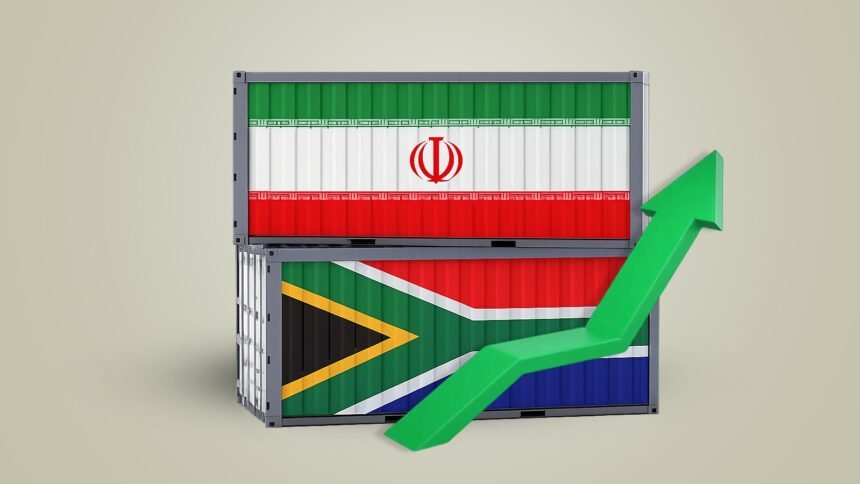
Continental Crossroads: Pan-African Pathways in Persian Partnerships
Africa’s economic mosaic, a vibrant interplay of resource wealth and emerging markets, increasingly intersects with Iran’s strategic outreach, forging pathways that blend necessity with opportunity. Across the continent, Tehran’s ties manifest in diversified exchanges: from Algerian hydrocarbons to Ethiopian infrastructure, Iranian non-oil exports surged 77% in the first eight months of 2025, reaching $1.2 billion continent-wide, driven by machinery, petrochemicals, and agricultural inputs. This pan-African tango reflects Iran’s pivot amid Western isolation, leveraging BRICS synergies—expanded in 2023 to include Egypt, Ethiopia, Iran, Indonesia, and the UAE—to counter the sanctions squeeze. For nations like Nigeria and Ghana, Iranian fertilizers bolster food security; in East Africa, technical aid in mining aligns with Agenda 2063’s industrialization thrust. Yet, this crossroads navigates geopolitical minefields: U.S. pressures ripple southward, where Africa’s $1.1 trillion debt burden amplifies vulnerability to tariff tempests. South Africa, as BRICS anchor and AU voice, embodies this nexus—its modest Persian pacts, valued at R300 million in 2023, underscore a broader continental calculus: balancing Eastern alliances against Western dependencies, where trade’s tango risks tariff-induced stumbles.
Tehran’s African Embrace: Africa-Iran Economic Entwinements
Iran’s embrace of Africa, a strategic entwinement rooted in post-sanctions resilience, weaves economic threads that span from Saharan sands to Cape coasts, prioritizing non-oil avenues to evade global isolation. Commodity-wise, bilateral trade climbed to $2.5 billion in 2025, with Iran exporting $1.8 billion in goods—predominantly petrochemicals, steel, and machinery—while importing $700 million in minerals and agricultural products. Key entwinements include Algeria’s $500 million energy pacts, Nigeria’s $300 million in fertilizers, and Kenya’s $150 million in construction tech, reflecting Tehran’s 100% non-oil export growth to Africa in early 2025. This embrace, fortified by over 90 agreements with South Africa alone, extends to defense and diplomacy: joint commissions in Tehran and Pretoria foster mining collaborations, while BRICS forums amplify mutual advocacy against unilateral sanctions. Challenges persist—currency volatility and logistical hurdles constrain potential—yet opportunities emerge: Iran’s expertise in arid agriculture aids drought-prone Sahel states, and African raw materials fuel Persian industries. In this entwinement, Africa’s 1.4 billion market offers Tehran a sanctions-proof bulwark, transforming historical solidarities—forged in anti-apartheid eras—into contemporary economic lifelines.
Bilateral Bridges: Trade Flows Between Tehran and Pretoria
Trade flows between Tehran and Pretoria, though modest in scale, construct bilateral bridges that span energy, agriculture, and manufacturing, underscoring South Africa’s multipolar economic strategy. In 2023, exports totaled R300 million ($16 million), declining to R2.5 million in October 2025 amid global frictions, with South Africa exporting $10 million in fruits, machinery parts, and chemicals and importing $6 million in Iranian petrochemicals and dates. This bridge, anchored in 90+ memoranda since 1994, aims for $2 billion ambitions: joint ventures in mining—leveraging Iran’s steel tech for Pretoria’s platinum reserves—and agriculture, where Persian pistachios meet South African wines in reciprocal deals. Diplomatic scaffolding bolsters flows: Iran’s observer role in 2026 naval exercises, yielding to U.S. pressure, preserves the sanctity of trade, while BRICS pacts facilitate currency swaps to circumvent dollar dominance. Yet, bridges strain under the weight of sanctions: Pretoria’s limited $100 million 2019 negotiations highlight untapped potential, curtailed by compliance concerns. In these flows, Tehran-Pretoria ties embody pragmatic entwinement—modest volumes yielding strategic depth, where trade bridges foster resilience against isolation’s currents.
Atlantic Alliances: Africa-US Economic Interdependencies
Africa’s economic interdependencies with the United States, a tapestry of aid, investment, and market access, navigate Atlantic alliances that balance opportunity with oversight. Compared with other continents, U.S. trade volumes reached $100 billion in 2025, with sub-Saharan exports—led by South African autos and Nigerian oil—enjoying AGOA’s duty-free benefits for $25 billion annually. These alliances, channeling $10 billion in FDI and $5 billion in aid, fortify sectors like South Africa’s textiles—employing 200,000—and Kenya’s apparel hubs. Yet, interdependencies fray under policy pivots: Trump’s 30% tariffs on South African goods in August 2025, amid AGOA’s uncertain renewal, threaten 100,000 jobs and reduce GDP by 0.8%. Broader African ties reflect this duality—Ethiopia’s Boeing deals contrast with tariff threats over Nile disputes—while remittances from 2 million African Americans exceed $50 billion. In this Atlantic weave, alliances demand recalibration: Africa’s pivot to multipolarity, via the AfCFTA’s surge in intra-trade, counters dependencies, transforming U.S. interdependencies from paternalistic pacts to equitable partnerships.
Levies’ Looming Shadow: Tariffs’ Toll on Transcontinental Ties
Tariffs loom as a shadow over transcontinental ties, with U.S. levies reshaping Africa’s economic landscape through punitive precision. Trump’s January 2026 decree—imposing 25% duties on any nation’s U.S. trade if engaging Iran—targets 147 Iranian partners, ensnaring Africa’s modest $2.5 billion flows in collateral crossfire. For South Africa, the toll manifests subtly: Iranian exchange risk could amplify existing 30% tariffs, potentially costing $500 million in lost AGOA benefits and 50,000 jobs in linked sectors. Continentally, levies’ shadow darkens: Nigeria’s $300 million fertilizer imports face ripple duties, while Algeria’s $500 million energy pacts invite scrutiny, shaving 0.5% off collective GDP projections. This tool, extending Trump’s “reciprocal” ethos—baseline 10% on imports, escalating to 30% for non-negotiators—compels realignments: Pretoria’s framework deals, offering LNG purchases and $3.3 billion in investments, seek leniency on tariffs. Yet, shadows deepen interdependencies—BRICS alternatives absorb shocks, but the punitive edge of tariffs erodes trust, necessitating diversified ties to mitigate the looming economic eclipse.
Fiscal Frontiers: Economy’s Evolution Amid External Edicts
Africa’s economy evolves along fiscal frontiers, where external edicts such as U.S. tariffs catalyze adaptive responses amid global headwinds. Continental growth of 3.8% in 2025—buoyed by AfCFTA’s 52% intra-trade potential—navigates $1.1 trillion in debt and $89 billion in service burdens, with Iran’s $2.5 billion ties offering diversification buffers. For South Africa, frontiers manifest in resilience: a 1.1% GDP ascent despite 76% debt, gold’s $3.8 billion in exports, and BRICS inflows of $47 billion that counter tariff edicts. Iran’s modest R300 million bridge evolves into a strategic evolution—mining synergies yielding $200 million in potential—while U.S. 25% levies prompt fiscal pivots: green bonds mobilizing $50 billion, AI-driven 6% uplift by 2035. Challenges frontier this evolution: AGOA’s lapse threatens $10 billion in exports, youth unemployment at 68% festers, yet edicts spur innovation—Pan-African rating agencies slashing premiums, debt swaps unlocking $150 billion in space. In this fiscal frontier, external pressures temper Africa’s economy, shaping robust frontiers where edicts’ constraints foster self-reliant prosperity.