




In an era where distant conflicts ripple across continents with unprecedented speed, African nations stand united in confronting the economic aftershocks of escalating tensions in the Middle East. The recent intensification involving United States and Israeli actions against Iran, coupled with retaliatory measures that have disrupted critical maritime passages, has thrust African supply chains into the spotlight. President Cyril Ramaphosa’s address at the Africa Energy Indaba in Cape Town captured this reality with clarity: the continent is already grappling with strained logistics and elevated energy costs, a vulnerability echoed across import-reliant economies. This Pan-African moment demands not only immediate adaptation but a visionary reimagining of continental self-reliance, where Gulf partnerships serve as bridges rather than lifelines. By examining the interplay of historical ties, infrastructural realities, conflict-induced strains, investment dynamics, debt challenges, and developmental horizons, a clearer path emerges, one rooted in unity, diversification, and strategic foresight.
Embracing Pan-African Unity in Times of Global Turmoil
Africa’s response to the current crisis embodies the spirit of collective resilience that has defined the continent’s post-independence journey. From the African Union’s urgent calls for restraint and dialogue to statements from regional bodies like ECOWAS, leaders have consistently framed the conflict not as a distant event but as a shared threat to energy security, food stability, and economic sovereignty. This unity underscores a Pan-African ethos: no single nation bears the burden alone. Import-dependent economies, which dominate much of the continent, face amplified risks from global chokepoints, yet the crisis also accelerates momentum toward intra-African solutions. Initiatives aligned with the African Continental Free Trade Area gain renewed urgency, as does investment in renewable energy and local manufacturing. The message is clear: geopolitical sands may shift, but a cohesive continent can anchor its future through solidarity and proactive diplomacy, transforming external pressures into catalysts for deeper integration.
Deepening Africa-Gulf Strategic Relations
The bonds between Africa and the Gulf Cooperation Council states have evolved from transactional exchanges into multifaceted strategic alliances, driven by shared interests in diversification, food security, and trade expansion. Gulf nations, seeking to secure supply routes and agricultural investments, have turned toward East Africa and the Horn of Africa as natural extensions of their economic vision. This relationship transcends oil, encompassing logistics hubs, digital connectivity, and green energy projects that align with Africa’s developmental aspirations. Formal agreements, including comprehensive economic partnerships, have institutionalized these flows, enabling non-oil exports from the Gulf to surge while African resources find reliable markets. In this context, the Gulf emerges not merely as a trading partner but as a co-architect of resilient value chains, offering African states alternative financing and technical expertise amid global uncertainty. These ties reflect a reordering of global economics, where proximity, cultural affinities, and mutual growth potential create enduring frameworks for cooperation.
The Interwoven Fabric of Africa-Gulf Supply Chains
At the heart of these relations lies a sophisticated network of supply chains linking African ports, farmlands, and markets to Gulf hubs. Investments in critical infrastructure, such as port expansions, free trade zones, and logistics corridors, have shortened transit times and lowered costs, integrating African commodities into global streams while securing Gulf access to essential goods. East African agricultural ventures, for instance, supply food security needs, while Gulf-operated terminals along the Red Sea and Indian Ocean facilitate smoother flows of machinery, fuels, and consumer products. These chains extend to critical minerals and renewable energy components, positioning Africa as a vital node in emerging value streams. Pre-conflict trade volumes had shown robust growth, with bilateral exchanges benefiting from diversified financing mechanisms and export credit support. Yet the fabric remains intricate: disruptions anywhere along the route, from production facilities to maritime passages, cascade rapidly. The current context reveals both the strength of these interconnections and their exposure to external volatility, highlighting the imperative for redundant routes and localized processing to enhance durability.
War-Induced Strains and Economic Vulnerabilities
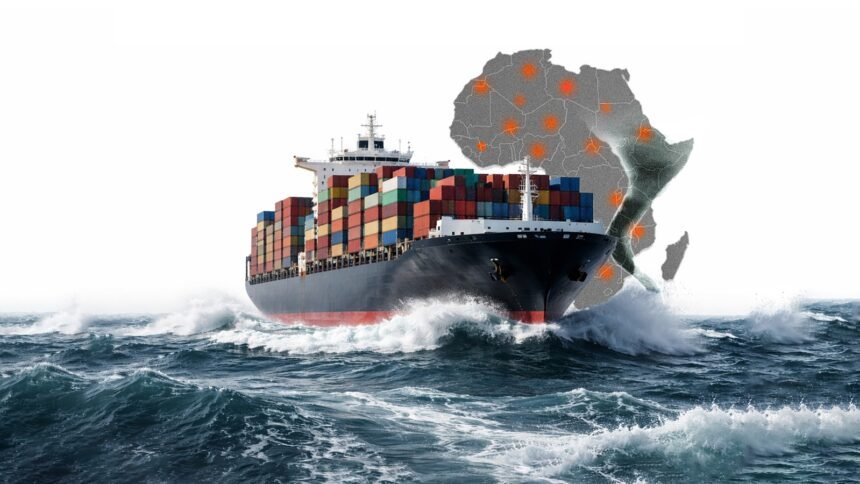
The escalation has manifested most acutely through disruptions in the Strait of Hormuz, a passage that handles roughly one-fifth of global oil and significant volumes of liquefied natural gas. Shutdowns of facilities and shipping halts have propelled oil prices upward by 7-14 percent in early March 2026, with Brent crude climbing toward $83 per barrel and potential spikes to $100 under prolonged scenarios. Natural gas prices have surged further in key markets, compounding logistical challenges. For Africa, the effects are multifaceted: rerouting around the Cape of Good Hope adds 10-14 days to Asia-Europe voyages, inflating freight rates and delaying the delivery of essentials, from fertilizers to consumer goods. Oil-importing nations confront heightened inflation, widened fiscal deficits, and pressure on household budgets, while exporters weigh short-term revenue opportunities against broader instability. Parallels to the Russia-Ukraine conflict and the COVID-19 era are stark; import dependence once again exposes structural fragilities. Cold chain operations, manufacturing inputs, and food distribution networks face immediate cost pressures, with East and North African economies particularly exposed due to reliance on Gulf-linked routes. The African Union has rightly warned of threats to energy markets, trade, and food security, and has urged measures to safeguard vulnerable populations and prevent deeper humanitarian fallout.
Gulf Investments: Catalysts for Continental Progress
Amid these strains, Gulf capital stands out as a proactive force for mitigation and growth. Pledges and commitments have soared in recent years, targeting ports, energy infrastructure, agriculture, and critical minerals to fortify supply chains against precisely such shocks. Major operators have poured resources into African terminals and connectivity projects, creating resilient nodes that shorten distances and enhance control over trade flows. These investments, spanning billions across infrastructure platforms, prioritize long-term ownership models and green transitions, aligning with Africa’s push for sustainable industrialization. In sectors such as battery metals and renewable energy capacity, Gulf partnerships facilitate midstream processing and value addition, reducing reliance on raw material exports. The approach emphasizes “patient capital” that builds platforms rather than fleeting transactions, offering African states leverage in global negotiations. As volatility persists, these inflows provide buffers: diversified routes, upgraded facilities, and financing alternatives that ease immediate pressures while laying foundations for self-sufficiency.
To illustrate the scope of these contributions, consider the following overview of key investment focuses:
| Sector | Approximate Scale and Focus | Strategic Benefits for Africa |
| Ports & Logistics | Multi-billion commitments in Red Sea/Indian Ocean terminals | Reduced transit times, enhanced trade integration |
| Agriculture & Food Security | Large-scale ventures in Horn and East Africa | Stable supply chains, local production boosts |
| Energy & Renewables | Targets exceeding 50 GW pipeline capacity | Diversified power, lower import reliance |
| Critical Minerals | Upstream access and processing partnerships | Value addition, industrial growth |
| Infrastructure (General) | Pledges in aviation, digital connectivity | Connectivity, job creation, resilience building |
This table underscores how targeted deployments address vulnerabilities while advancing broader goals.
Confronting Africa’s Debt Crisis Through Gulf Partnerships
The conflict arises as the continent navigates a formidable $90 billion debt repayment wall in 2026, with external obligations peaking for several major economies. Rising interest rates, concentrated revenues, and external shocks have trapped many nations in cycles of borrowing and vulnerability. Here, Gulf engagements offer nuanced pathways: alternative financing through sovereign wealth vehicles and export-credit arrangements often carries fewer conditionalities than traditional sources, enabling infrastructure without immediate fiscal strain. Yet risks remain; geopolitical alignments and commodity price swings can influence repayment dynamics. Strategic engagement with Gulf partners can thus alleviate pressures by channeling investments into revenue-generating assets, such as modernized ports or green energy projects that yield long-term dividends. Pan-African coordination on debt management, including liability restructuring where needed, becomes essential to harness these inflows responsibly. The crisis, while daunting, presents an opening to reorient financing toward sustainable, regionally integrated models that prioritize African agency.
Forging Pathways to Sustainable Development and Resilience
Looking ahead, the intersection of conflict strains and Gulf ties illuminates a roadmap for enduring progress. Accelerated diversification, through renewables, intra-continental trade, and localized supply chains, will diminish exposure to distant chokepoints. Gulf collaborations can accelerate this by transferring technology, building processing capacity, and co-developing adaptive logistics networks. Pan-African institutions must lead in monitoring vulnerabilities, pooling resources for strategic reserves, and advocating globally for equitable energy transitions. The emphasis on self-reliance, as articulated by African leaders, aligns perfectly with the developmental dividends of deepened partnerships: job creation, skills transfer, and inclusive growth that uplift communities. By weaving these elements into a cohesive strategy, Africa not only weathers the current storm but emerges stronger, its supply chains more robust, its relations more equitable, and its development trajectory firmly in continental hands. In unity lies the power to transform adversity into advancement, securing a prosperous future for generations to come.