





Pan African: The Continental Push for Fiscal Transparency
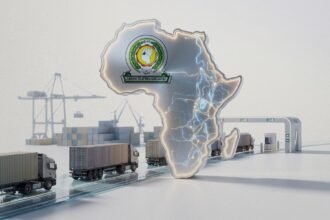
Across the African landscape, the management of sovereign obligations is increasingly recognized as a cornerstone of regional stability and the realization of the African Union’s Agenda 2063. The quest for “financial sovereignty” requires African states to balance the need for external development capital with the imperative of rigorous internal oversight. For Central Africa, Gabon’s current efforts to reconcile its past fiscal slippages serve as a vital case study in institutional resilience. This Pan-African movement toward greater accountability is essential to ensuring that mineral and petroleum wealth are translated into sustainable infrastructure rather than remaining trapped in cycles of unverified debt.
Gabon’s Political Outlook: Governance Through Reform
The political outlook for Gabon in 2026 is defined by a transition toward heightened fiscal discipline and a systematic effort to tighten public finances. The current administration is prioritizing a “reconstruction of trust” with international financial institutions, seeking to distance the nation from the debt management concerns and fiscal slippages of previous years. This political roadmap is centered on a comprehensive “cleaning of the books,” in which securing new funding for basic infrastructure is inextricably linked to the successful audit of past borrowing. The government’s ability to stabilize the macro-economy is now the primary metric of its success in navigating the post-transition era.
Political Unrest: The Social Cost of Economic Oliquity
Unrest in Central Africa is often a direct consequence of perceived economic inequity and the state’s failure to deliver on major infrastructure promises despite significant borrowing. The Gabonese finance ministry has identified specific breaches of contracts and budgetary rules during the 2016 to 2023 period of the previous administration. These breaches, including the failure to carry out certain projects and the failure to transfer funds into state treasury accounts, have fueled public frustration. Addressing these systemic failures through a rigorous audit is viewed as a necessary step to prevent future social instability and to ensure that public wealth serves the public good.
Democracy Struggles: Reasserting the Rule of Law in Finance
Gabon’s struggle for institutional stability is currently focused on reasserting the rule of law within the nation’s financial apparatus. To this end, the government has established a special commission to conduct a comprehensive audit of the country’s public debt. Coordinated by the Minister of Economy and Finance and supported by the International Monetary Fund (IMF), this audit is expected to last between two and three months. This reassertion of oversight is a critical component of the nation’s effort to secure a formal program from the IMF, which Gabon has requested to help stabilize its finances and restore its standing in global credit markets.
The Recent Developments: The World Bank Expansion
The most significant and high-profile recent development occurred on April 30, 2026, when the Gabonese finance ministry signed an additional program worth $\$150$ million with the World Bank. This agreement brings the World Bank’s total commitment to Gabon to a substantial $\$600$ million. This infusion of capital is strategically targeted to fund basic infrastructure, provided the nation can demonstrate a commitment to fiscal reform. Reclaiming the future for Gabon depends on the successful execution of this audit and the transparent utilization of these new funds, ensuring that the nation’s oil wealth provides a stable foundation for the next generation of Gabonese citizens.