





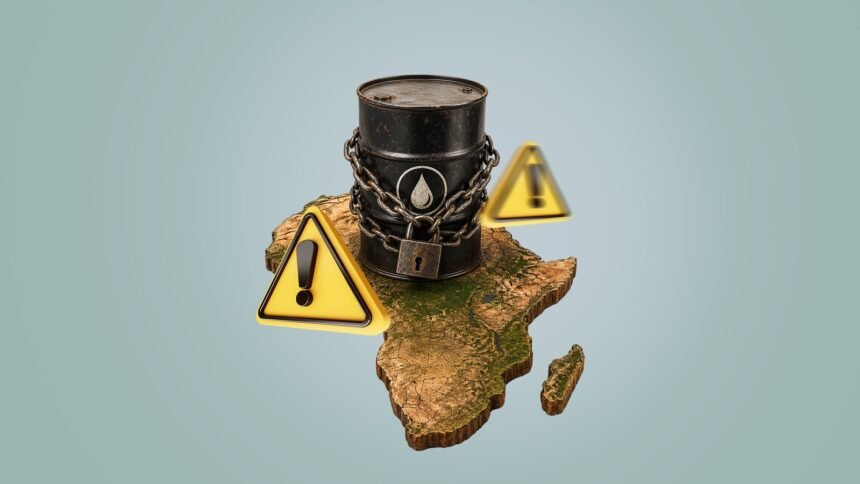
The International Monetary Fund (IMF) has trimmed its economic growth outlook for Sub-Saharan Africa, warning that escalating tensions in the Middle East are beginning to ripple across African economies through higher fuel costs, disrupted supply chains, and tightening financial conditions.
In its latest projections, the Fund now expects the region to grow by 4.3 percent in 2026, marking a downward revision from earlier forecasts made before the intensification of conflict involving Iran, the United States, and Israel. The downgrade comes despite a relatively strong performance in 2025, when the region is estimated to have expanded by 4.5 per cent, its fastest pace in nearly a decade.
According to the IMF, the conflict is driving up global prices for key commodities, particularly fuel, natural gas, and fertilizers, which are critical inputs for many African economies. The resulting cost pressures are already being felt across the continent, with fuel supply tightening in countries such as Ethiopia, Kenya, and the Democratic Republic of the Congo, among others.
Several nations, including Rwanda, Uganda, and Nigeria, have already recorded increases in pump prices, raising concerns over the cost of living and inflation.
The IMF cautions that the effects of the crisis will not be uniform. Oil-exporting countries may experience short-term revenue gains from elevated global prices. However, these benefits could be offset by increased exposure to market volatility and the risk of unsustainable fiscal spending.
On the other hand, oil-importing nations, especially those with limited natural resources, face a more difficult outlook. Higher import bills are expected to widen trade deficits, weaken currencies, and limit governments’ ability to respond through public spending.
Meanwhile, financial conditions are tightening across several economies. Rising borrowing costs and increased risk premiums are making it more expensive for governments to access international markets. Countries such as Mozambique, Ghana, and South Africa are already experiencing mounting exchange rate pressures, which could dampen investor confidence.
Despite the headwinds, several African economies are expected to maintain strong growth momentum. The IMF projects Ethiopia to lead with 9.2 percent growth, followed by Guinea at 8.7 percent, Uganda at 7.5 percent, Rwanda at 7.2 percent, and Benin at 7 percent.
However, the Fund warns that sectors such as tourism, particularly in countries like Rwanda and Seychelles, could face additional pressure if global uncertainty persists.
IMF economists caution that a prolonged or intensified conflict could further push up global prices for oil, food, and agricultural inputs, amplifying inflationary pressures across Africa. This scenario would be particularly damaging for import-dependent economies, where growth could slow more sharply.
The Fund estimates that, under a more severe scenario, regional output could decline by 0.6 percentage points in 2026 and 0.4 percentage points in 2027 compared to pre-conflict expectations.
At the same time, many African governments face looming debt repayments and are planning to rely on international markets for financing. Any sudden tightening in global financial conditions could significantly raise borrowing costs and force difficult fiscal adjustments.
In response, the IMF is urging African policymakers to act decisively. In the short term, governments are encouraged to stabilize inflation and shield vulnerable populations from rising living costs through targeted support measures.
For oil-exporting countries, the Fund advises treating windfall revenues as temporary and using them to rebuild financial buffers. Meanwhile, oil-importing nations are urged to prioritise essential spending, improve revenue collection, and strengthen public financial management systems.
The IMF underscores the need for resilience, warning that the continent’s recovery path will depend not only on external conditions but also on the strength of domestic policy responses.