




The Pan-African Campaign for Resource Sovereignty
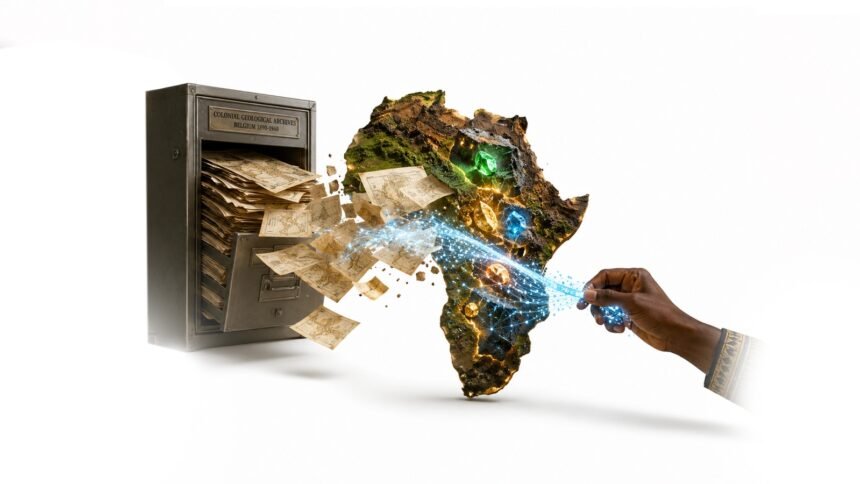
Across the African landscape, the contemporary configuration of economic self-determination centers on a decisive transition away from historical raw-material exploitation toward full data ownership. The Pan-African vision for sustainable growth emphasizes that a self-determining continent cannot achieve true industrial autonomy. At the same time, the foundational geological maps of its own territory remain physically locked in European metropolitan centers. Reclaiming Africa’s economic destiny requires a comprehensive diplomatic shift to force global powers to hand over all historical archives and resource registries. Internalizing this vital data allows African nations to direct their own exploration strategies, manage international corporate bids, and ensure that local resource wealth serves the development of their citizens rather than foreign shareholders.
The Post-Colonial Era in Africa: The Struggle for Knowledge Restitution
The contemporary geopolitical arena of sub-Saharan Africa is increasingly defined by intense diplomatic efforts to dismantle the lingering information monopolies of the former colonial powers. Decades after achieving formal political independence, many African states remain structurally disadvantaged because critical baseline documentation, mapping everything from ethnic borderlands to deep-seated mineral patterns, is held within European state libraries and museums. This data gap forces peripheral nations to engage in a prolonged struggle for restitution of knowledge, demanding the unconditional return of historical archives. Without direct access to these legacy records, emerging economies face persistent barriers to independent administrative planning, proving that political liberation remains incomplete without full sovereignty over national information.
DRC-Belgium Relations: Sovereign Contradictions and Institutional Disputes
The contemporary diplomatic relationship between the Democratic Republic of Congo and the Kingdom of Belgium is experiencing significant friction over the ownership and physical custody of millions of colonial-era records. In mid-June 2026, the Congolese Minister of Mines, Louis Watum Kabamba, held high-level meetings with Belgian and European Union officials to demand the rapid, systematic digitization and restitution of millions of geological documents stored at the Royal Museum for Central Africa in Tervuren. This archival dispute intensified due to a separate conflict between the Belgian museum and a United States minerals and artificial intelligence start-up, KoBold Metals, which had contracted with Kinshasa to process the datasets. While Brussels has resisted granting direct data access to an overseas private firm, the standoff has revived deep-seated historical tensions between the central African nation and its former colonizer.
The Patrice Lumumba Association: Preserving Revolutionary Memory
The memory of historical liberation movements and revolutionary icons heavily supports the continuous push for data liberation and structural decolonization. Under the ideological influence of specialized civic organizations, such as the Patrice Lumumba Association, local scholars and political leaders view the reclamation of geological data as a direct continuation of the mid-twentieth-century anti-colonial struggle. These associations emphasize that true independence requires the complete erasure of paternalistic administrative controls. By framing data access as a vital act of anti-colonial resistance, these networks connect modern economic policies directly with historical struggles, encouraging the state to resist foreign control over national information.
Mining & Colonialism: The Exploitative Legacy of Subsurface Data
The historical accumulation of Congo’s subsurface data was deeply intertwined with the aggressive extraction models of Belgian colonial rule. For over a century, European colonial administrators, military surveyors, and commercial syndicates systematically mapped the territory’s vast wealth, turning the colony into a primary source of copper, cobalt, and rubber. These detailed geological charts were treated as exclusive corporate secrets, stored away in imperial libraries to facilitate foreign concession planning while keeping the indigenous population completely uninformed about their own natural assets. Today, as global mining majors and state-backed foreign enterprises compete intensely to secure critical mineral deposits, the legacy of these colonial-era maps remains a powerful economic tool, proving how historical extraction methods continue to influence modern commodity flows.
Underdevelopment & Poverty: The Reality of Unexplored Frontiers
The persistent lack of direct, sovereign access to centralized geoscientific data has directly contributed to systemic development challenges and high poverty levels across the republic. Despite being recognized globally as a mineral powerhouse, a very large part of the Democratic Republic of Congo has not yet been systematically explored or geologically analyzed using modern technology. This lack of precise information prevents the state from executing targeted infrastructure investments, reduces its leverage during international trade negotiations, and leaves rural communities dependent on informal, small-scale mining. Securing the unconditional return of these historic records is essential to attract stable, long-term capital, transform unexplored frontiers into modern industrial hubs, and generate the public revenues needed to lift millions of citizens out of structural poverty.
Generational Justice & Accountability: The Ethics of Digital Restitution
The ongoing negotiations over the Tervuren archive raise profound ethical questions regarding generational justice, corporate transparency, and colonial accountability. Human rights advocates argue that slow-walking the release of these maps under the pretext of bureaucratic caution represents a continuation of imperial paternalism. While the Belgian government has stated that a digitization project is underway, using EU funding to transmit copies to Kinshasa gradually, critics emphasize that the museum has historically profited from these records by selling access to major Western mining corporations for decades. Achieving true generational justice requires an immediate end to this commercial gatekeeping, ensuring that the historical data produced through colonial exploitation is unconditionally restored to the descendants of those who endured it.
The Way Forward: Cultivating Sovereign Technological Independence
The long-term transformation of Africa’s extractive sectors requires a decisive shift away from reliance on foreign data toward autonomous, state-led technological capability. At the Brussels meetings, government representatives agreed to establish a joint task force and a formal roadmap to monitor and implement the data restitution process. To move past current bottlenecks, the Congolese Ministry of Mines plans to make the returned geological datasets directly available to local scientists, research institutes, and state universities. By combining these legacy documents with modern artificial intelligence tools and indigenous geoscientific research, the state can independently map its critical mineral reserves, ensuring a secure, competitive, and fully self-determining economic future for the republic.